WireByte
  • Log In
  • Sign Up
  • AI & Machine Learning
  • Technology
  • Science
  • Space & Astronomy
  • Gaming & Esports

Welcome Back

Log in to your WireByte account

Don't have an account? Sign Up

Create Account

Join WireByte for a personalized experience

Select your favorite categories:

Already have an account? Log In

Stay in the Loop

Get the stories that matter, delivered to your inbox.

You're all set! Check your inbox for a welcome email.

What do you want alerts for?

Search
Trending
WireByte
AI & Machine LearningTechnologyScienceSpace & AstronomyGaming & Esports

Home / Latest

Toyota, Nissan, Honda Standardize Parts to Cut Costs
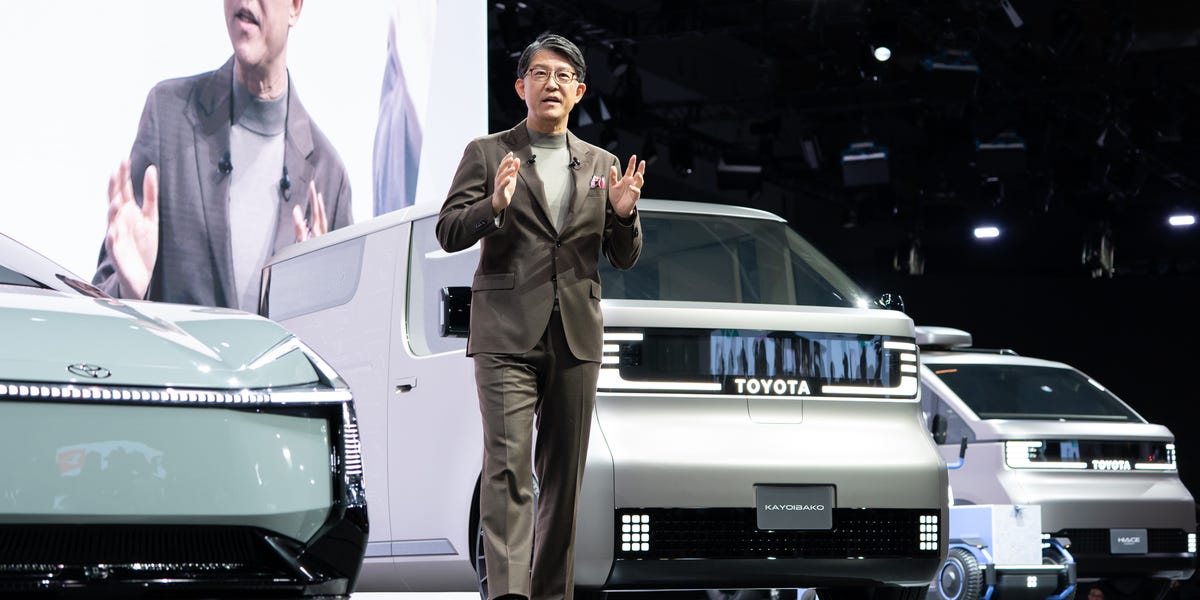
Image: © caranddriver.com
Latest

Toyota, Nissan, Honda Standardize Parts to Cut Costs

WireByte Staff · November 22, 2026

Japan's top three automakers—Toyota, Nissan, and Honda—have agreed to standardize internal vehicle components, including steel quality, plastic protocols, and wiring harness codes. Announced by JAMA chairman Koji Sato, the initiative aims to reduce production expenses by leveraging shared supply chains for non-visible parts, with international suppliers to join soon.

Key points

  • Toyota, Nissan, and Honda, Japan's largest automakers, have agreed to standardize internal vehicle parts to lower production costs.
  • The initiative was announced by Koji Sato, chairman of the Japan Automobile Manufacturers Association and vice chairman of Toyota, at a Tokyo news conference.
  • Initial standardization efforts will focus on unified steel quality criteria, consistent plastic and resin protocols, and universal color-coding for wiring harnesses.
  • These specific components were selected because they are not visible to consumers, preserving brand identity while addressing significant cost centers.
  • Discussions are currently underway with domestic Japanese suppliers, with plans to include international suppliers in the near future.
  • The Japan Automobile Manufacturers Association plans to expand the standardization to cover more components across the entire vehicle in the long term.

Strategic Alignment Among Japanese Automakers

In a significant move to bolster financial efficiency, Toyota, Nissan, and Honda have agreed to begin standardizing certain vehicle parts. This collaboration marks a rare instance of direct cooperation among Japan's three largest automakers, who have traditionally competed fiercely on design and engineering. The decision, reported by Automotive News, aims to reduce production costs by creating unified standards for materials and components that do not directly impact the consumer-facing appearance of the vehicles.

Koji Sato, who serves as both the chairman of the Japan Automobile Manufacturers Association (JAMA) and the vice chairman of Toyota, announced the agreement at a news conference in Tokyo this week. Sato highlighted the necessity of such measures in the current economic climate, where rising material and logistics costs threaten profit margins. By pooling their purchasing power and standardizing internal specifications, the automakers hope to achieve economies of scale that benefit their respective supply chains.

Initial Focus on Non-Visible Components

The first phase of this standardization effort targets three specific areas: steel quality, plastic and resin protocols, and wiring harness color-coding. These components were chosen strategically because they are generally not noticed by consumers. Standardizing these parts allows the automakers to streamline their supply chains without altering the aesthetic or brand-specific identity of their vehicles. This approach ensures that while the internal structure becomes more uniform, the external design and user experience remain distinct for each brand.

Unified quality criteria for steel will ensure that all three companies source materials meeting the same rigorous standards. Similarly, consistent protocols for plastics and resins will simplify the manufacturing process and reduce waste. A universal color-coding scheme for wiring harnesses is also being implemented to improve assembly efficiency and reduce errors in the production line. These changes are expected to have an immediate impact on production costs, as these materials account for a significant portion of the total expense in vehicle manufacturing.

Expanding the Scope and Supplier Involvement

While the initial focus is on these three areas, the Japan Automobile Manufacturers Association has plans to expand the standardization efforts to cover more components across the entire car in the long term. This broader strategy aims to create a more cohesive and efficient manufacturing ecosystem for Japanese automakers. The goal is to reduce complexity and redundancy in the supply chain, allowing for greater flexibility and resilience in the face of global market fluctuations.

Discussions regarding the implementation of these standards are currently focused on Japan’s domestic suppliers. The automakers are working closely with local vendors to establish the new protocols and ensure a smooth transition. However, the initiative is not limited to domestic partners. International suppliers are expected to be looped in soon, indicating that the standardization efforts will have a global impact on the automotive supply chain. This expansion suggests that the automakers are looking to influence industry standards beyond their immediate regional markets.

Implications for the Global Auto Industry

The move by Toyota, Nissan, and Honda to standardize parts reflects a broader trend in the automotive industry towards cost reduction and operational efficiency. As the sector faces pressure from rising costs, supply chain disruptions, and the transition to electric vehicles, such collaborative efforts may become more common. The success of this initiative could set a precedent for other automakers to follow, potentially reshaping how parts are sourced and manufactured globally.

For consumers, the immediate impact may be minimal, as the changes do not affect the visible aspects of the vehicles. However, the long-term implications could include more stable pricing and potentially faster production times as supply chains become more efficient. The automotive industry is closely watching this development to see how it influences competition and innovation in the years to come.

Key takeaways

  • Toyota, Nissan, and Honda are standardizing internal parts to reduce production costs.
  • Koji Sato of JAMA and Toyota announced the initiative at a Tokyo press conference.
  • Initial standards cover steel, plastics, and wiring harness color-coding.
  • These parts are non-visible to preserve brand identity.
  • Domestic suppliers are involved first, with international partners to join later.
  • JAMA plans to expand standardization to more components in the future.

Sources

  • caranddriver.com
WireByte Staff — Editorial Team

The WireByte editorial team synthesises technology news from multiple primary sources, verifies the facts, and links every source. Articles are produced with AI assistance and reviewed under our editorial policy.


More in Latest

Global Tech Outages: Coincidence or Coordinated Attack?

Global Tech Outages: Coincidence or Coordinated Attack?

A series of widespread IT failures affecting airlines, banks, and tech giants sparked gl…

Dragon Quest 11: A Guide for Busy Gamers

Dragon Quest 11: A Guide for Busy Gamers

Dragon Quest 11: Echoes of an Elusive Age offers a 86-hour JRPG experience adaptable for…

Charlie Brown's Kite-Eating Tree Remains Undefeated Icon After 61 Years

Charlie Brown's Kite-Eating Tree Remains Undefeated Icon After 61 Years

Sixty-one years after its debut, the Kite-Eating Tree from Charles Schulz's Peanuts rema…

technology news

Why 3D Printer Calibration Is Critical for Print Quality

3D printing failures often stem from uncalibrated hardware, leading to wasted filament a…

technology news

Audio Experts: In-Ear Earbuds Deliver Superior Sound Fidelity

Audio engineers emphasize that in-ear earbuds provide the best sound quality due to pass…

Latest

Captain Kirk's 'Risk is Our Business' Named Greatest Sci-Fi Quote

Captain Kirk's 'Risk is Our Business' Named Greatest Sci-Fi Quote

A recent analysis identifies Captain James T. Kirk’s line “Risk is our business” from St…

South Korea Education Minister Resigns Over AI Cheating Scandal

South Korea Education Minister Resigns Over AI Cheating Scandal

South Korea’s education minister resigned following a scandal where AI and hidden camera…

Global Tech Outages: Coincidence or Coordinated Attack?

Global Tech Outages: Coincidence or Coordinated Attack?

A series of widespread IT failures affecting airlines, banks, and tech giants sparked gl…

Berlin Club Apologizes After Military AI Launch Event Sparks Outrage

Berlin Club Apologizes After Military AI Launch Event Sparks Outrage

Kraftwerk Berlin apologized for hosting Helsing’s Clarity AI launch, describing it as a …

Home Network Congestion: Why More Devices Don't Always Mean Better Speed

Home Network Congestion: Why More Devices Don't Always Mean Better Speed

Connecting numerous devices to a home network can cause severe congestion, leading to bu…

Samsung and LG Battle for OLED TV Supremacy Amid Tech Disputes

Samsung and LG Battle for OLED TV Supremacy Amid Tech Disputes

Samsung and LG dominate the OLED TV market, each leveraging distinct panel technologies.…

Related articles

Global Tech Outages: Coincidence or Coordinated Attack? Latest Global Tech Outages: Coincidence or Coordinated Attack? WireByte

A series of widespread IT failures affecting airlines, banks, and tech giants sparked global conspiracy theories linking them to cyberattacks. While initial fears pointed to coordinated AI-driven threats, experts now attribute the disruptions to a string of unrelated coincidences, including software updates and infrastructure glitches, rather than a unified assault.

WireByte Staff · November 22, 2026

Dragon Quest 11: A Guide for Busy Gamers Latest Dragon Quest 11: A Guide for Busy Gamers WireByte

Dragon Quest 11: Echoes of an Elusive Age offers a 86-hour JRPG experience adaptable for short play sessions. Players can speed up battles, toggle random encounters, and save frequently at Sacred Stones. This flexibility allows completion of the 100-hour epic in fragmented time slots.

WireByte Staff · November 22, 2026

Charlie Brown's Kite-Eating Tree Remains Undefeated Icon After 61 Years Latest Charlie Brown's Kite-Eating Tree Remains Undefeated Icon After 61 Years WireByte

Sixty-one years after its debut, the Kite-Eating Tree from Charles Schulz's Peanuts remains a cultural symbol of persistent failure. Schulz based the character on real-world observations of kites disappearing into foliage. The tree’s enduring popularity highlights the comic’s unique blend of humor and melancholy, cementing its status as one of the franchise’s most recognizable antagonists.

WireByte Staff · November 22, 2026

technology news Latest Why 3D Printer Calibration Is Critical for Print Quality WireByte

3D printing failures often stem from uncalibrated hardware, leading to wasted filament and poor dimensional accuracy. Key steps include mechanical checks, bed leveling, Z-offset adjustments, and E-step calibration. Regular maintenance ensures consistent print quality, especially after hardware changes or printer relocation.

WireByte Staff · November 22, 2026

technology news Latest Audio Experts: In-Ear Earbuds Deliver Superior Sound Fidelity WireByte

Audio engineers emphasize that in-ear earbuds provide the best sound quality due to passive noise cancellation and secure fit. Unlike open-ear designs, these models block external distractions, maximizing perceived volume and detail. While comfort and price vary, proper eartip selection is crucial for optimal audio performance.

WireByte Staff · November 22, 2026

Captain Kirk's 'Risk is Our Business' Named Greatest Sci-Fi Quote Business & Economy Captain Kirk's 'Risk is Our Business' Named Greatest Sci-Fi Quote WireByte

A recent analysis identifies Captain James T. Kirk’s line “Risk is our business” from Star Trek’s second season as the franchise’s most significant dialogue. The quote, spoken in the episode “Return to Tomorrow,” is argued to better encapsulate Star Trek’s core themes of exploration and bravery than more famous catchphrases like “Live long and prosper.”

WireByte Staff · November 22, 2026

WireByte

Tech & AI news, synthesised and to the point.

Delivering original syntheses and breaking news with cited sources. Stay informed with WireByte.

Sections

  • AI & Machine Learning
  • Technology
  • Science
  • Space & Astronomy
  • Gaming & Esports

Company

  • About Us
  • Editorial Policy
  • Privacy Policy
  • Contact: [email protected]

Newsletters

Get the stories that matter, delivered to your inbox.

© 2026 WireByte. All rights reserved. Original syntheses with cited sources.

Home Search