WireByte
  • Log In
  • Sign Up
  • AI & Machine Learning
  • Technology
  • Science
  • Space & Astronomy
  • Gaming & Esports

Welcome Back

Log in to your WireByte account

Don't have an account? Sign Up

Create Account

Join WireByte for a personalized experience

Select your favorite categories:

Already have an account? Log In

Stay in the Loop

Get the stories that matter, delivered to your inbox.

You're all set! Check your inbox for a welcome email.

What do you want alerts for?

Search
Trending
WireByte
AI & Machine LearningTechnologyScienceSpace & AstronomyGaming & Esports

Home / World & Geopolitics

Berlin Club Apologizes After Military AI Launch Event Sparks Outrage
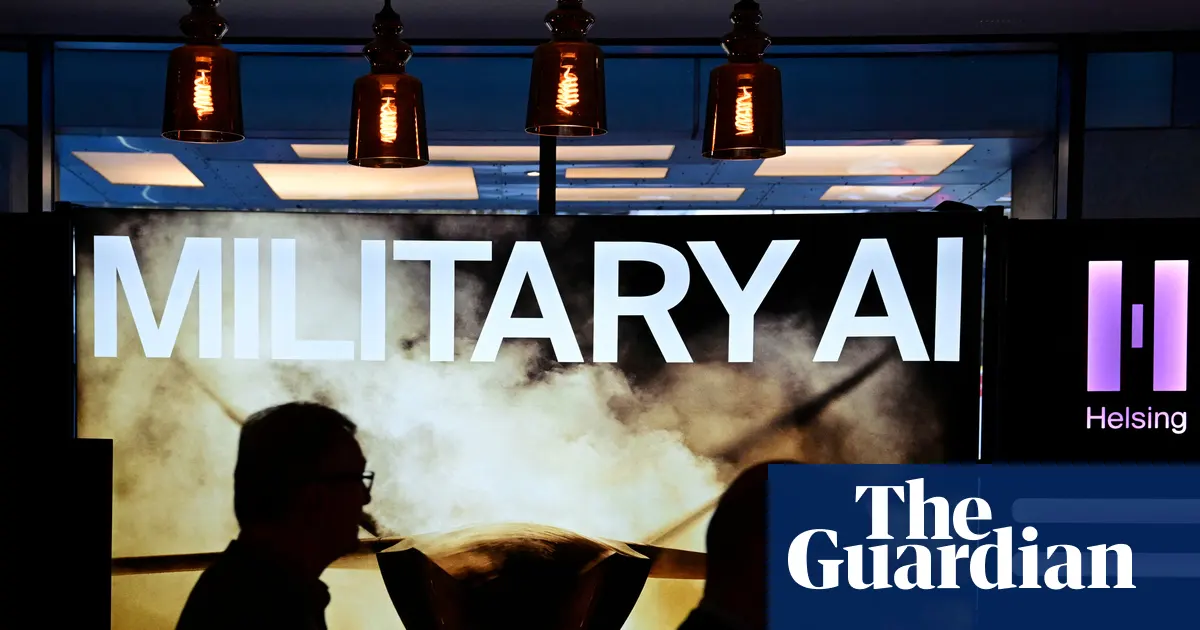
Image: © The Guardian
World & Geopolitics

Berlin Club Apologizes After Military AI Launch Event Sparks Outrage

WireByte Staff · November 22, 2026

Kraftwerk Berlin apologized for hosting Helsing’s Clarity AI launch, describing it as a serious error of judgment. The event, featuring drones and military-style security, drew backlash from the techno community. The controversy highlights tensions between Berlin’s pacifist culture and the growing commercialization of its nightlife venues for defense technology.

Key points

  • Kraftwerk Berlin, a prominent arts complex in Berlin, apologized for hosting a launch event for Helsing's Clarity AI targeting system on 11 November.
  • The event featured military-style elements including drones, aerial footage projections, and guards with sniffer dogs, which clashed with the venue's techno culture.
  • Helsing is a Munich-based arms startup founded in 2021, backed by investors including Spotify co-founder Daniel Ek.
  • The incident has sparked outrage within Berlin's music scene, raising questions about the commercialization of nightlife and the culture sector's traditional pacifism.
  • Kraftwerk Berlin has vowed to revise its commercial rental department's booking policy to prevent similar future events.

A Dystopian Clash in Berlin's Nightlife

Berlin’s reputation for edgy, post-industrial nightlife has long been built on a foundation of bleak aesthetics and techno beats. However, a recent event at one of the city's most iconic venues has pushed the boundaries of acceptability for many in the local community. On 11 November, the Kraftwerk Berlin arts complex hosted a launch for Clarity, an artificial intelligence targeting system developed by Helsing, a German arms startup. The event transformed the venue's central hall into what attendees described as resembling a war room, a stark departure from the typical club atmosphere.

Military Aesthetics Meet Techno Culture

The setup at Kraftwerk Berlin included maps and aerial footage projected onto concrete walls, drones hanging from the ceiling, and security guards wearing flak jackets. These guards were accompanied by sniffer dogs patrolling the premises. The venue, which is known for hosting the experimental music festival Atonal and shares a complex with the legendary techno club Tresor, attracted visitors who were initially unaware of the military nature of the event. The juxtaposition of high-tech defense technology with Berlin's renowned techno scene proved too dystopian for many seasoned club-goers.

The Company Behind the Controversy

Helsing, the Munich-based startup behind the Clarity system, was founded in 2021. The company has attracted significant attention in the tech and defense sectors, partly due to its high-profile investors. Among its backers is Daniel Ek, the co-founder of Spotify, who serves on Helsing's board. The presence of such prominent tech figures in the defense industry has intensified scrutiny on the intersection of consumer tech and military applications. The launch event was intended to showcase Clarity's capabilities, but the setting and presentation style sparked immediate controversy.

Backlash and Apology

The reaction from Berlin's music community was swift and negative. Many attendees expressed shock and anger at the militarization of a space traditionally associated with cultural expression and pacifism. In response to the outcry, Kraftwerk Berlin issued an apology, describing the decision to host the event as a "serious error of judgment." The arts complex acknowledged that the event did not align with the values of the local community or the typical character of its venues. The apology was accompanied by a commitment to review internal procedures to prevent similar incidents in the future.

Policy Changes and Broader Implications

Kraftwerk Berlin has vowed to revise its commercial rental department's booking policy. The changes aim to ensure that future events are more closely vetted for their alignment with the venue's cultural identity and the expectations of its patrons. This incident has raised uncomfortable questions about the commercialization of Berlin's famed nightlife. As security threats grow globally, there is an increasing pressure on the culture sector to adapt, but many in Berlin remain resistant to the encroachment of military and defense technologies into spaces of artistic and social gathering.

Key takeaways

  • Kraftwerk Berlin apologized for hosting Helsing's Clarity AI launch on 11 November, calling it a serious error of judgment.
  • The event featured military-style elements including drones, aerial footage, and guards with sniffer dogs, clashing with the venue's techno culture.
  • Helsing is a Munich-based arms startup founded in 2021, backed by investors including Spotify co-founder Daniel Ek.
  • The incident sparked outrage in Berlin's music scene, highlighting tensions between nightlife commercialization and traditional pacifism.
  • Kraftwerk Berlin is revising its rental policies to prevent similar future events from occurring at its venues.

Sources

  • theguardian.com
WireByte Staff — Editorial Team

The WireByte editorial team synthesises technology news from multiple primary sources, verifies the facts, and links every source. Articles are produced with AI assistance and reviewed under our editorial policy.


Latest

Captain Kirk's 'Risk is Our Business' Named Greatest Sci-Fi Quote

Captain Kirk's 'Risk is Our Business' Named Greatest Sci-Fi Quote

A recent analysis identifies Captain James T. Kirk’s line “Risk is our business” from St…

Toyota, Nissan, Honda Standardize Parts to Cut Costs

Toyota, Nissan, Honda Standardize Parts to Cut Costs

Japan's top three automakers—Toyota, Nissan, and Honda—have agreed to standardize intern…

South Korea Education Minister Resigns Over AI Cheating Scandal

South Korea Education Minister Resigns Over AI Cheating Scandal

South Korea’s education minister resigned following a scandal where AI and hidden camera…

Global Tech Outages: Coincidence or Coordinated Attack?

Global Tech Outages: Coincidence or Coordinated Attack?

A series of widespread IT failures affecting airlines, banks, and tech giants sparked gl…

Home Network Congestion: Why More Devices Don't Always Mean Better Speed

Home Network Congestion: Why More Devices Don't Always Mean Better Speed

Connecting numerous devices to a home network can cause severe congestion, leading to bu…

Samsung and LG Battle for OLED TV Supremacy Amid Tech Disputes

Samsung and LG Battle for OLED TV Supremacy Amid Tech Disputes

Samsung and LG dominate the OLED TV market, each leveraging distinct panel technologies.…

Related articles

Captain Kirk's 'Risk is Our Business' Named Greatest Sci-Fi Quote Business & Economy Captain Kirk's 'Risk is Our Business' Named Greatest Sci-Fi Quote WireByte

A recent analysis identifies Captain James T. Kirk’s line “Risk is our business” from Star Trek’s second season as the franchise’s most significant dialogue. The quote, spoken in the episode “Return to Tomorrow,” is argued to better encapsulate Star Trek’s core themes of exploration and bravery than more famous catchphrases like “Live long and prosper.”

WireByte Staff · November 22, 2026

Toyota, Nissan, Honda Standardize Parts to Cut Costs Latest Toyota, Nissan, Honda Standardize Parts to Cut Costs WireByte

Japan's top three automakers—Toyota, Nissan, and Honda—have agreed to standardize internal vehicle components, including steel quality, plastic protocols, and wiring harness codes. Announced by JAMA chairman Koji Sato, the initiative aims to reduce production expenses by leveraging shared supply chains for non-visible parts, with international suppliers to join soon.

WireByte Staff · November 22, 2026

South Korea Education Minister Resigns Over AI Cheating Scandal AI & Machine Learning South Korea Education Minister Resigns Over AI Cheating Scandal WireByte

South Korea’s education minister resigned following a scandal where AI and hidden cameras were used to cheat in national exams. The crisis peaked before the high-stakes suneung university entrance test, sparking public outrage over inadequate security. The minister accepted responsibility for failing to prevent cheating, marking a significant moment in the nation's battle against technology-facilitated academic dishonesty.

WireByte Staff · November 22, 2026

Global Tech Outages: Coincidence or Coordinated Attack? Latest Global Tech Outages: Coincidence or Coordinated Attack? WireByte

A series of widespread IT failures affecting airlines, banks, and tech giants sparked global conspiracy theories linking them to cyberattacks. While initial fears pointed to coordinated AI-driven threats, experts now attribute the disruptions to a string of unrelated coincidences, including software updates and infrastructure glitches, rather than a unified assault.

WireByte Staff · November 22, 2026

Home Network Congestion: Why More Devices Don't Always Mean Better Speed Technology Home Network Congestion: Why More Devices Don't Always Mean Better Speed WireByte

Connecting numerous devices to a home network can cause severe congestion, leading to buffering, lag, and slow downloads. While upgrading routers or internet plans is a common fix, bandwidth is shared among all connected gadgets. A single smartphone can consume significant resources, meaning performance issues often stem from total device load rather than just hardware limitations.

WireByte Staff · November 22, 2026

Samsung and LG Battle for OLED TV Supremacy Amid Tech Disputes Entertainment Samsung and LG Battle for OLED TV Supremacy Amid Tech Disputes WireByte

Samsung and LG dominate the OLED TV market, each leveraging distinct panel technologies. Since Samsung's 2022 return, its QD-OLEDs offer superior color saturation, while LG's long-standing expertise provides unique color pops. However, both manufacturers face criticism regarding technical transparency and recent quality issues, complicating consumer choices.

WireByte Staff · November 22, 2026

WireByte

Tech & AI news, synthesised and to the point.

Delivering original syntheses and breaking news with cited sources. Stay informed with WireByte.

Sections

  • AI & Machine Learning
  • Technology
  • Science
  • Space & Astronomy
  • Gaming & Esports

Company

  • About Us
  • Editorial Policy
  • Privacy Policy
  • Contact: [email protected]

Newsletters

Get the stories that matter, delivered to your inbox.

© 2026 WireByte. All rights reserved. Original syntheses with cited sources.

Home Search