Google Wallet Launches on iOS in US Without Tap-to-Pay
Google has released Google Wallet for iPhone in the United States, offering digital card storage and purchase management. The app excludes tap-to-pay functionality due to Apple's NFC restrictions. Users can digitize loyalty cards, manage online payments, and track deliveries. This move expands Google's ecosystem access on iOS, though full contactless payment capabilities remain unavailable until potential commercial agreements are reached.
Key points
- Google, the technology giant, has launched the Google Wallet application for iOS devices in the United States, providing a digital hub for cards and purchases.
- The app allows users to digitize loyalty and gym membership cards via camera scanning, manage online payment cards for Google Pay, and track agentic purchases and deliveries.
- Tap-to-pay functionality is currently unavailable on the iOS version because Apple restricts third-party access to NFC technology without specific commercial agreements.
- Apple began allowing third-party NFC contactless payments with iOS 18.1, but Google has not yet implemented this feature, likely due to pending fee structures or partnership terms.
- The launch positions Google Wallet as an alternative to Apple Wallet for managing digital assets, though it lacks the core contactless payment feature available on Android.
Google Wallet Arrives on iPhone with Limited Features
Google has officially released Google Wallet for iOS in the United States, marking a significant expansion of its digital payment and management ecosystem onto Apple’s mobile platform. The application is now available for iPhone users, offering a centralized interface for storing digital cards, managing online transactions, and tracking purchases. While the app serves as a functional alternative to Apple Wallet for many daily tasks, it notably lacks the ability to make contactless payments in retail stores, a key feature of the Android version.
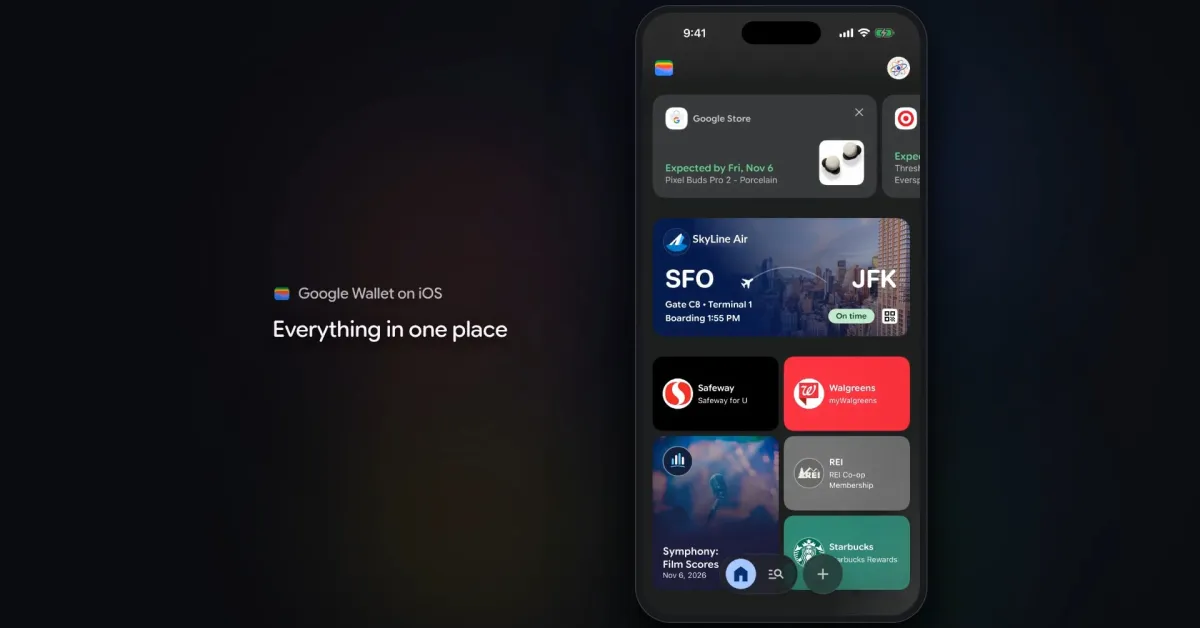
The primary use cases highlighted by Google for the iOS application focus on digital organization rather than direct point-of-sale transactions. Users can digitize physical loyalty cards, gym memberships, and gift cards by scanning them with their phone’s camera. The app’s interface, featuring a floating action button and a liquid glass navigation pill, allows for quick access to these stored items. The homepage displays a carousel of recent deliveries, boarding passes, and a grid of loyalty cards, providing a streamlined view of a user’s digital assets.
Payment Limitations and Apple’s NFC Restrictions
A critical distinction between the iOS and Android versions of Google Wallet is the absence of tap-to-pay functionality. Google Wallet on iPhone cannot be used to make payments at physical retail locations using Near Field Communication (NFC). This limitation stems from Apple’s control over the NFC hardware on iOS devices. Although Apple introduced support for third-party NFC contactless payments with the release of iOS 18.1, access to this technology requires a commercial agreement between the app developer and Apple.
Industry analysts suggest that Google has not yet integrated tap-to-pay into its iOS app because it has not finalized a commercial deal with Apple to cover the associated fees. While NFC access is available to developers in several countries including the United States, the United Kingdom, Canada, Australia, Brazil, Japan, and New Zealand, the implementation of contactless payments on iOS remains contingent on these business arrangements. Consequently, the current iOS version of Google Wallet is restricted to online checkouts via Google Pay and the management of digital cards.
Managing Digital Assets and Agentic Purchases
Beyond card storage, Google Wallet on iOS is designed to manage what the company terms "agentic purchases" across its services. The app syncs with Gmail and other Google applications to provide users with order confirmations, receipts, and delivery updates in one secure location. This integration allows users to view recent transactions associated with their Google account and manage payment methods saved to their profile for use in Chrome and other Google services.
The app also includes a camera scanner for digitizing additional items beyond loyalty cards, such as tickets and boarding passes, which can be pinned or unpinned from the homepage. This functionality aims to reduce reliance on physical cards and streamline the user experience for travel and retail loyalty programs. By consolidating these digital assets, Google seeks to create a secure hub that competes with Apple’s ecosystem offerings, even without the ability to tap and pay.
Strategic Implications for the Mobile Payment Landscape
The launch of Google Wallet on iOS represents a strategic move by Google to increase its presence on the world’s most popular mobile operating system. By offering a comprehensive solution for digital card management and purchase tracking, Google can attract users who prefer its interface or ecosystem integration over Apple’s. However, the lack of tap-to-pay limits the app’s utility in everyday physical transactions, where Apple Wallet holds a dominant position.
As Apple continues to open up NFC access to third-party developers, the pressure may increase on Google to finalize commercial agreements and enable full contactless payment capabilities. Until then, Google Wallet on iOS will serve primarily as a digital wallet for online transactions and card storage, filling a niche for users who wish to consolidate their digital credentials across platforms. The move underscores the ongoing competition between tech giants to define the future of mobile payments and digital identity management.
Key takeaways
- Google Wallet is now available on iOS in the US for storing digital cards and managing online purchases.
- The app lacks tap-to-pay functionality due to Apple’s restrictions on third-party NFC access.
- Users can digitize loyalty and gym cards using the phone’s camera and manage delivery updates.
- Apple’s iOS 18.1 allows third-party NFC payments, but Google has not yet implemented this feature.
- The launch expands Google’s ecosystem on iPhone, though it remains limited compared to the Android version.
Sources
The WireByte editorial team synthesises technology news from multiple primary sources, verifies the facts, and links every source. Articles are produced with AI assistance and reviewed under our editorial policy.