Signal Blocks AI Screenshots to Protect Privacy on iOS and Android
Signal has introduced screenshot and AI-scanning blocks on iOS 27 and Android to prevent Siri and Gemini from accessing private chats. Signal President Meredith Whittaker warns this is an existential privacy threat. The protections are unavailable on macOS due to OS limitations. Users can disable the blocks, but Signal cautions this exposes data to AI agents.
Key points
- Signal President Meredith Whittaker announced new protections on iOS 27 and Android to block Siri and Gemini AI assistants from scanning private chat content.
- The measures include disabling screenshots within the app and activating screen security settings when AI agents attempt to capture the display.
- Users can manually disable these privacy features in Signal settings, though the company warns this exposes messages to AI data collection.
- Signal cannot implement these protections on macOS because Apple and Google do not provide developers with sufficient tools to restrict AI access without compromising user experience.
- Whittaker described the current AI integration environment as an existential threat to Signal's mission and urged tech giants to improve developer controls.
Signal has introduced new technical safeguards on iOS 27 and Android devices designed to prevent artificial intelligence assistants from accessing private user data. The encrypted messaging service announced that it is actively blocking screenshots and screen capture capabilities within its application to stop AI agents from reading on-screen content. This move addresses growing concerns regarding the integration of agentic AI features into mobile operating systems, which increasingly analyze screen data to perform tasks for users.
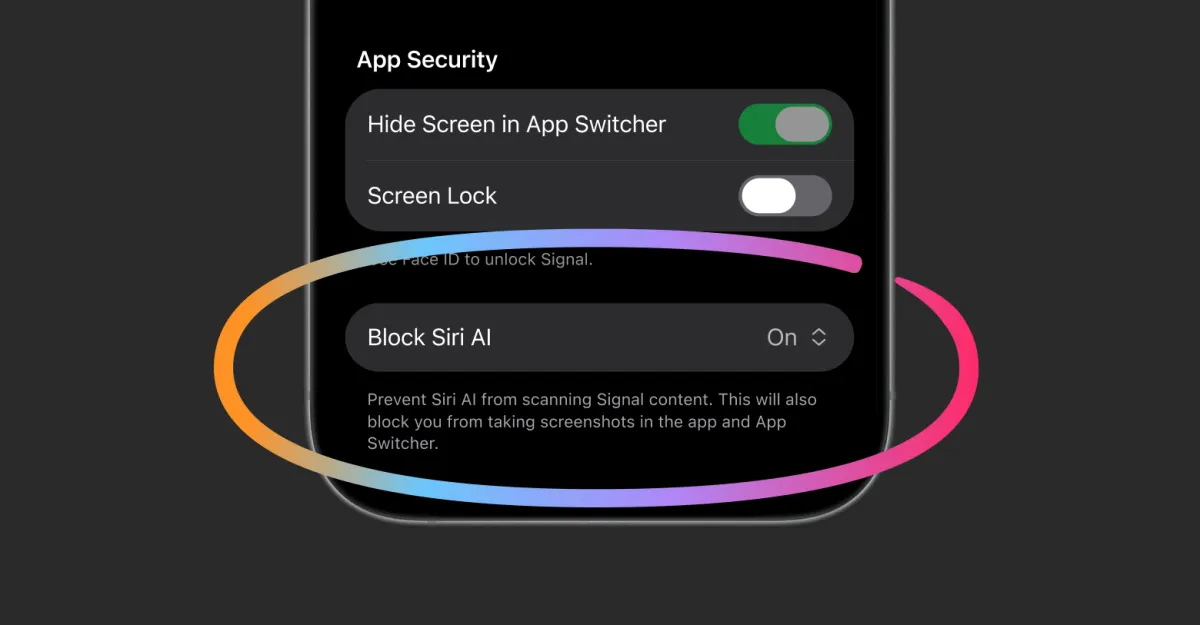
Signal President Meredith Whittaker detailed the initiative in a blog post, stating that the new features are a direct response to the rising prevalence of AI systems that scan device displays. On iOS 27, Signal has introduced a default setting called Block Siri AI. This setting prevents Siri from scanning Signal content and also disables screenshots within the app and the App Switcher. On Android, Signal automatically enables its Screen security setting when it detects an AI assistant attempting to read the screen. These mechanisms are intended to stop AI agents like Gemini Intelligence and Siri Onscreen Awareness from capturing sensitive information.
The company emphasized that these protections are not absolute and can be overridden by users. Signal allows individuals to disable the screenshot blocks and AI restrictions through the app settings. However, Whittaker issued a stern warning regarding this option. She stated that turning off these protections could expose both the user's and their contacts' messages to AI agents, thereby breaking Signal's privacy guarantees. The company aims to make these safeguards the default experience while still providing users with control over their device settings.
A significant limitation of the current rollout is the absence of similar protections on macOS. Signal confirmed that it is unable to implement these privacy measures on Apple's desktop operating system. Whittaker explained that the lack of robust tools provided by operating system providers makes it impossible to restrict AI data access without making drastic compromises to the core user experience. She highlighted that Google, Apple, Microsoft, and other tech giants do not currently offer developers easy ways to limit AI access without impacting functionality.
Whittaker characterized the current landscape of AI integration as an existential threat to Signal. She argued that agentic AI integrations are changing the digital environment in ways that are increasingly hostile to privacy. The ability of AI systems to capture and store data in local databases or remote servers outside of Signal's control undermines the company's ability to independently guarantee privacy. This situation places pressure on app developers to find solutions that do not sacrifice user trust or security.
The announcement comes as major technology companies expand the capabilities of their AI assistants. Google has been rolling out Gemini Intelligence on Android, allowing the assistant to order food and book rides using third-party apps. Apple has similarly enhanced Siri with onscreen awareness features on iOS 27. Microsoft is also developing computer-use capabilities for Macs. These advancements allow AI to act on behalf of users, but they also raise significant privacy questions about what data is being processed and stored.
Signal is calling on Google, Apple, and Microsoft to provide better tools for app developers. The company argues that developers need more granular control over what data AI agents can access. Without such tools, Signal and other privacy-focused applications are forced to make difficult choices between functionality and security. The company hopes that its actions will highlight the need for industry-wide changes in how AI systems interact with private applications.
This development reflects a broader tension between the convenience of AI assistants and the right to privacy. As AI becomes more integrated into daily digital life, users are increasingly concerned about the extent to which their personal communications are being monitored. Signal's move to block screenshots and AI scanning is a proactive step to maintain its reputation as a secure communication platform. The company's stance may influence how other privacy-focused apps approach AI integration in the future.
The impact of Signal's new features will depend on user adoption and the response from operating system providers. If users continue to disable the protections, the effectiveness of the measures may be limited. However, the announcement has already drawn attention to the privacy risks associated with agentic AI. Signal's call for better developer tools may prompt tech companies to reconsider how they design AI access permissions. The situation remains dynamic as the industry grapples with the implications of AI on personal data.
Key takeaways
- Signal blocks screenshots and AI scanning on iOS 27 and Android to protect private chats.
- The measures target Siri and Gemini AI agents that scan screen content.
- Users can disable protections, but Signal warns this exposes data to AI agents.
- macOS protections are unavailable due to lack of developer tools from Apple and Google.
- Signal President Meredith Whittaker calls current AI integration an existential privacy threat.
Sources
The WireByte editorial team synthesises technology news from multiple primary sources, verifies the facts, and links every source. Articles are produced with AI assistance and reviewed under our editorial policy.