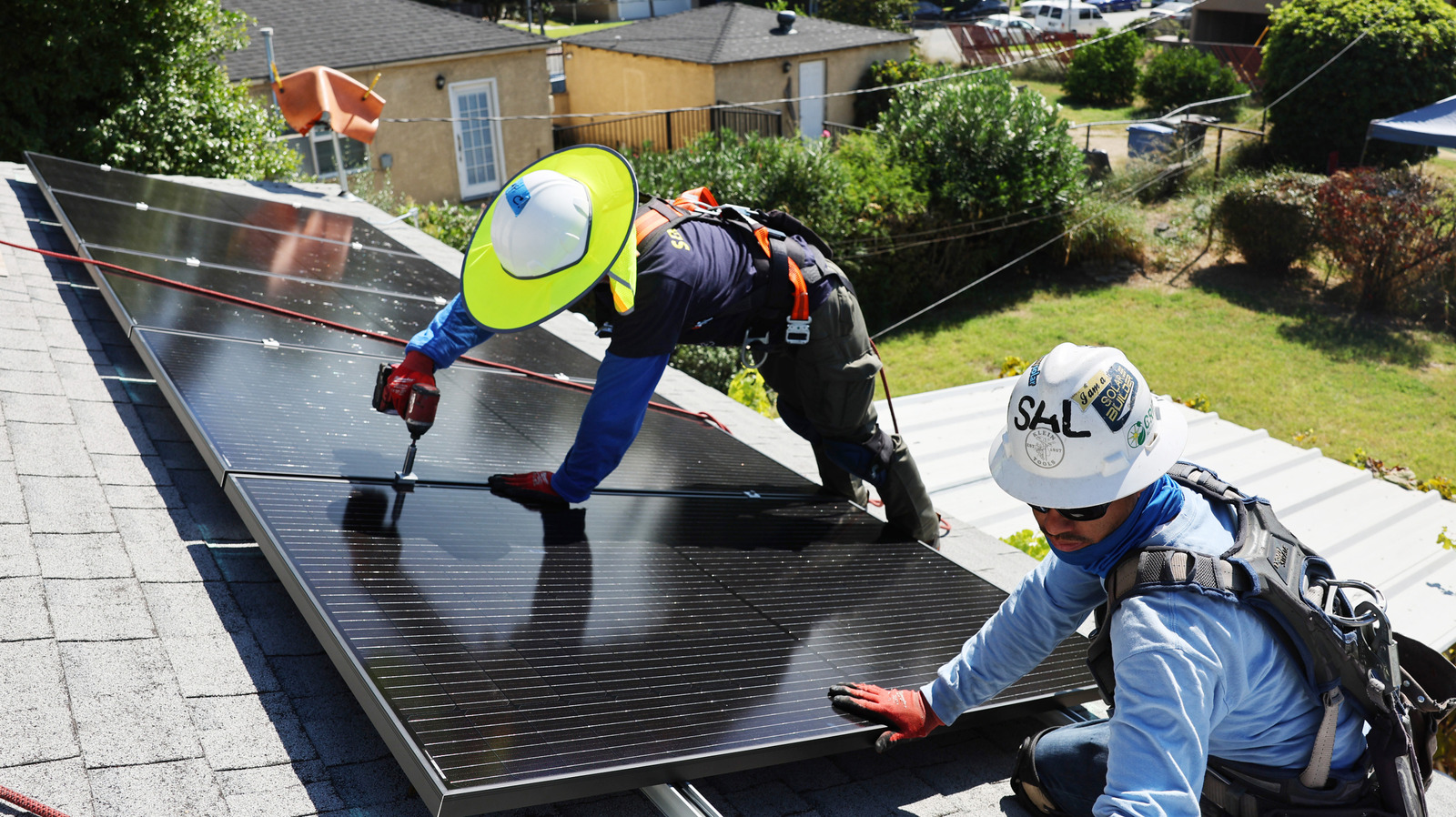
US Solar Installations Constrained by Fire Safety '33 Percent Rule'
US residential solar installations are limited by fire codes requiring roof setbacks for firefighter access. Known as the 33 percent rule, it mandates wider clearances when arrays exceed one-third of roof area. This regulation, distinct from inverter sizing guidelines, varies by local jurisdiction, impacting energy costs and rooftop capacity nationwide.
Key points
- The 33 percent rule is a US fire and building code requirement designed to ensure firefighter access to roofs with solar panels.
- Arrays occupying 33 percent or less of roof area require an 18-inch setback from the ridge, while larger arrays need a 36-inch setback.
- The regulation is defined by the International Residential Code, NFPA, and International Fire Code, though local jurisdictions may apply it differently.
- This safety rule is often confused with a separate inverter sizing guideline that allows panels to exceed inverter capacity by 33 percent.
- Variations in local building codes mean installation permissions and required setbacks can differ significantly between towns.
Navigating Fire Safety Regulations for Rooftop Solar
Rising energy costs have driven a surge in interest for residential solar power, prompting many homeowners to consider maximizing their rooftop capacity. However, the physical installation of these systems is not unlimited. In the United States, the number of panels that can be installed is strictly constrained by fire safety regulations known collectively as the 33 percent rule. These guidelines are not merely suggestions but are embedded in residential fire and building codes, creating a complex landscape for installers and homeowners alike.
The core purpose of the 33 percent rule is to ensure that firefighters can safely access and operate on roofs equipped with solar arrays. To achieve this, the codes mandate specific setbacks and access pathways. The International Residential Code, specifically Section R324.6, the NFPA Section 11.12, and the International Fire Code Section 1204, all contribute to this framework. These standards dictate that clearances must be maintained around the ridge of the roof to allow for safe movement and ventilation during emergency operations.
The specifics of the rule depend on the density of the solar installation. If a solar panel array occupies 33 percent or less of the total roof area, the code typically requires an 18-inch setback on each side of the ridge. This smaller clearance is deemed sufficient for firefighter access when the panels do not cover a significant portion of the roof. However, as the array size increases, the required safety margins expand.
When a solar array takes up more than 33 percent of the total roof area, the requirements become more stringent. In these cases, installers must typically provide a 36-inch setback on each side of the ridge. Additionally, access pathways of at least 36 inches in width are required. These wider clearances are necessary to mitigate risks associated with larger, more densely packed solar installations, ensuring that emergency responders are not hindered by the presence of extensive photovoltaic equipment.
A common source of confusion arises from the terminology used in the industry. The term 33 percent rule is also used to describe a different guideline related to electrical components. This separate rule pertains to inverter sizing, stating that a solar inverter can typically handle panels totaling up to 133 percent of its stated capacity. This electrical guideline is distinct from the fire safety setbacks and should not be conflated with the physical installation requirements.
The application of these fire safety rules is not uniform across the country. Because the 33 percent rule is enforced through local building codes, the specific requirements can vary significantly from one municipality to another. What is permitted in one town may not be allowed in a neighboring jurisdiction. This variability adds a layer of complexity to solar installations, requiring homeowners and installers to consult local authorities to determine the exact setbacks and access requirements for their specific location.
This regulatory environment has direct implications for the economics of solar power. Homeowners seeking to maximize energy production may find that their ability to fill their roofs with panels is limited by these safety codes. The need for setbacks reduces the total available area for solar arrays, potentially increasing the cost per watt of installed capacity. As energy prices continue to fluctuate, these regulatory constraints play a crucial role in determining the feasibility and return on investment for residential solar projects.
Key takeaways
- The 33 percent rule is a US fire code requiring setbacks for firefighter access to roofs with solar panels.
- Arrays covering 33 percent or less of the roof require an 18-inch ridge setback, while larger arrays need 36 inches.
- The rule is based on the International Residential Code, NFPA, and International Fire Code standards.
- It is distinct from the inverter sizing guideline that allows panels to exceed inverter capacity by 33 percent.
- Local building codes determine the exact application, leading to variations in requirements between towns.
Sources
The WireByte editorial team synthesises technology news from multiple primary sources, verifies the facts, and links every source. Articles are produced with AI assistance and reviewed under our editorial policy.