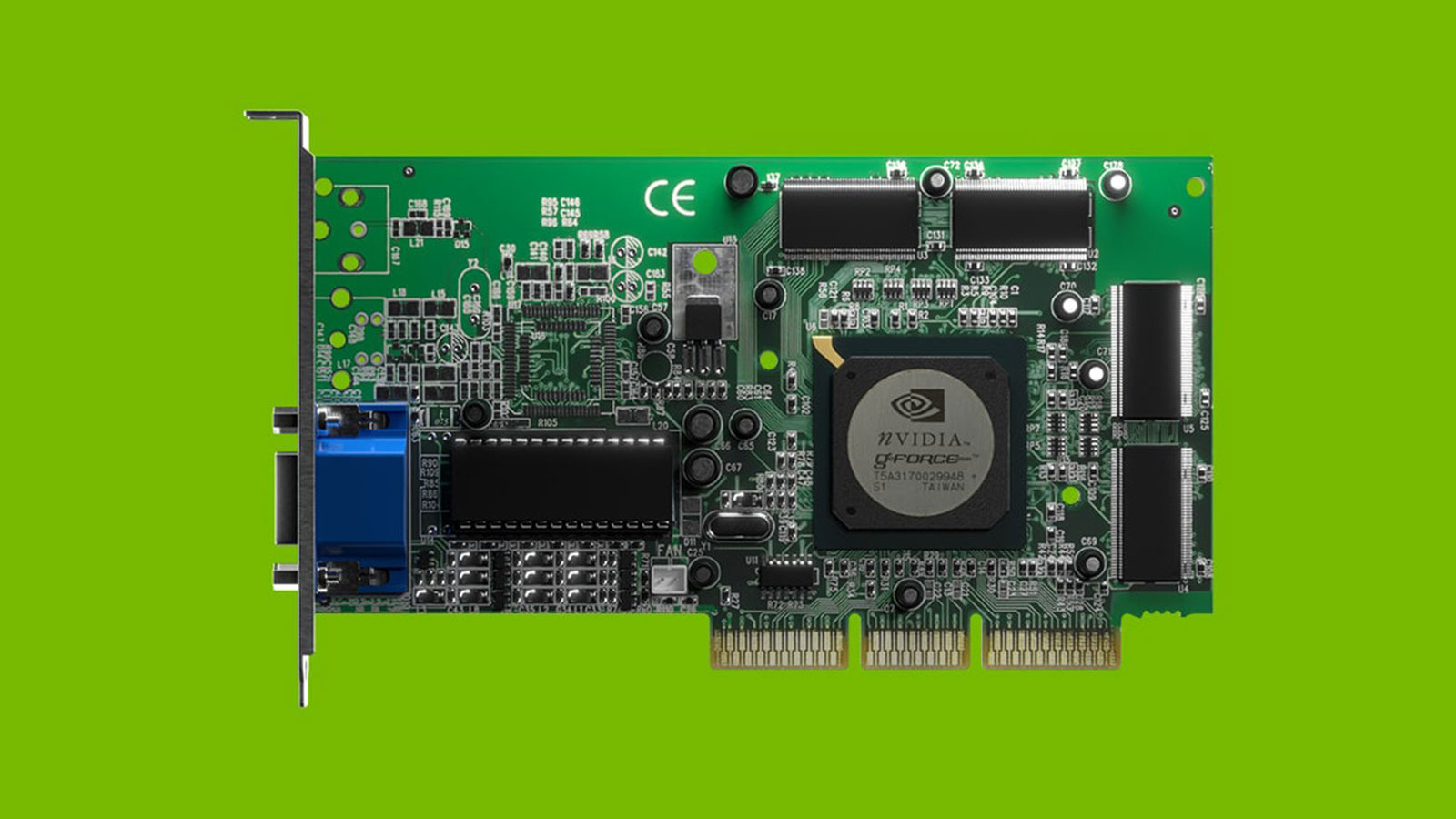
NVIDIA GeForce 256: The 1999 GPU That Defined the Industry
In 1999, NVIDIA launched the GeForce 256, the world's first graphics processing unit. Despite modest specs like 17 million transistors, it introduced hardware T&L, shifting 3D rendering from CPUs to GPUs. This innovation established NVIDIA's dominance, eventually capturing 95% of the gaming GPU market against rivals like 3dfx and ATI.
Key points
- NVIDIA launched the GeForce 256 in 1999, marketing it as the world's first true graphics processing unit (GPU).
- The card featured 17 million transistors and up to 64MB of memory, introducing hardware Transform and Lighting (T&L).
- It competed against market leader 3dfx and ATI Technologies, with NVIDIA controlling 95% of the gaming GPU market in recent years.
- The introduction of the GPU architecture shifted 3D rendering responsibilities from the CPU to the graphics card.
- This technological shift laid the foundation for NVIDIA's long-term dominance in the PC gaming hardware industry.
A Revolutionary Definition of Graphics Hardware
In 1999, the technology landscape was dominated by the cultural phenomenon of The Matrix and the looming anxiety of the Y2K bug. Amidst this backdrop, NVIDIA introduced its first product to carry the GeForce name: the GeForce 256. While modern standards might view its specifications as modest, the card was a pivotal moment in computing history. It was marketed not just as a video card, but as the world's first graphics processing unit, or GPU. This distinction was not merely semantic; it represented a fundamental architectural shift in how computers handled 3D graphics.
The Technical Leap: Hardware T&L
The GeForce 256 contained 17 million transistors and offered up to 64MB of memory, depending on the specific model. To contextualize this, entry-level modern cards like the GeForce RTX 5050 boast 16.9 billion transistors and 8GB of VRAM. However, the 256's significance lay in its capabilities rather than raw power. It was the first card to include hardware Transform and Lighting (T&L). Before this innovation, the CPU was responsible for calculating the position of 3D objects and their lighting. The GeForce 256 offloaded these tasks, allowing for more complex and realistic 3D environments without bogging down the central processor.
The Competitive Landscape of 1999
At the time of the GeForce 256's release, NVIDIA was one of three major players in the PC gaming GPU market. The dominant force was 3dfx, known for its popular Voodoo line of 3D accelerators. ATI Technologies, which AMD would not acquire for nearly seven years, was another key competitor. NVIDIA's market share was far from guaranteed. The launch of the GeForce 256 was a strategic move to challenge 3dfx's supremacy by offering a more integrated solution that reduced the need for additional CPU processing power.
Shifting the Industry Paradigm
The introduction of the GPU changed the trajectory of the PC gaming industry. By handling 3D rendering tasks directly on the graphics card, NVIDIA enabled developers to create more sophisticated games with less strain on the system's overall resources. This shift allowed for a new era of graphical fidelity and performance. The GeForce 256 proved that dedicated hardware for graphics processing was not just an enhancement but a necessity for the future of gaming.
Long-Term Dominance
Today, NVIDIA controls as much as 95 percent of the gaming GPU market. This dominance is rooted in the innovations started with the GeForce 256. The decision to market the card as a GPU rather than just a video card established a new category of hardware. It forced competitors to adapt and paved the way for NVIDIA's expansion into professional graphics, AI, and data center computing. The GeForce 256 remains an iconic product, marking the moment NVIDIA transitioned from a niche player to an industry leader.
Legacy of the GeForce 256
The GeForce 256's legacy is evident in every modern graphics card. The concept of the GPU has become so ingrained that it is now the standard for all 3D rendering. The card's success demonstrated the value of specialized hardware in personal computing. It set the stage for the rapid advancements in graphics technology that have followed over the last two decades. The 1999 launch was not just a product release; it was the beginning of a new era in computer graphics.
Key takeaways
- NVIDIA launched the GeForce 256 in 1999 as the world's first true GPU.
- The card featured 17 million transistors and introduced hardware Transform and Lighting.
- It competed against market leader 3dfx and ATI Technologies in a shifting market.
- The GPU architecture offloaded 3D rendering from the CPU, enhancing performance.
- This innovation laid the foundation for NVIDIA's 95% market share in gaming GPUs today.
Sources
The WireByte editorial team synthesises technology news from multiple primary sources, verifies the facts, and links every source. Articles are produced with AI assistance and reviewed under our editorial policy.