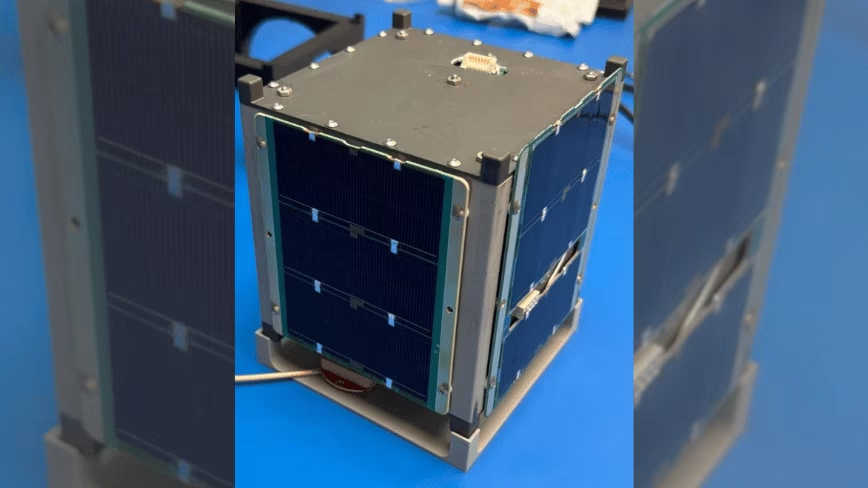
Tritium-Powered Satellite Reaches Orbit
City Labs' BOHR satellite, a nuclear-powered CubeSat, has successfully reached orbit on a SpaceX Falcon 9 rideshare. The satellite's nuclear battery, powered by tritium, aims to prove its functionality in space. This technology could provide long-lasting power for future lunar missions and deep space sensors.
Key points
- City Labs' BOHR satellite, a nuclear-powered CubeSat, has reached orbit on a SpaceX Falcon 9 rideshare.
- The satellite's nuclear battery, powered by tritium, is designed to provide long-lasting power for future lunar missions and deep space sensors.
- The battery's output is minute, ranging from nanowatts to microwatts, but can last for decades.
- This technology could address the need for power in permanently shadowed craters on the Moon and deep space environments.
- The mission aims to prove the functionality of the tritium-powered battery in space.
City Labs' BOHR satellite, a nuclear-powered CubeSat, has made history by becoming the first commercial nuclear-powered satellite to reach orbit. Launched on a SpaceX Falcon 9 rideshare on July 7, BOHR is about the size of a softball and is designed to test the functionality of its tritium-powered battery in space.
The battery, which is powered by tritium, a radioactive form of hydrogen, is a significant innovation in space technology. As the tritium decays, it gives off beta particles that strike a semiconductor and generate a trickle of electric current. This technology has the potential to provide long-lasting power for future lunar missions and deep space sensors.
The timing of this launch is significant, as NASA's Artemis program aims to return people to the Moon in the near future. Engineers need power sources that can survive long lunar nights and permanently shadowed craters, where solar panels are ineffective. The tritium-powered battery could address this need and provide a reliable source of power for future missions.
While the output of the battery is minute, ranging from nanowatts to microwatts, it can last for decades, making it an attractive option for long-duration space missions. The mission aims to prove the functionality of the tritium-powered battery in space and demonstrate its potential for future applications.
Sources
The WireByte editorial team synthesises technology news from multiple primary sources, verifies the facts, and links every source. Articles are produced with AI assistance and reviewed under our editorial policy.