Ring Launches Autonomous Drone and Rover Security Robots
Amazon’s Ring unveiled its new robotics division, introducing the $249.99 Ring Drone Cam and the $999.99 Rover Cam. Powered by AI Pilot navigation, these autonomous devices patrol homes and businesses, responding to sensor triggers. The Drone Cam ships January 27, 2027, marking the end of a decade-long development cycle for indoor security drones.
Key points
- Ring Robotics, a new division of Amazon-owned Ring, launched two autonomous security devices: the Ring Drone Cam and the Rover Cam.
- The Ring Drone Cam, priced at $249.99, is a 165-gram indoor flying camera with 2K resolution, scheduled to ship on January 27, 2027.
- The Ring Rover Cam, priced at $999.99, is a wheeled enterprise robot built on the Amazon Astro platform, featuring 4K recording and a siren.
- Both devices utilize 'AI Pilot,' a cloud-based navigation system that maps interiors and autonomously routes the devices to triggered sensors.
- Ring founder Jamie Siminoff confirmed the launch ends a decade of development, citing previous prototypes that failed to ship due to technical and privacy constraints.
- The devices integrate with existing Ring security ecosystems, allowing users to set patrol schedules or trigger automatic investigations via the Ring app.
Ring Enters the Robotics Market
Amazon’s home security brand Ring has officially launched a new division called Ring Robotics, marking a significant expansion into autonomous mobile security hardware. The company unveiled two primary devices designed to patrol indoor environments: the Ring Drone Cam for residential use and the Rover Cam for commercial applications. This launch follows a decade-long development period, with Ring founder Jamie Siminoff noting that the company has been exploring drone concepts since 2016, prior to Amazon’s acquisition of Ring in 2018.
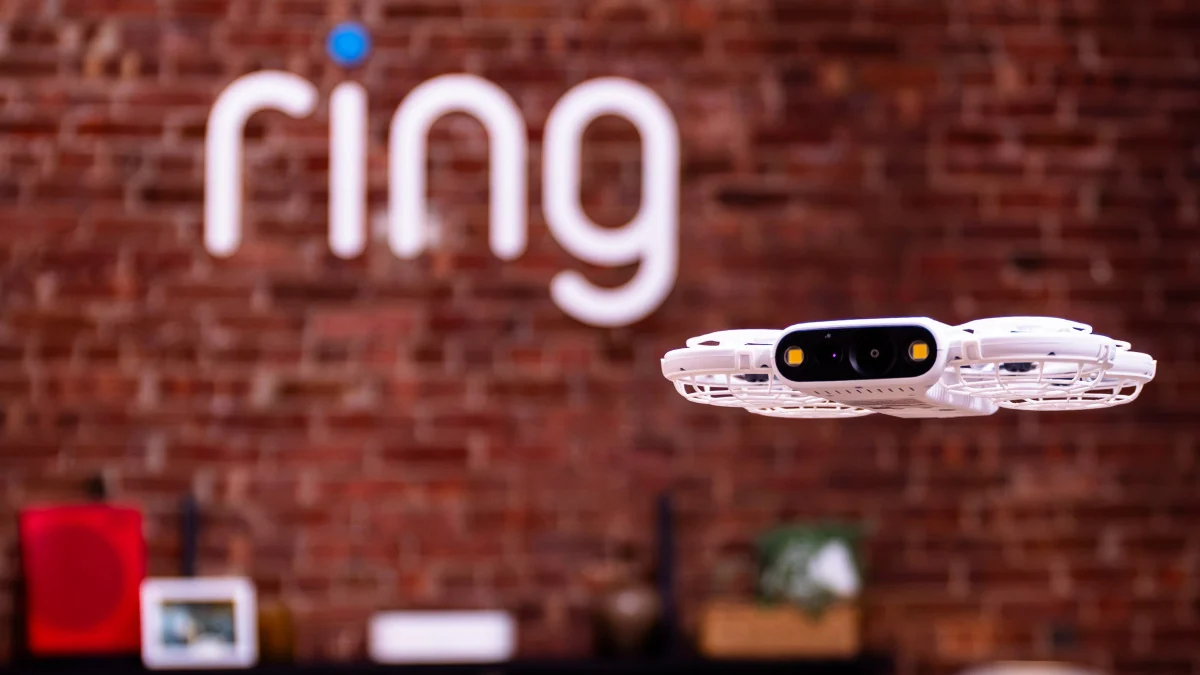
The Ring Drone Cam is a small, quadcopter-style device weighing just 165 grams. Priced at $249.99, it is scheduled to begin shipping on January 27, 2027. The device features a 2K front-facing camera and a 1080p underside camera, supplemented by LED lights that serve both as illumination for low-light recording and as a deterrent to intruders. Ring emphasizes that the drone is designed to be seen and heard, resembling the action of a security guard with a flashlight when navigating dark spaces.
Autonomous Navigation via AI Pilot
A core component of the new robotics line is AI Pilot, a custom navigation software that powers both the drone and the rover. This system utilizes the devices’ cameras, on-device sensors, and cloud processing to create detailed maps of interior spaces. Instead of requiring manual remote control, the devices autonomously navigate around obstacles such as furniture and shelving. Users can establish patrol points for specific areas like windows or doors, and the AI plans efficient routes between them.
The Rover Cam, priced at $999.99, is built on the platform of Amazon’s Astro home robot. It features a telescoping camera capable of continuous 4K recording, two-way audio, and a built-in siren. While the Drone Cam is strictly for indoor residential use, the Rover Cam is pitched toward businesses and larger commercial spaces. Both devices can be activated manually, set on fixed schedules, or triggered automatically by other Ring security sensors, such as door alarms or leak detectors.
A Decade in the Making
Ring’s path to this launch has been marked by several aborted attempts. Siminoff revealed that a previous prototype was ready to ship in 2021 but was ultimately cancelled due to design trade-offs, limited flight time, and privacy concerns. Another attempt in 2025 also failed to reach the market. The company’s current strategy focuses on simplifying the hardware by removing excess onboard sensors, relying instead on cloud-based AI to handle complex navigation and decision-making. This approach allows for a lighter, more cost-effective device.
Market Reaction and Privacy
The launch of autonomous indoor drones has sparked debate regarding privacy and surveillance. Ring has stated that the Drone Cam records only while in flight and remains inactive and covered when docked. However, the concept of a flying camera patrolling private spaces continues to raise questions among privacy advocates. Siminoff acknowledged the sensitivity of the topic, insisting that the devices are designed to replace the need for multiple fixed cameras while providing comprehensive coverage.
What Comes Next
With the Drone Cam set for early 2027 release, Ring is positioning itself at the forefront of the consumer robotics security market. The company indicated that more products are likely to follow under the Ring Robotics banner. As the technology matures, the integration of these autonomous devices into broader smart home ecosystems will be critical. The success of the Ring Drone Cam and Rover Cam will depend on their ability to navigate complex home environments reliably while addressing consumer concerns about noise, privacy, and safety.
Sources
The WireByte editorial team synthesises technology news from multiple primary sources, verifies the facts, and links every source. Articles are produced with AI assistance and reviewed under our editorial policy.