Trump Proposes Ban on US AI Data Centers Overseas
President Trump announced a potential ban on US companies building AI data centers abroad, threatening heavy taxes for violations. The move aims to keep AI infrastructure domestic to counter China. Details remain vague, with Trump admitting he had not yet discussed the policy with his team. Enforcement and legal feasibility are currently unclear as the administration considers the proposal.
Key points
- President Donald Trump proposed a ban on US firms constructing AI data centers outside the United States to prevent China from gaining an advantage in artificial intelligence.
- The President threatened a "tremendous tax" on companies that violate the proposed restriction, stating, "We're not going to allow our companies to build data centres outside of our country."
- Trump admitted he had not previously discussed the policy with his cabinet, telling reporters, "I haven't even said that to my people. But I'm telling them now, they're here."
- The announcement follows recent US restrictions on advanced computer chip exports and aims to keep AI infrastructure within US borders amid midterm election concerns.
- It remains unclear how such a policy would be enforced or if it will become official law, as no specific legislative framework or implementation details have been provided.
A New Stance on Global AI Infrastructure
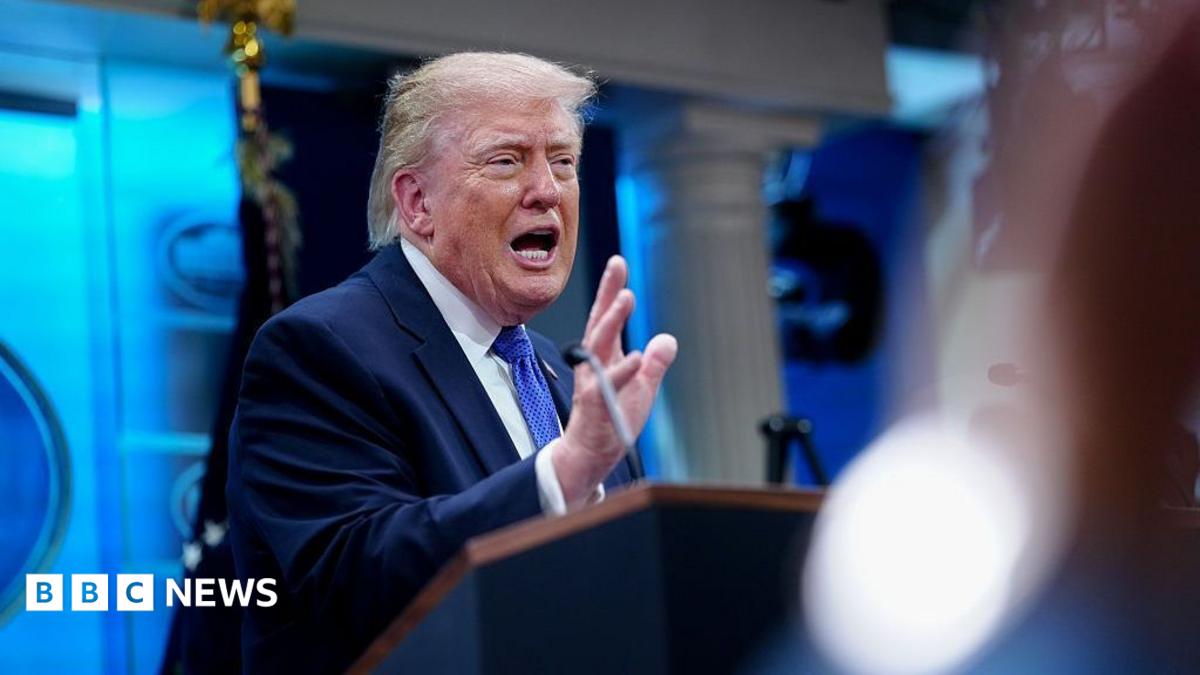
President Donald Trump has announced a potential policy shift that would prohibit US technology companies from constructing artificial intelligence data centers overseas. During a press briefing following his return from a trip to Asia, the President stated that the administration intends to keep such critical infrastructure within the United States. He warned that companies violating this directive could face a "tremendous tax," signaling a hardline approach to maintaining domestic control over the rapidly expanding AI sector.
Countering Chinese Influence
The core rationale behind the proposal appears to be geopolitical competition with China. Trump explicitly linked the ban to national security and technological supremacy, stating, "Because China will take all of them, and we're not allowing that to happen." He framed the issue as a race for "super intelligence," or SI, asserting that the US must lead in data center construction to prevent Beijing from gaining a strategic advantage. This stance aligns with broader US efforts to restrict the export of advanced computer chips and limit foreign access to high-performance computing power, measures announced earlier in the week.
Lack of Policy Detail
Despite the bold declaration, the President provided minimal specifics regarding the mechanics of the proposed ban. When pressed on the details, Trump admitted that the idea was not yet fully developed within his administration. "I don't know if that's a breaking story, but I haven't even said that to my people. But I'm telling them now, they're here," he said. This admission suggests that the policy is in its earliest conceptual stages, with no formal regulatory framework or legislative text currently in place.
Industry Implications
The announcement comes at a time when major tech giants, including Meta and Google, have entered into agreements to build data centers in overseas locations. These expansions are part of a global effort to expand cloud computing capacity and serve international markets. A ban on overseas construction would significantly disrupt these plans, potentially forcing companies to accelerate domestic builds or face substantial financial penalties. The tech industry, which has increasingly relied on global supply chains and international data hubs, may need to reassess its long-term infrastructure strategies.
Political Context and Enforcement
The issue of data center construction has become a focal point in US domestic politics, particularly during the midterm elections held earlier in November. Many Democratic candidates have campaigned on tougher regulations regarding the environmental and economic impact of these facilities. Trump’s proposal, while framed as a national security measure, intersects with these domestic regulatory debates. However, the practical enforcement of such a ban remains a significant hurdle. It is unclear how the administration would monitor and penalize companies that choose to build abroad, especially given the global nature of the tech industry and existing international trade agreements.
Next Steps
As of now, the proposal remains a statement of intent rather than enacted law. The administration has not released a timeline for implementation or a detailed plan for enforcement. Industry analysts and legal experts are likely to scrutinize the feasibility of the ban, particularly regarding its compatibility with existing international trade obligations. The White House has not yet issued a formal statement elaborating on the policy, leaving the tech sector in a state of uncertainty. Any future developments will likely involve consultations with cabinet members and relevant regulatory bodies to determine the viability and scope of the restriction.
Key takeaways
- President Trump proposed banning US firms from building AI data centers abroad to counter China's influence.
- The President threatened a "tremendous tax" on companies that violate the proposed restriction.
- Trump admitted he had not previously discussed the policy with his cabinet or developed specific details.
- The move aligns with recent US restrictions on advanced computer chip exports and access to computing power.
- Major tech companies like Meta and Google, which have overseas expansion plans, may face significant disruptions.
- Enforcement mechanisms and legal feasibility remain unclear as the policy is in its early conceptual stages.
Sources
The WireByte editorial team synthesises technology news from multiple primary sources, verifies the facts, and links every source. Articles are produced with AI assistance and reviewed under our editorial policy.