WireByte
  • Log In
  • Sign Up
  • AI & Machine Learning
  • Technology
  • Science
  • Space & Astronomy
  • Gaming & Esports

Welcome Back

Log in to your WireByte account

Don't have an account? Sign Up

Create Account

Join WireByte for a personalized experience

Select your favorite categories:

Already have an account? Log In

Stay in the Loop

Get the stories that matter, delivered to your inbox.

You're all set! Check your inbox for a welcome email.

What do you want alerts for?

Search
Trending
WireByte
AI & Machine LearningTechnologyScienceSpace & AstronomyGaming & Esports

Home / Technology

Oppo Launches Find X10 Pro Max with Triple 200MP Camera System
Image: © bgr.com
Technology

Oppo Launches Find X10 Pro Max with Triple 200MP Camera System

WireByte Staff · November 28, 2026

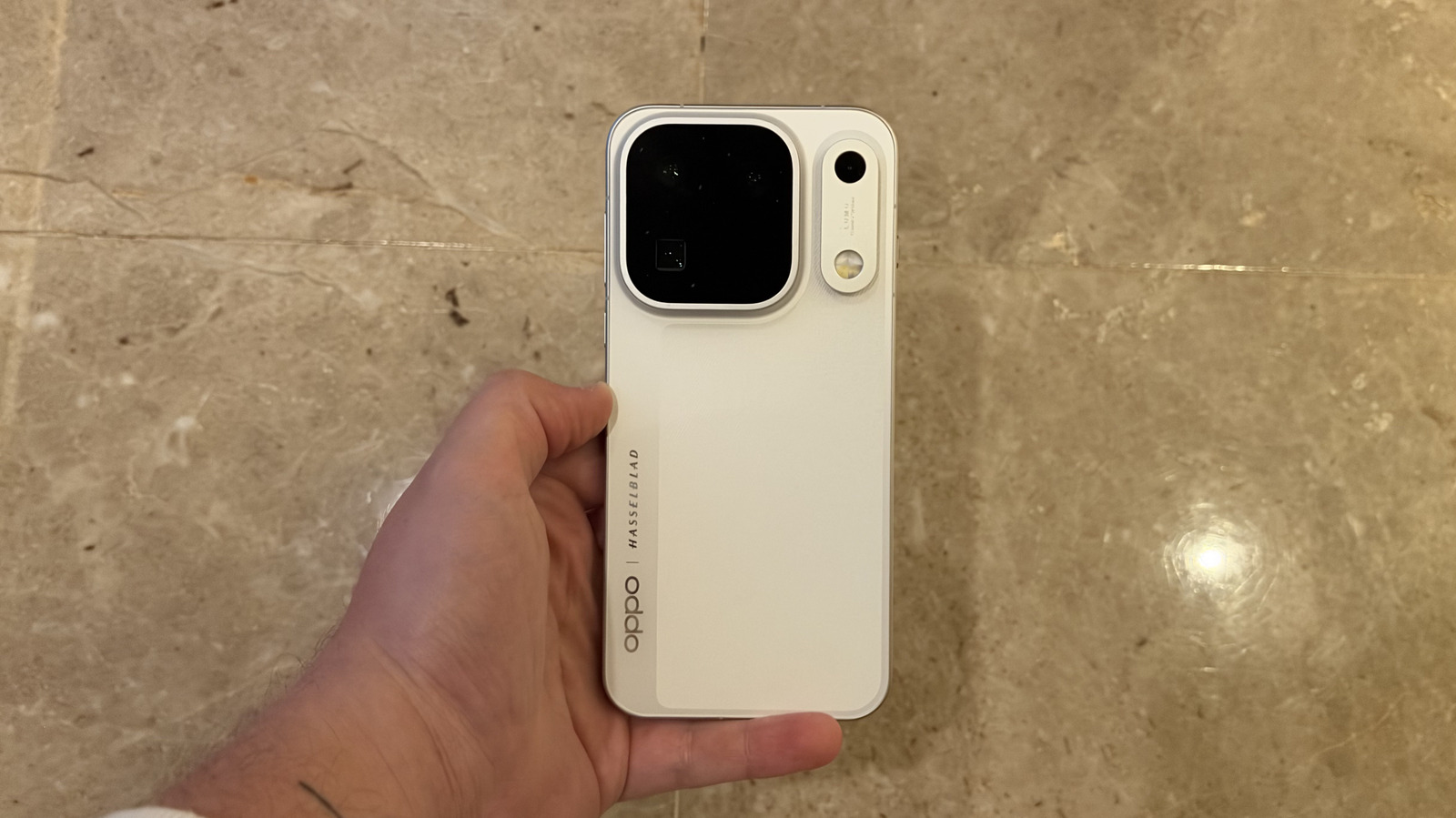
Oppo has released the Find X10 Pro Max, the first smartphone featuring three 200-megapixel lenses for main, ultrawide, and telephoto photography. Developed with Hasselblad, the device aims to eliminate resolution inconsistencies between camera modes. This hardware innovation targets users seeking uniform image quality across all focal lengths.

Key points

  • Oppo has launched the Find X10 Pro Max, the first commercially available smartphone equipped with three 200-megapixel camera sensors.
  • The triple-lens system includes a 24mm main lens, a 13mm ultrawide lens, and a 70mm telephoto lens, all sharing identical 200MP resolution.
  • The camera hardware was developed in collaboration with Hasselblad to ensure consistent color and quality across all shooting modes.
  • The 200MP resolution is primarily accessible via Hasselblad Ultra-Clear Mode, which operates at 13mm, 24mm, and 70mm focal lengths.
  • This configuration contrasts with industry standards that typically pair a high-resolution main sensor with lower-resolution ultrawide and telephoto lenses.

A Unified High-Resolution Approach

The smartphone industry has long relied on mixed-resolution camera systems, where a high-quality main sensor is paired with lower-resolution ultrawide and telephoto lenses. This disparity often results in inconsistent photo quality, with images taken on secondary lenses appearing softer or differing in color profile. Oppo is challenging this standard with the release of the Find X10 Pro Max, a device that features three 200-megapixel lenses, making it the only smartphone on the market as of November 2026 with this specific configuration.

Hardware Specifications and Collaboration

The Find X10 Pro Max’s camera array is the result of a continued collaboration between Oppo and the renowned camera manufacturer Hasselblad. This partnership has focused on tuning the camera software and hardware to deliver a uniform shooting experience. The main camera utilizes a 1/1.3-inch sensor with a 24mm focal length and an f/1.5 aperture. The ultrawide lens features a 1/1.56-inch sensor, offering a 13mm focal length, an f/2.2 aperture, and a 124-degree field of view. The telephoto lens also employs a 1/1.56-inch sensor, providing a 70mm focal length and an f/2.1 aperture.

The Hasselblad Ultra-Clear Mode

Despite the hardware capability, the device does not default to capturing full 200-megapixel images for every shot. Instead, Oppo has integrated a feature called Hasselblad Ultra-Clear Mode within the camera application. This mode allows users to utilize the full 200MP resolution across all three lenses, specifically at 13mm, 24mm, and 70mm, provided there is suitable lighting conditions. This approach ensures that the high-resolution potential of the sensors is preserved for scenarios where maximum detail is required, rather than consuming excessive storage and processing power for every standard photo.

Industry Context and Market Position

Most contemporary smartphones employ a tiered sensor strategy. Typically, the primary camera uses a large, high-megapixel sensor to capture the majority of user photos, while the ultrawide and telephoto cameras use smaller, lower-megapixel sensors to save space and cost. This often leads to a noticeable difference in image quality when switching between lenses. The Find X10 Pro Max aims to eliminate this discrepancy by ensuring that every lens can capture images of identical resolution. This consistency is particularly valuable for professional photographers and enthusiasts who require uniform color science and sharpness across different focal lengths.

Significance of the Release

The introduction of the Find X10 Pro Max marks a significant shift in smartphone camera technology. By offering three 200MP lenses, Oppo is addressing a common pain point for users who are frustrated by the quality drop-off when using secondary cameras. The collaboration with Hasselblad adds a layer of credibility and prestige, leveraging the brand's reputation for high-quality imaging. As of November 2026, no other smartphone offers this specific triple-200MP configuration, positioning the Find X10 Pro Max as a unique device in the high-end smartphone market.

Key takeaways

  • Oppo's Find X10 Pro Max is the first smartphone with three 200MP lenses.
  • The system includes a 24mm main, 13mm ultrawide, and 70mm telephoto lens.
  • Hasselblad collaborated on the camera tuning and Ultra-Clear Mode feature.
  • Full 200MP resolution is available via a specific mode for optimal detail.
  • This design eliminates the typical resolution gap between smartphone camera lenses.

Sources

  • bgr.com
WireByte Staff — Editorial Team

The WireByte editorial team synthesises technology news from multiple primary sources, verifies the facts, and links every source. Articles are produced with AI assistance and reviewed under our editorial policy.


More in Technology

Black Friday 2026: 3D Printer and Filament Deals Extend Past Weekend

Black Friday 2026: 3D Printer and Filament Deals Extend Past Weekend

Major retailers are extending Black Friday discounts on 3D printing hardware and materia…

technology computer

AI Breakthrough Threatens Global Encryption Security

Experts warn that advanced AI models may have solved complex mathematical problems under…

Latest

NVIDIA GeForce 256: The 1999 GPU That Defined the Industry

NVIDIA GeForce 256: The 1999 GPU That Defined the Industry

In 1999, NVIDIA launched the GeForce 256, the world's first graphics processing unit. De…

AI Safety Debate: Race Dynamics and Governance Challenges

AI Safety Debate: Race Dynamics and Governance Challenges

A recent analysis challenges the inevitability of an unchecked AI arms race, arguing tha…

Apple Passwords vs Google Password Manager: Key Differences Explained

Apple Passwords vs Google Password Manager: Key Differences Explained

Apple Passwords and Google Password Manager offer similar login management but differ in…

artificial intelligence technology

Donald Knuth Suspends Error Bounties Amid AI Report Flood

Computer science pioneer Donald Knuth has temporarily suspended his decades-long traditi…

Nimble SharePower Power Bank Discounted to $59.96

Nimble SharePower Power Bank Discounted to $59.96

Nimble’s SharePower, a 10,000mAh portable charger with a unique magnetic split design, i…

Black Friday Tech Deals: Gaming Handhelds, Laptops, and Streaming Bundles on Sale

Black Friday Tech Deals: Gaming Handhelds, Laptops, and Streaming Bundles on Sale

Major retailers are offering significant discounts on consumer electronics as Black Frid…

Related articles

Black Friday 2026: 3D Printer and Filament Deals Extend Past Weekend Technology Black Friday 2026: 3D Printer and Filament Deals Extend Past Weekend WireByte

Major retailers are extending Black Friday discounts on 3D printing hardware and materials into late November 2026. Prominent offers include a Bambu Lab P1S with AMS combo for $479 and significant savings on Sunlu PETG filament. These ongoing promotions allow consumers to access professional-grade additive manufacturing tools at reduced prices well beyond the initial sales period.

WireByte Staff · November 28, 2026

technology computer Technology AI Breakthrough Threatens Global Encryption Security WireByte

Experts warn that advanced AI models may have solved complex mathematical problems underpinning global encryption. This potential breakthrough could compromise security for banks and governments within months. Theoretical computer scientist Scott Aaronson cites well-attested rumors of this capability, raising urgent concerns about digital infrastructure resilience worldwide.

WireByte Staff · November 28, 2026

NVIDIA GeForce 256: The 1999 GPU That Defined the Industry Hardware NVIDIA GeForce 256: The 1999 GPU That Defined the Industry WireByte

In 1999, NVIDIA launched the GeForce 256, the world's first graphics processing unit. Despite modest specs like 17 million transistors, it introduced hardware T&L, shifting 3D rendering from CPUs to GPUs. This innovation established NVIDIA's dominance, eventually capturing 95% of the gaming GPU market against rivals like 3dfx and ATI.

WireByte Staff · November 28, 2026

AI Safety Debate: Race Dynamics and Governance Challenges AI & Machine Learning AI Safety Debate: Race Dynamics and Governance Challenges WireByte

A recent analysis challenges the inevitability of an unchecked AI arms race, arguing that coordinated governance and safety standards can mitigate risks. Experts emphasize that proactive regulation, rather than reactive measures, is essential to prevent catastrophic outcomes. The debate highlights the tension between rapid innovation and responsible development in the global tech landscape.

WireByte Staff · November 28, 2026

Apple Passwords vs Google Password Manager: Key Differences Explained Apple Apple Passwords vs Google Password Manager: Key Differences Explained WireByte

Apple Passwords and Google Password Manager offer similar login management but differ in platform integration. Apple’s solution is a standalone app for iOS and Mac users, while Google’s is web-based and tied to Chrome. This distinction affects cross-device accessibility and ecosystem lock-in for users choosing between the two major tech giants.

WireByte Staff · November 28, 2026

artificial intelligence technology AI & Machine Learning Donald Knuth Suspends Error Bounties Amid AI Report Flood WireByte

Computer science pioneer Donald Knuth has temporarily suspended his decades-long tradition of accepting reader-submitted errata for his books. Citing an overwhelming influx of AI-generated reports that exceed his capacity to verify, Knuth states that recent submissions are largely repetitive. He will review new reports only after publishing updated error lists, marking a significant shift in how classic technical texts handle community feedback in the age of generative AI.

WireByte Staff · November 28, 2026

WireByte

Tech & AI news, synthesised and to the point.

Delivering original syntheses and breaking news with cited sources. Stay informed with WireByte.

Sections

  • AI & Machine Learning
  • Technology
  • Science
  • Space & Astronomy
  • Gaming & Esports

Company

  • About Us
  • Editorial Policy
  • Privacy Policy
  • Contact form
  • Contact: [email protected]

Newsletters

Get the stories that matter, delivered to your inbox.

© 2026 WireByte. All rights reserved. Original syntheses with cited sources.

Home Search