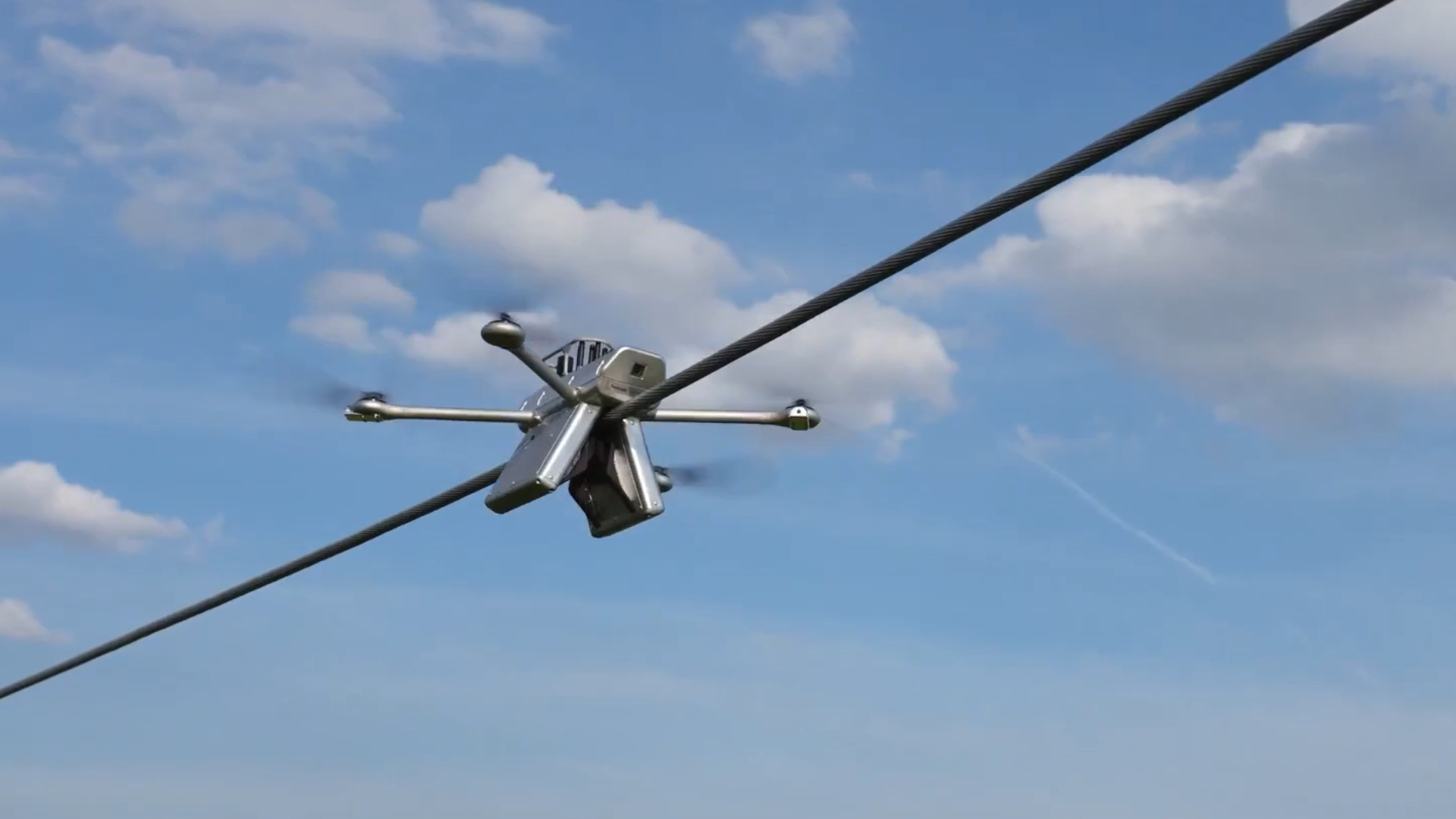
Nomadic Drones Recharge on Live Power Lines to Monitor Grids
Nomadic, a Munich-based tech firm, has deployed autonomous 4kg drones that attach to live 420 kV power lines, harvesting energy from magnetic fields to monitor infrastructure. With over 20,000 operating hours across Europe and the US, the technology addresses critical grid monitoring needs amid rising energy demand, eliminating the need for line shutdowns or frequent battery swaps.
Key points
- Nomadic, a Munich technology company, has developed autonomous drones weighing approximately 4kg that attach directly to energized power conductors.
- The drones harvest operating power through electromagnetic induction from the magnetic fields surrounding live cables, specifically noted at 420 kV.
- Each drone can monitor approximately 25 kilometers of transmission infrastructure without requiring temporary shutdowns or frequent battery replacements.
- Nomadic reports accumulating more than 20,000 operating hours across three countries, including operations in Europe and the United States.
- The technology aims to solve monitoring challenges as renewable energy projects and data centers increase pressure on existing electricity networks.
- Deployment is rapid, with drones reaching locations within minutes, avoiding the extensive preparation required by traditional monitoring equipment.
Autonomous Grid Monitoring Innovation
Electricity networks globally are facing mounting pressure as the demand for power surges. Renewable energy projects, industrial factories, and massive data centers are seeking connections at a pace that exceeds the speed of traditional infrastructure expansion. This rapid growth has created a critical bottleneck: identifying weaknesses along existing transmission routes is increasingly difficult. Conventional monitoring systems often fail to capture changing conditions across every section of the grid, leaving operators blind to potential failures until they occur.
In response to these challenges, Nomadic, a technology company based in Munich, has developed a novel solution. The firm has engineered autonomous drones capable of attaching themselves to energized power cables. These drones collect precise measurements of the transmission infrastructure without interrupting the flow of electricity. This capability is crucial for maintaining grid stability in an era where power continuity is paramount and unplanned outages are costly.
Energy Harvesting Technology
The core innovation lies in how these drones power themselves. Each Nomad aircraft weighs approximately 4kg and is designed to attach to an energized conductor. Instead of relying on internal batteries that require frequent replacement or separate charging infrastructure, the drones draw operating power through electromagnetic induction. They harvest energy directly from the magnetic fields surrounding the live cables.
This arrangement allows for continuous observation of electrical transmission conditions. The drones can monitor approximately 25 kilometers of transmission infrastructure per unit. By eliminating the need for battery swaps, the system reduces operational complexity and cost. It also ensures that monitoring can be sustained over long periods without the logistical burden of recharging or replacing power sources in remote or hard-to-reach locations.
Operational Scale and Deployment
Nomadic reports that its drones have accumulated more than 20,000 operating hours across three countries. These operations span both Europe and the United States, indicating a significant level of adoption and testing. The technology has proven effective in real-world conditions, providing data that helps grid operators identify hidden bottlenecks and potential failure points.
Deployment is another area where the technology excels. The drones can reach deployment locations within minutes. This rapid response capability avoids the extensive preparation and temporary shutdowns traditionally associated with installing equipment directly onto operational cables. In the past, inspecting high-voltage lines often required cutting power to the line, causing disruptions. Nomadic’s drones allow for inspection while the grid remains fully operational.
Impact on Global Energy Infrastructure
The significance of this development extends beyond mere inspection. As the world transitions to cleaner energy sources, the existing grid infrastructure must handle more variable and higher loads. The ability to monitor these lines continuously and autonomously is essential for preventing blackouts and ensuring efficient energy distribution. Nomadic’s technology offers a scalable solution that can be integrated into existing grid management systems.
While the technology is promising, it represents a shift in how critical infrastructure is maintained. The move from periodic, manual inspections to continuous, autonomous monitoring could redefine grid management standards. As more countries adopt similar technologies, the data collected could lead to more predictive maintenance strategies, further enhancing grid reliability.
Key takeaways
- Nomadic's 4kg drones attach to live 420 kV power lines to harvest energy via electromagnetic induction.
- Each drone monitors roughly 25 kilometers of transmission infrastructure without requiring line shutdowns.
- The company has logged over 20,000 operating hours across Europe and the US.
- The technology eliminates the need for frequent battery replacements or separate charging setups.
- Rapid deployment within minutes allows for continuous grid monitoring without operational disruption.
Sources
The WireByte editorial team synthesises technology news from multiple primary sources, verifies the facts, and links every source. Articles are produced with AI assistance and reviewed under our editorial policy.