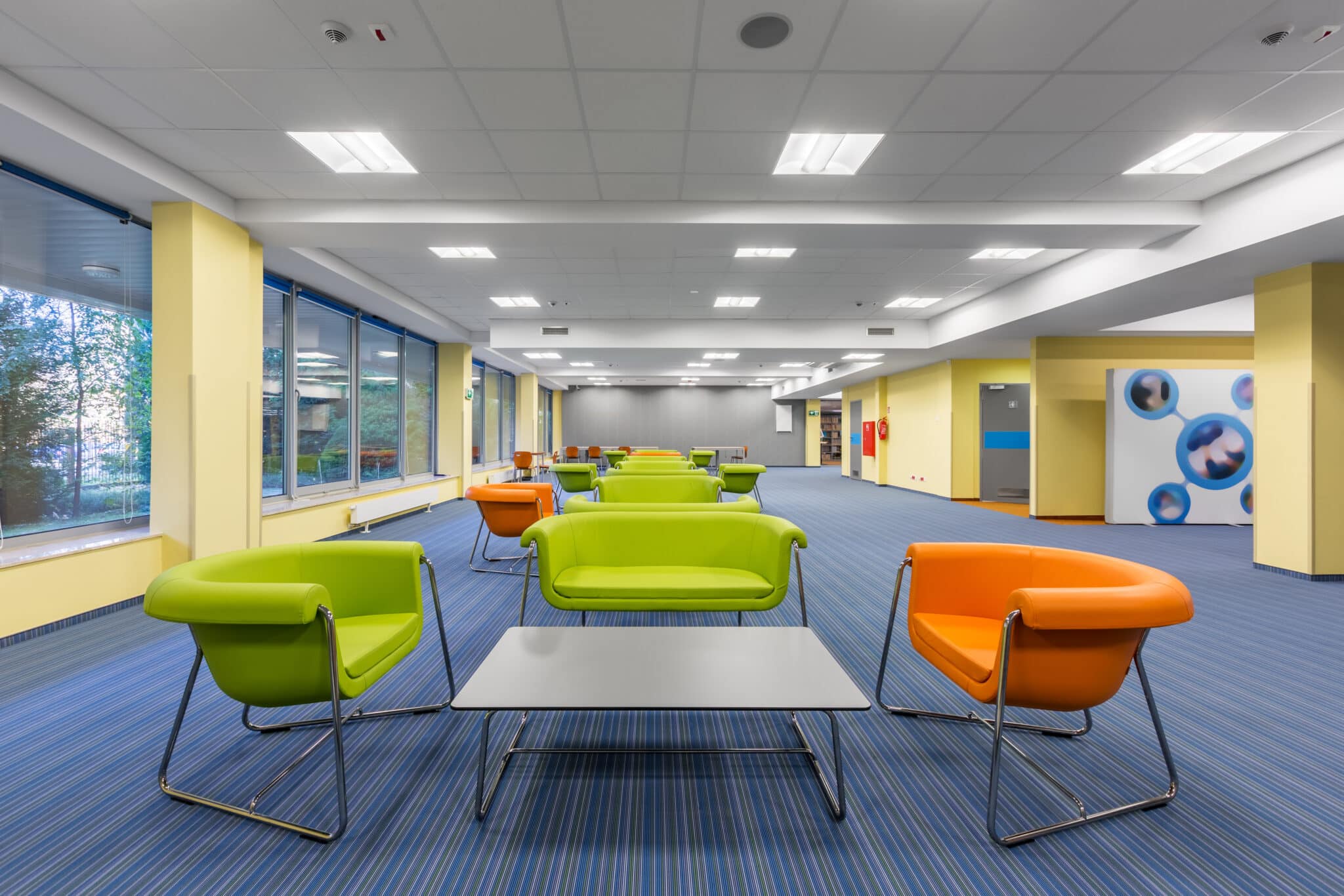
Modern office design linked to brain strain and discomfort
A new scientific review suggests that modern office design, featuring bright colors, striped floors, and flickering lights, may be causing physical discomfort in many people, particularly those with neurodiverse conditions. The study proposes that the brain may use more energy to process these visual patterns, leading to headaches and nausea. The findings have significant implications for workplace design and accessibility.
Key points
- A team of researchers from across the globe published a scientific review linking modern office design to brain strain and discomfort.
- The study suggests that bright colors, striped floors, and flickering lights may cause physical discomfort in many people, particularly those with neurodiverse conditions.
- The brain may use more energy to process these visual patterns, leading to headaches and nausea, according to the study's hypothesis.
- The findings have significant implications for workplace design and accessibility, particularly for individuals with autism, ADHD, migraines, dyslexia, and other conditions.
- The study's results are based on a review of 11 clinical diagnoses and areas of neurodiversity, with a consistent pattern found across these groups.
A new scientific review has shed light on the potential impact of modern office design on brain function and physical comfort. The study, published by a team of researchers from institutions across the globe, suggests that bright colors, striped floors, and flickering lights may be causing physical discomfort in many people, particularly those with neurodiverse conditions.
The study's hypothesis is that the brain may use more energy to process these visual patterns, leading to headaches and nausea. This is particularly concerning for individuals with conditions such as autism, ADHD, migraines, dyslexia, and other neurodiverse conditions, who may be more susceptible to this type of brain strain.
The findings have significant implications for workplace design and accessibility. As companies strive to create more comfortable and inclusive work environments, they may need to rethink their use of bright colors, striped floors, and flickering lights. This could involve incorporating more natural light, using calming colors and patterns, and providing accommodations for employees with neurodiverse conditions.
The study's results are based on a review of 11 clinical diagnoses and areas of neurodiversity, with a consistent pattern found across these groups. While more research is needed to fully understand the impact of modern office design on brain function, the study's findings highlight the importance of creating more accessible and inclusive work environments.
Sources
The WireByte editorial team synthesises technology news from multiple primary sources, verifies the facts, and links every source. Articles are produced with AI assistance and reviewed under our editorial policy.