ISRO Seeks Industry Partnership for Human Spaceflight Simulation Facility
India’s space agency ISRO has invited domestic industry to design and build the Mission ANTARIKSH, an Earth-based analog simulation facility for crew training and system validation. This initiative supports the ongoing Gaganyaan mission and future ambitions, including a national space station by 2035 and a crewed lunar mission by 2040.
Key points
- ISRO’s Human Space Flight Centre issued an Expression of Interest on November 26, 2026, for the complete execution of Mission ANTARIKSH.
- The facility will serve as an Earth-based analog simulation center for crew training, mission rehearsal, and operational procedure validation.
- Scope includes end-to-end realization, from design and fabrication to testing, commissioning, and long-term operation and maintenance.
- The project supports India’s broader space goals, including the operational Bharatiya Antariksh Station by 2035 and a crewed lunar mission by 2040.
- Indian industry is invited to participate individually or in consortia to develop representative spacecraft modules and mission control infrastructure.
ISRO Expands Human Spaceflight Capabilities Through Domestic Partnership
The Indian Space Research Organisation (ISRO) has taken a significant step toward strengthening its human spaceflight program by inviting the domestic industry to develop a critical infrastructure component. The Human Space Flight Centre (HSFC), based in Bengaluru, issued an Expression of Interest (EoI) on November 26, 2026, seeking partners for the complete execution of Mission ANTARIKSH. This initiative marks a strategic move to leverage private sector expertise for the development of an Earth-based Human Spaceflight Analog Simulation Facility.
The primary purpose of the ANTARIKSH facility is to provide a comprehensive environment for crew training and mission rehearsal. It is designed to facilitate the evaluation of systems and the validation of operational procedures essential for human spaceflight. By simulating the conditions astronauts will face, the facility aims to reduce risks and enhance the safety and efficiency of future missions. The scope of work is extensive, covering the design, development, procurement, fabrication, assembly, deployment, integration, testing, and commissioning of the facility and its systems.
Beyond initial construction, the selected industry partner will also be responsible for the operation, maintenance, and management of the specified mission campaigns. This long-term involvement ensures that the facility remains up-to-date and functional throughout its operational life. The EoI indicates that Indian industry participants may engage individually or form consortia, encouraging collaboration and shared expertise within the domestic aerospace sector.
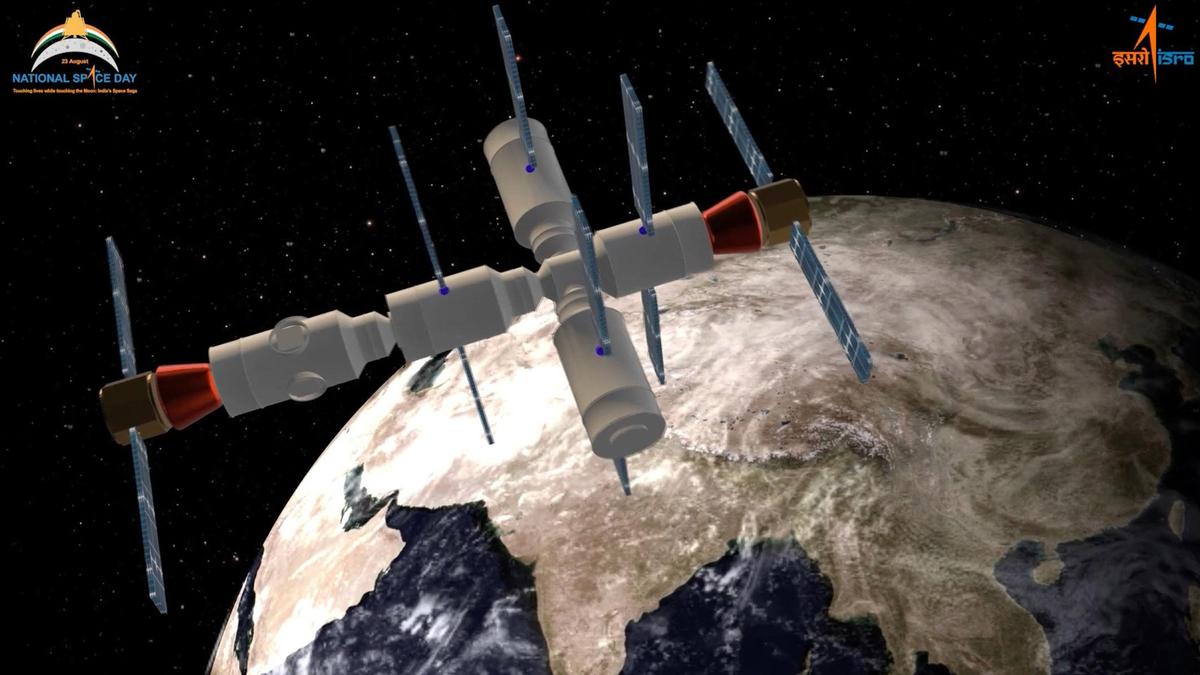
The facility will comprise representative spacecraft and space station modules, a mission control center, simulation hardware and software, and associated support infrastructure. These components are crucial for conducting realistic analog missions that mimic the challenges of space travel. The integration of these elements will allow astronauts and ground control teams to practice complex scenarios in a controlled environment on Earth.
This development is part of India’s broader vision for space exploration. Alongside the ongoing Gaganyaan mission, which aims to demonstrate human spaceflight capability, ISRO has outlined ambitious long-term goals. The agency plans to establish an operational national space station, known as the Bharatiya Antariksh Station (BAS), by 2035. Additionally, ISRO aims to launch a crewed lunar mission by 2040, positioning India as a key player in deep space exploration.
The ANTARIKSH facility is expected to play a pivotal role in achieving these milestones. By providing a robust training and testing ground, it will help refine the technologies and procedures necessary for sustained human presence in space. The involvement of the domestic industry in such a critical project underscores India’s commitment to building a self-reliant space ecosystem.
Industry experts view this move as a catalyst for growth in the Indian aerospace sector. The opportunity to work on high-profile projects like ANTARIKSH can drive innovation and technological advancement. It also offers Indian companies a chance to gain international recognition and potentially export their expertise in the future. The collaboration between ISRO and the private sector is seen as a model for other emerging space nations.
As the EoI process moves forward, stakeholders are closely watching for the selection of the primary contractor. The successful execution of Mission ANTARIKSH will not only support India’s immediate human spaceflight goals but also lay the groundwork for its long-term ambitions in space. The facility is expected to become a central hub for training and research, attracting scientists, engineers, and astronauts from across the country.
Key takeaways
- ISRO’s HSFC issued an EoI on November 26, 2026, for the development of the Mission ANTARIKSH analog facility.
- The facility will support crew training, system evaluation, and operational validation for human spaceflight.
- Scope includes full lifecycle management, from design and fabrication to long-term operation and maintenance.
- The project aligns with India’s goals for a national space station by 2035 and a crewed lunar mission by 2040.
- Indian industry is invited to participate individually or in consortia to build the simulation infrastructure.
Sources
The WireByte editorial team synthesises technology news from multiple primary sources, verifies the facts, and links every source. Articles are produced with AI assistance and reviewed under our editorial policy.