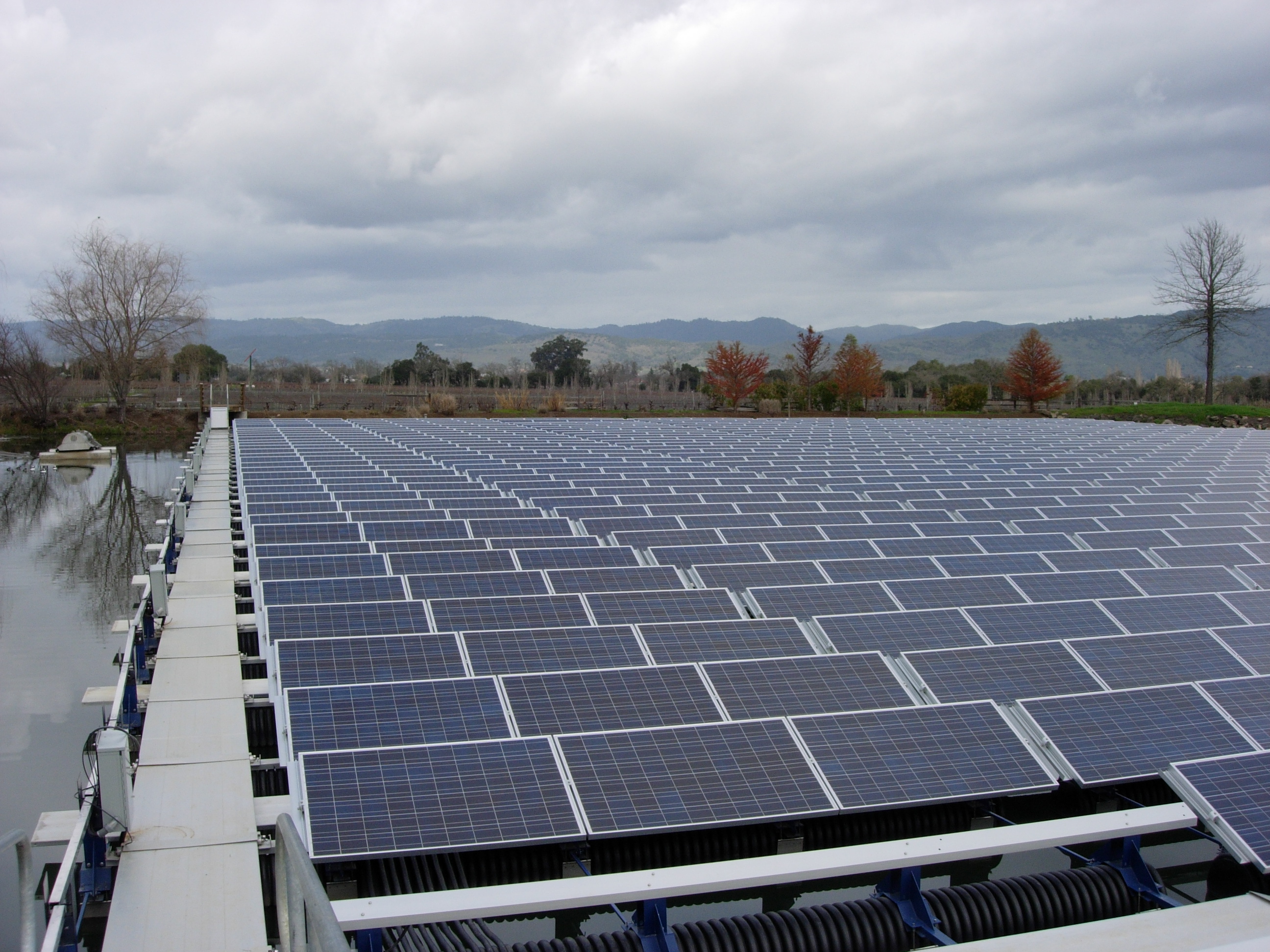
India Approves PM-SSY Scheme for 5,000 MW Floating Solar
The Union Cabinet in India approved the Pradhan Mantri Surya Sarovar Yojana scheme, allocating ₹5,070 crore to construct 5,000 MW of floating solar photovoltaic capacity on reservoirs and waterbodies. Implemented by the Solar Energy Corporation of India, the initiative requires a two-hour energy storage pairing per project, aiming to attract ₹28,500 crore in investments and bypass land scarcity constraints.
Key points
- The Union Cabinet cleared the Pradhan Mantri Surya Sarovar Yojana, a central-sector scheme aimed at building 5,000 MW of floating solar photovoltaic capacity on Indian waterbodies.
- The initiative carries a total outlay of ₹5,070 crore, providing Central Financial Assistance of up to ₹1 crore per MW disbursed post-commissioning, with expected investments of ₹28,500 crore.
- Every project must incorporate an energy storage system of at least two hours, totaling 10,000 MWh, enabling states to utilize stored power during peak demand periods.
- The Solar Energy Corporation of India will implement the scheme to help overcome land scarcity constraints that hinder ground-mounted solar expansion.
- India currently maintains an installed floating solar capacity of approximately 0.7 GW against an estimated national potential of 102 GW.
The Union Cabinet has officially cleared the Pradhan Mantri Surya Sarovar Yojana, a new central-sector initiative designed to construct 5,000 MW of floating solar photovoltaic capacity across reservoirs, irrigation tanks, industrial ponds, and hydropower lakes in India. The program carries a total financial outlay of ₹5,070 crore and offers Central Financial Assistance reaching up to ₹1 crore per MW. Crucially, these funds are only released after a plant has been successfully commissioned. Government projections estimate that the scheme will draw approximately ₹28,500 crore in total investments.
To address grid stability and peak demand challenges, the program mandates that every participating project must be paired with an energy storage system lasting at least two hours. Across all implementations, this requirement accounts for a collective 10,000 MWh of storage capacity, allowing states to deploy stored power when electricity demand peaks. The Solar Energy Corporation of India has been designated to implement the framework.
Floating solar arrays consist of modular panel blocks assembled onshore before being floated onto water surfaces and secured with anchors and mooring lines designed to withstand wind, waves, and fluctuating water levels. Inverters are positioned either on the floats or onshore, with cables routing power to local substations. This approach addresses a major bottleneck in India's renewable energy sector: while the country possesses nearly 100 GW of solar capacity and extensive potential, ground-mounted installations face severe land scarcity constraints.
Sources
The WireByte editorial team synthesises technology news from multiple primary sources, verifies the facts, and links every source. Articles are produced with AI assistance and reviewed under our editorial policy.