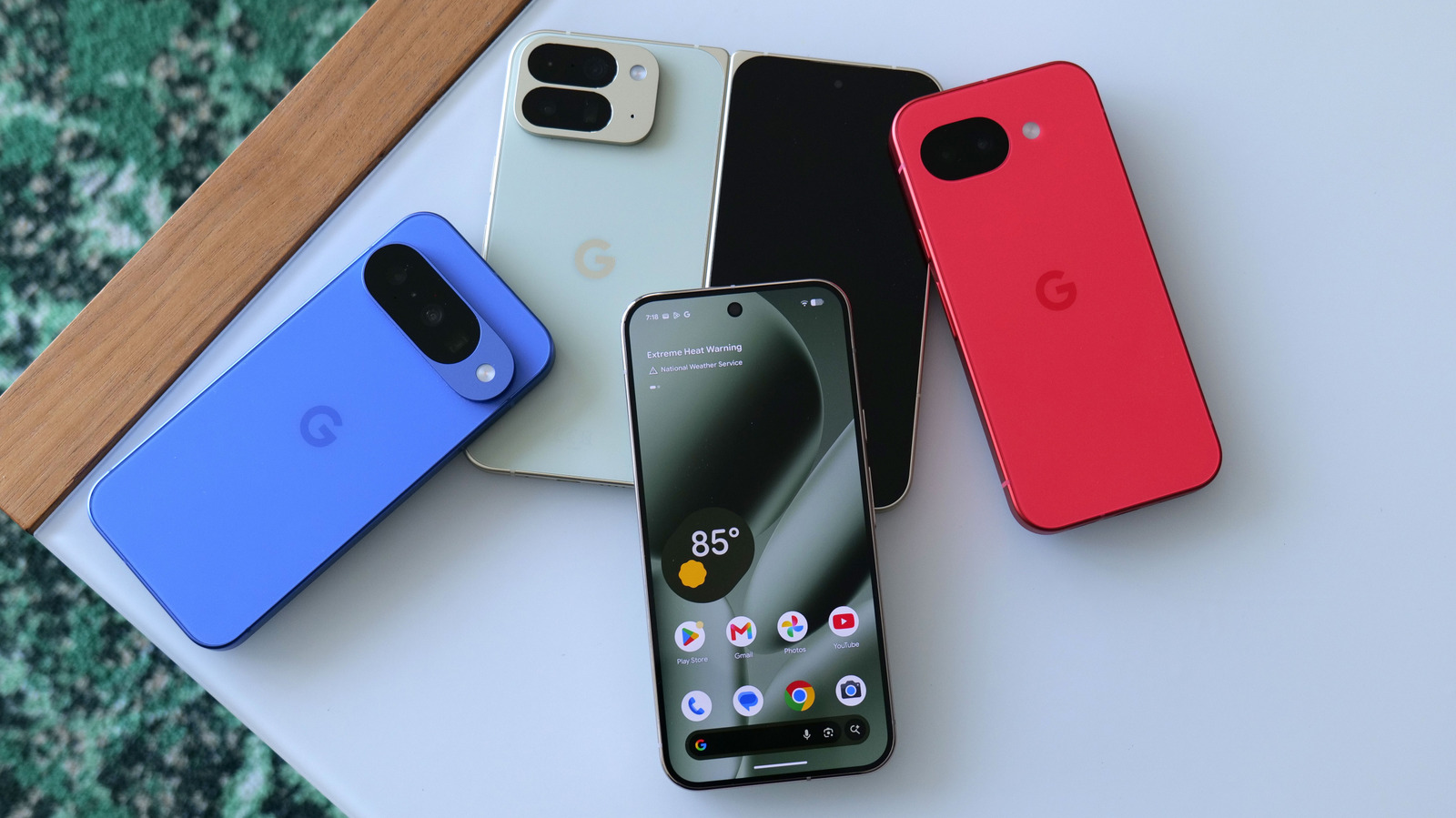
Google Pixel Variants Differ Across Regions
Google sells Pixel handsets in various regions with subtle tweaks to conform to local regulations and customer preferences. International models feature the same Tensor chips, memory, and storage as US versions, but with different language support, power sockets, and network bands. The differences are minor, with identical camera sensors, display tech, and charging capabilities.
Key points
- Google sells Pixel handsets in various regions with subtle tweaks to conform to local regulations and customer preferences.
- International Pixel phones feature the same Tensor chips, memory, and storage as US versions.
- Differences include different language support, power sockets, and network bands.
- Camera sensors, display tech, and charging capabilities remain identical across regions.
- The base Pixel 10 features a Tensor G5 processor, 12GB of RAM, and 128GB or 256GB of storage.
Google's Pixel handsets are sold in various regions around the world, with subtle tweaks to conform to local regulations and customer preferences. While the differences may not be immediately apparent, they are an important aspect of the company's approach to global device sales.
One of the most significant differences between US and international Pixel models is the language support. International models often feature language packs for local markets, allowing users to switch between languages easily. Additionally, power sockets and network bands may differ between regions, requiring adjustments to accommodate local infrastructure.
Despite these differences, the camera sensors, display tech, and charging capabilities remain identical across regions. This consistency is a testament to Google's commitment to delivering a high-quality user experience, regardless of where the device is sold.
The base Pixel 10 is a prime example of this consistency, featuring a Tensor G5 processor, 12GB of RAM, and 128GB or 256GB of storage. This level of hardware consistency is a significant departure from other device makers, such as Samsung, which often use different chipsets depending on the region.
Overall, Google's approach to global device sales is a key factor in the company's success. By catering to local regulations and customer preferences, Google is able to deliver a consistent user experience across regions, while also adapting to the unique needs of each market.
Sources
The WireByte editorial team synthesises technology news from multiple primary sources, verifies the facts, and links every source. Articles are produced with AI assistance and reviewed under our editorial policy.