China Considers Restricting Foreign Access to Advanced AI Models
China's tech sector is escalating its response to US concerns over AI model 'distillation'. Beijing is preparing to restrict overseas access to its most advanced AI models, including those yet to be released, following meetings with top tech firms. This move underscores China's growing emphasis on AI as a national asset, mirroring the US approach.
Key points
- Chinese authorities have held meetings with top tech firms to discuss restricting overseas access to China's most advanced AI models.
- The move follows Beijing's efforts to keep homegrown AI within the country, echoing the US approach to AI as a national asset.
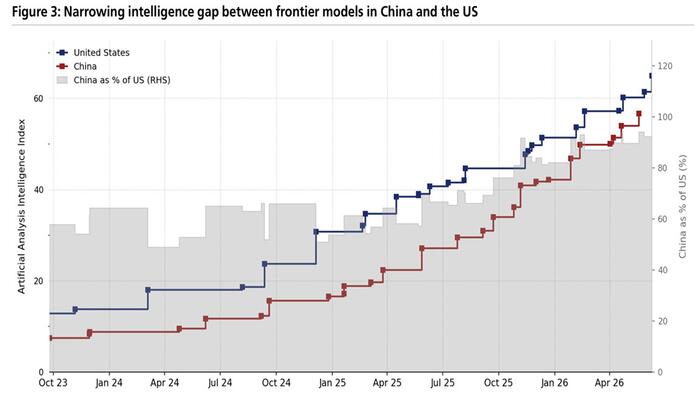
- China's latest open-model, GLM 5.2, is considered just barely behind the latest comparable US offerings.
- The average gap between US and Chinese AI models has shrunk to almost nothing, according to industry reports.
China Considers Restricting Foreign Access to Advanced AI Models
China's tech sector is escalating its response to US concerns over AI model 'distillation'. Beijing is preparing to restrict overseas access to its most advanced AI models, including those yet to be released, following meetings with top tech firms. This move underscores China's growing emphasis on AI as a national asset, mirroring the US approach.
The talks come after a number of steps by Beijing to keep homegrown AI within the country. China's tech giant Alibaba recently banned employees from using Anthropic's Claude Code at work, citing concerns over features that can help identify China-linked users.
Industry experts say this move is a significant escalation in the AI 'cold war' between the US and China. As both countries treat cutting-edge AI as a critical national asset, the stakes are rising for tech firms operating in this space.
Sources
The WireByte editorial team synthesises technology news from multiple primary sources, verifies the facts, and links every source. Articles are produced with AI assistance and reviewed under our editorial policy.