Voyager 1 to Reach Historic One Light-Day Milestone
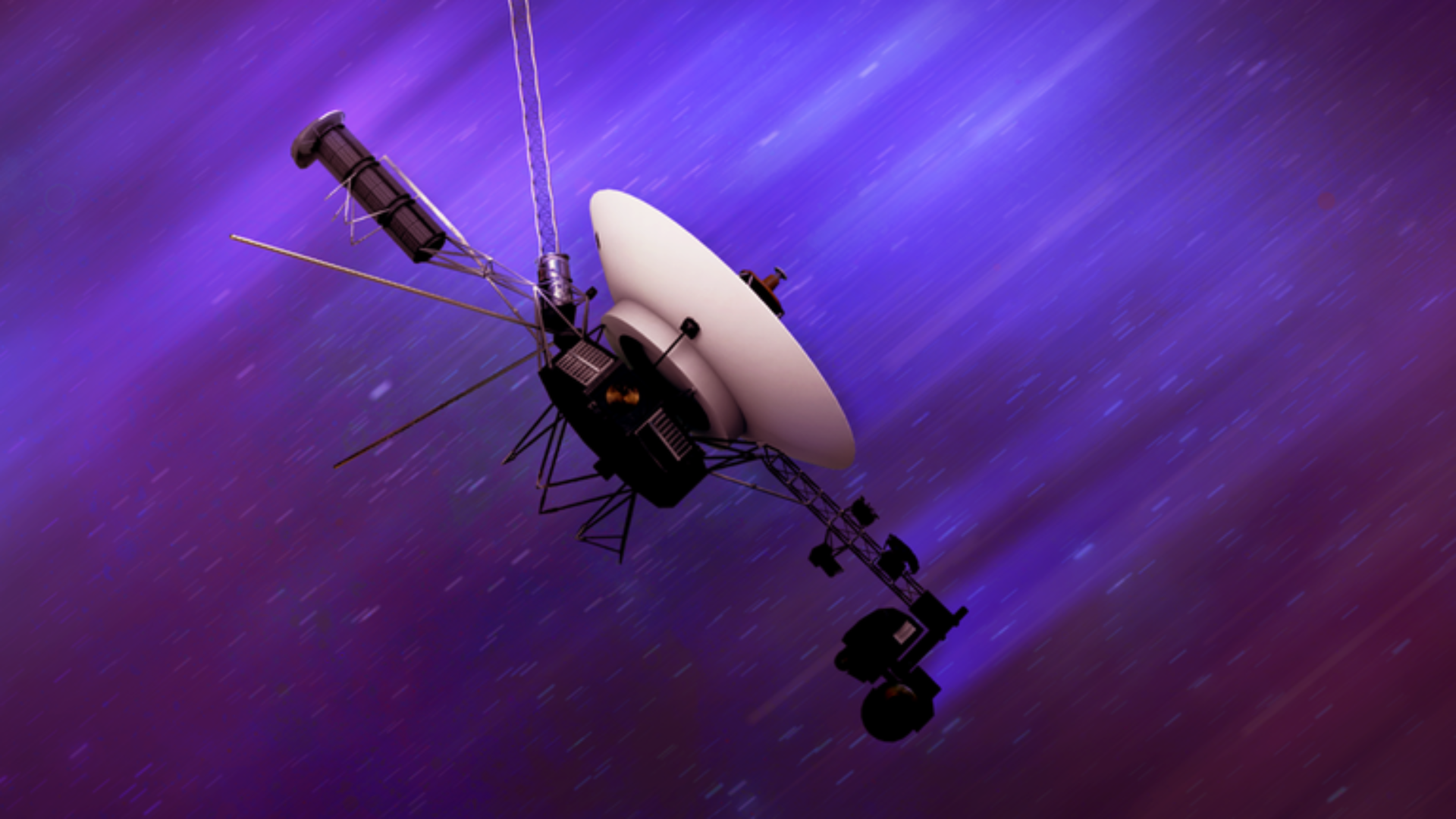
NASA's Voyager 1 probe will reach a distance of one light-day from Earth on November 18, 2026. This milestone marks the first time a human-made object has traveled 16 billion miles, cementing its status as the most distant artificial object in history. The 49-year-old spacecraft, originally designed for a five-year mission, continues to operate far beyond its intended lifespan.
Key points
- Voyager 1, a NASA spacecraft launched nearly 50 years ago, will reach one light-day from Earth on November 18, 2026.
- One light-day equals approximately 16 billion miles or 26 billion kilometers, the distance light travels in 24 hours.
- This achievement makes Voyager 1 the most distant human-made object in history, surpassing all previous records.
- The probe was originally designed for a five-year mission to study Jupiter and Saturn but has remained operational for decades.
- NASA has posted a countdown clock to mark the historic moment, highlighting the spacecraft's enduring legacy in space exploration.
A Historic Milestone in Deep Space Exploration
NASA's Voyager 1 spacecraft is approaching a significant astronomical benchmark that underscores the longevity and reach of human engineering. On November 18, 2026, at 5:16:07 a.m. EST, the probe will cross the threshold of one light-day from Earth. This event marks the first time a human-made object will have traveled such a vast distance, solidifying Voyager 1's position as the most distant artificial object in history. The agency has already established a countdown clock on its official platforms to commemorate the occasion, inviting global observers to witness this unprecedented milestone in spaceflight.
Understanding the Scale of Distance
The concept of a light-day, while often confused with a measure of time, is strictly a unit of distance. It represents the span light travels in a vacuum over a 24-hour period. Given that light moves at approximately 186,282 miles per second, or 300,000 kilometers per second, one light-day equates to roughly 16 billion miles, or 26 billion kilometers. To contextualize this immense scale, the Moon orbits Earth at a distance of only 238,855 miles, and our planet sits 93 million miles from the Sun. Voyager 1's journey has taken it far beyond these familiar benchmarks, venturing into the interstellar medium where the influence of the solar system wanes.
From Five-Year Mission to Enduring Legacy
When Voyager 1 was launched, it was conceived as a short-duration mission. Its primary objective was to conduct flybys of Jupiter and Saturn, providing the first detailed images and data of these gas giants. The spacecraft was designed with a planned operational life of just five years. However, through careful engineering, redundant systems, and continuous remote updates from Earth, Voyager 1 has defied expectations. Now 49 years old, it continues to transmit data back to mission controllers, demonstrating remarkable resilience and adaptability in the harsh environment of deep space.
The Significance of Interstellar Travel
Reaching one light-day is not merely a numerical achievement; it signifies the probe's deep entry into interstellar space. Voyager 1 crossed the heliopause, the boundary where the solar wind yields to the interstellar medium, in 2012. Since then, it has been traveling through the space between stars, carrying a golden record containing sounds and images of Earth. This new milestone highlights the success of NASA's long-term strategy for deep space exploration and the enduring value of legacy systems that continue to operate well beyond their initial design parameters.
Global Interest and Scientific Continuity
The approaching date has generated significant interest among scientists, engineers, and the general public worldwide. The countdown clock serves as a reminder of human curiosity and the drive to explore the unknown. While Voyager 1's power sources are gradually depleting, and future communication may become increasingly difficult, the data it has already returned has revolutionized our understanding of the outer solar system and interstellar space. The event underscores the importance of sustained investment in space exploration and the potential for long-term scientific returns from seemingly simple missions.
Looking Ahead
As the date of November 18, 2026, approaches, NASA and the global scientific community will be monitoring the spacecraft's status. The successful reach of this distance will likely spur further interest in deep space missions and the technologies that enable them. It serves as a testament to human ingenuity and the enduring spirit of exploration. While Voyager 1 is an aging vessel, its continued operation and the new milestones it achieves remind us of the vastness of the universe and the reach of human endeavor.
Key takeaways
- Voyager 1 will reach one light-day from Earth on November 18, 2026, at 5:16:07 a.m. EST.
- One light-day is approximately 16 billion miles or 26 billion kilometers.
- This makes Voyager 1 the most distant human-made object in history.
- The spacecraft was originally designed for a five-year mission to Jupiter and Saturn.
- NASA has posted a countdown clock to mark the historic event.
- The probe has been operational for nearly 50 years, far exceeding its initial design life.
Sources
The WireByte editorial team synthesises technology news from multiple primary sources, verifies the facts, and links every source. Articles are produced with AI assistance and reviewed under our editorial policy.