US Midterms: Tech Oligarchs Face Political Backlash as Democrats Retake Congress
Democrats have retaken control of the US Congress following the midterm elections, signaling a shift away from the tech industry's previous alignment with Donald Trump. Silicon Valley billionaires, who heavily supported the Republican agenda, now face increased scrutiny from a hostile legislative body. Voters cited concerns over corruption, AI expansion, and surveillance as key drivers in rejecting pro-tech Republican candidates.
Key points
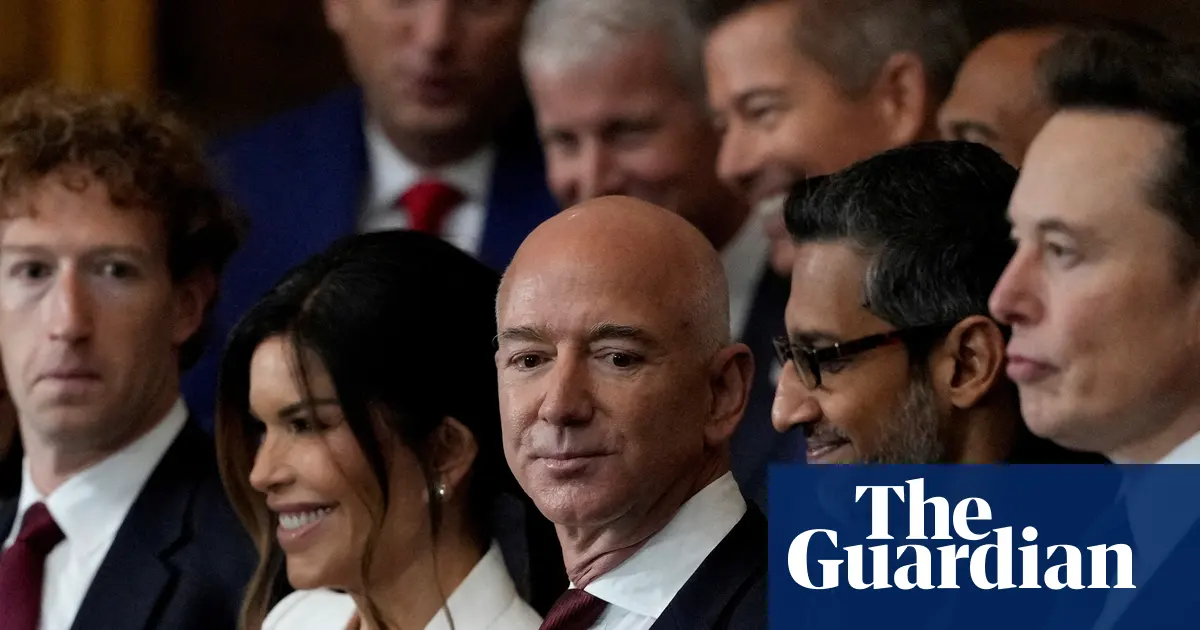
- Elon Musk, Jeff Bezos, and Mark Zuckerberg attended Donald Trump’s inauguration, symbolizing a close alliance between Silicon Valley tech giants and the Republican party.
- Democrats have won decisive control of the US Congress and numerous governorships, including in traditionally red states like Texas, during the recent midterm elections.
- Voters expressed displeasure with the political influence of tech oligarchs, citing concerns over corruption and the rapid expansion of artificial intelligence infrastructure.
- The tech industry's fortunes had ballooned under the previous political climate, with Musk’s wealth surpassing $1tn, but the political shift now poses regulatory risks.
- Public anger regarding data centers and surveillance technologies, such as Flock cameras, contributed to the electoral defeat of Republican candidates.
- The new Democratic majority in Congress is expected to increase scrutiny of big tech, challenging the previously unhedged political bets made by industry leaders.
A Political Reckoning for Silicon Valley
The image of Elon Musk, Jeff Bezos, and Mark Zuckerberg seated front and center at Donald Trump’s inauguration has taken on a starkly different meaning in the wake of the US midterm elections. What was once viewed as a symbiotic display of ultra-wealthy alignment with political power now resembles a target list for a newly empowered Democratic Congress. For years, the tech industry’s embrace of the Republican agenda, particularly under the Trump administration, seemed to yield substantial rewards. However, the recent electoral results indicate that this political strategy may have been an unwise miscalculation.
The midterms delivered a decisive victory for Democrats, who have reclaimed control of the US Congress. This shift is not limited to the federal legislature; Democrats have also flipped numerous governorships across the country. Notably, these gains include victories in traditionally Republican strongholds, such as Texas, demonstrating a broad-based rejection of the current political establishment. The election results suggest that voters are increasingly wary of the intersection between corporate power and political influence.
Central to this voter sentiment is a growing anger toward the perceived corruption associated with tech oligarchs. Many citizens view the blatant attempts by the industry’s wealthiest figures to shape the political environment as a threat to democratic integrity. This sentiment was compounded by concerns over the rapid expansion of artificial intelligence and its societal impacts. The tech barons’ previous bets on a MAGA-aligned future have now left them exposed to a legislative body that is far more likely to scrutinize their practices.
The financial implications of this political shift are significant. During the period of Republican dominance, the tech industry’s fortunes ballooned to unprecedented levels. Elon Musk’s personal wealth, for instance, surpassed $1 trillion, a figure that reflected the industry’s buoyant market position. However, the new political reality introduces uncertainty. A Democratic-controlled Congress is historically more inclined to pursue antitrust actions and regulatory frameworks that could curb the power of big tech companies.
Public discontent was also fueled by specific technological concerns. The expansion of data centers and the proliferation of surveillance technologies, such as Flock cameras, have drawn criticism from communities affected by these developments. Voters linked these issues to the broader political landscape, driving many away from Republican candidates who were seen as sympathetic to tech industry interests. This backlash against technocrats and their political allies has reshaped the electoral map.
Analysts suggest that the tech industry’s previous political alignment was an unhedged bet. By closely associating with one political faction, Silicon Valley leaders have now found themselves in opposition to the new majority. This shift could lead to increased legislative challenges, including potential investigations into market dominance and data privacy practices. The industry must now navigate a more hostile political environment.
The election results also highlight a disconnect between the tech elite and the general electorate. While the industry celebrated its financial gains, many voters felt left behind by the economic changes driven by AI and automation. This disconnect has fueled a populist backlash that has benefited Democratic candidates. The results serve as a warning to other corporate leaders about the risks of overt political engagement.
Key takeaways
- Democrats have retaken the US Congress and won key governorships, including in Texas, reversing previous Republican gains.
- Silicon Valley leaders like Musk, Bezos, and Zuckerberg face increased scrutiny from a new Democratic majority after their pro-Trump alignment.
- Voter anger over corruption, AI expansion, and surveillance technologies drove the rejection of Republican candidates.
- The tech industry’s political strategy is now viewed as a risky bet that has left it vulnerable to regulatory changes.
- Elon Musk’s wealth exceeding $1tn highlights the industry's previous success, which is now threatened by the political shift.
- The election underscores a broader public distrust of technocratic influence in politics and governance.
Sources
The WireByte editorial team synthesises technology news from multiple primary sources, verifies the facts, and links every source. Articles are produced with AI assistance and reviewed under our editorial policy.