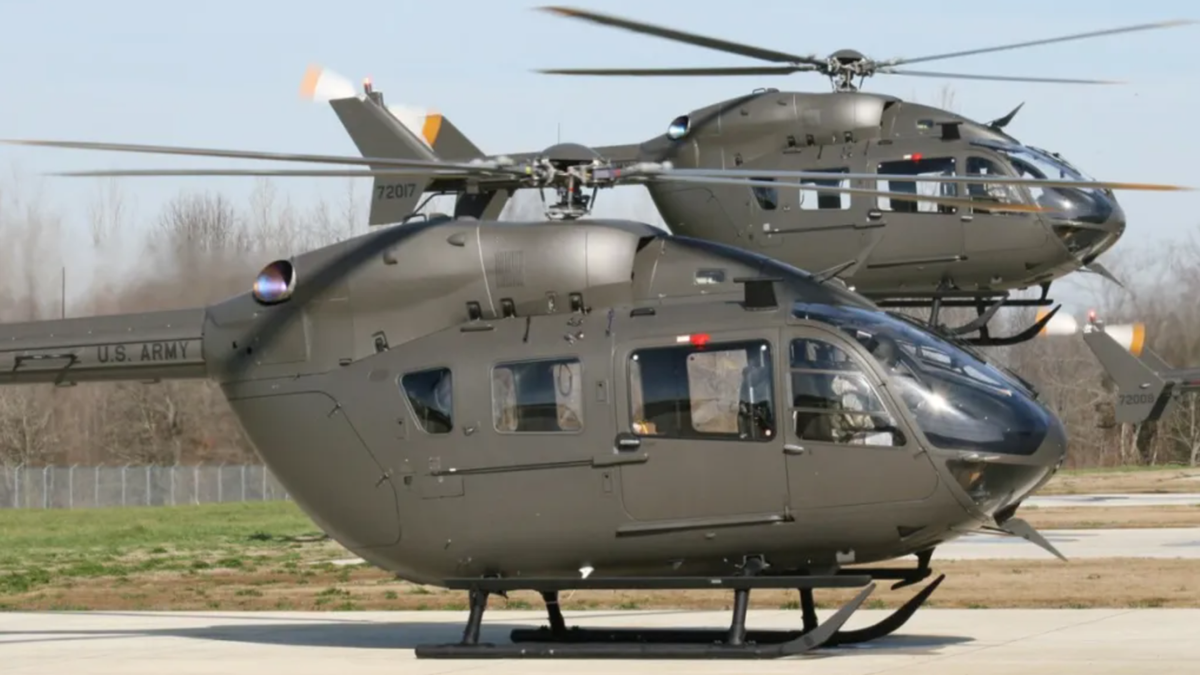
US Army tests autonomous Airbus cargo helicopter with 70-mile remote control
The US Army successfully tested Airbus' MQ-72C Lakota Connector, an autonomous cargo helicopter capable of remote operation from 70 miles away. Using Starlink connectivity and Shield AI's Hivemind software, the aircraft navigated around sudden airspace restrictions without pilot intervention. These trials at Huntsville Executive Airport demonstrate enhanced logistical flexibility for military operations, though a safety pilot remained aboard during the five demonstration flights.
Key points
- The US Army tested Airbus' MQ-72C Lakota Connector, an autonomous cargo helicopter designed to operate beyond conventional line-of-sight distances.
- Operators controlled the aircraft from up to 70 miles away using Starlink communications infrastructure to maintain command links.
- Shield AI's Hivemind software enabled the helicopter to autonomously calculate alternative routes when encountering suddenly restricted airspace.
- Airbus conducted five demonstration flights at Huntsville Executive Airport in Alabama, showcasing autonomous hovering and complex maneuvering.
- A safety pilot remained aboard during the trials but did not need to assume control, according to Airbus senior director Jaysen Yochim.
- The tests highlight the potential for autonomous aerial logistics to improve military supply chain resilience in dynamic operational environments.
The US Army has completed initial testing of the Airbus MQ-72C Lakota Connector, an autonomous cargo helicopter designed to enhance military logistics through remote operation. During trials at Huntsville Executive Airport in Alabama, operators controlled the aircraft from distances reaching 70 miles, utilizing Starlink satellite communications to maintain command links beyond conventional line-of-sight limitations. The system integrates Shield AI’s Hivemind software, which allows the helicopter to process environmental changes and adjust its flight path autonomously.
During one specific exercise, the aircraft encountered a newly introduced restricted airspace zone. Instead of requiring immediate pilot input, the onboard autonomy systems calculated an alternative route to navigate around the no-fly zone. Jaysen Yochim, Airbus’ senior director for the Aerial Logistics Connector programme, noted that the aircraft made these routing decisions independently. Although a pilot remained on board for safety during the five demonstration flights, Yochim stated that the human operator never needed to take manual control.
These tests demonstrate the feasibility of autonomous aerial logistics in complex operational environments. By combining long-range connectivity with advanced navigation software, the MQ-72C aims to provide flexible supply capabilities for the US Army. The successful integration of commercial satellite technology and autonomous flight systems marks a significant step toward reducing the human workload in military cargo operations.
Sources
The WireByte editorial team synthesises technology news from multiple primary sources, verifies the facts, and links every source. Articles are produced with AI assistance and reviewed under our editorial policy.