Ring Launches Drone Cam and Rover Cam After Six-Year Delay
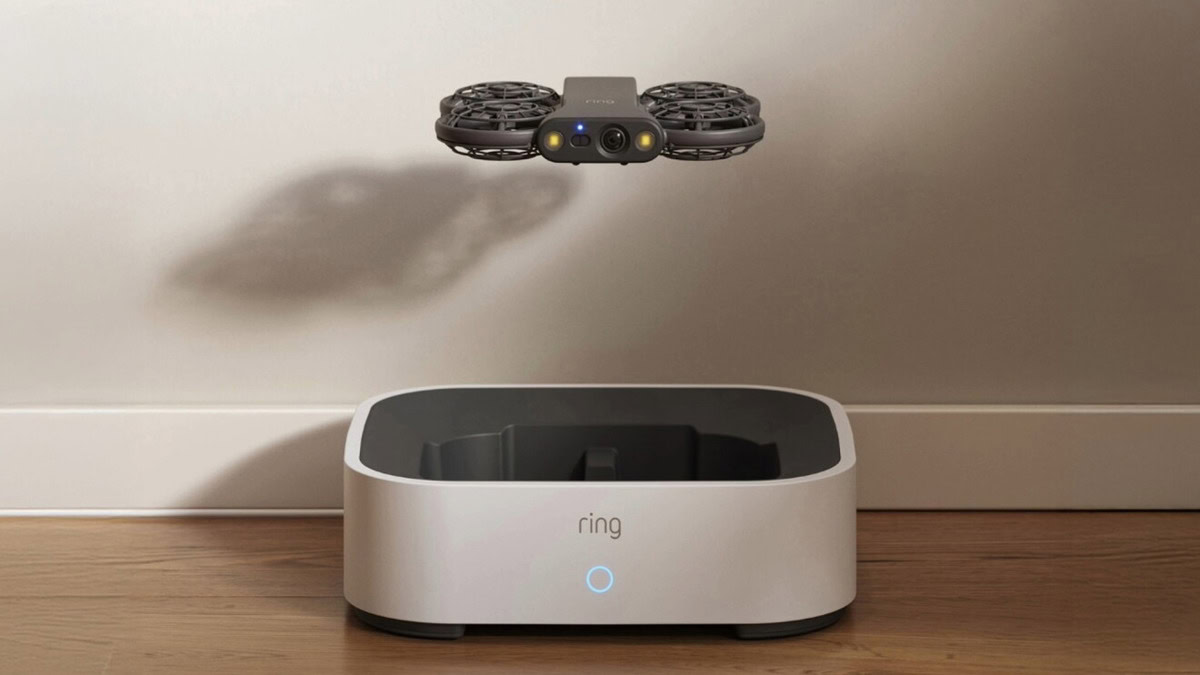
Ring is releasing the $250 Drone Cam and $1,000 Rover Cam, six years after first announcing the drone. The indoor-only Drone Cam features 2K video and AI navigation, while the Rover Cam rebrands the Astro robot. Both devices aim to expand autonomous home security, with the drone shipping in January 2027 and the rover in December.
Key points
- Ring, an Amazon subsidiary, is launching the Drone Cam, an indoor security drone priced at $250, and the Rover Cam, a rebranded Astro robot priced at $1,000.
- The Drone Cam records 2K video, weighs 165 grams, and flies for five to eight minutes before returning to its dock, relying on cloud-based AI for navigation.
- The drone was first announced in 2020 but faced development delays due to hardware stability issues, with shipping starting January 27, 2027.
- The Rover Cam, aimed at businesses, ships in mid-December, marking a commercial pivot for Amazon's previously unsuccessful Astro robot.
- Ring founder Jamie Siminoff noted that moving processing to the cloud solved earlier weight and stability problems that plagued previous prototypes.
Ring Enters Autonomous Security Market
Ring, the home security company owned by Amazon, has officially announced the launch of Ring Robotics, a new product category focused on autonomous devices. The debut includes two distinct hardware pieces: the Ring Drone Cam, an indoor flying camera, and the Rover Cam, a rebranded version of Amazon’s earlier Astro robot. This move marks the realization of a concept first teased six years ago, bringing autonomous home surveillance from prototype to consumer market.
Drone Cam Specifications and Technology
The Ring Drone Cam is designed exclusively for indoor use, weighing approximately 165 grams. It captures video in 2K resolution and offers a flight time of five to eight minutes before automatically returning to its charging dock. The device requires Wi-Fi connectivity for nearly all operations, including route planning and alert processing from other Ring devices. Each minute of flight necessitates about eight minutes of charging time. To ensure compliance with US aviation regulations, software prevents the drone from operating outdoors.
Navigation is handled by a system Ring calls AI Pilot. This custom-built framework utilizes on-device sensors, specialized vision models, and cloud processing to enable autonomous movement. Users can teach the drone a floor plan by carrying it through their home once. Once mapped, the drone can fly to specific locations triggered by security alerts. The camera automatically switches off when docked to conserve power and protect privacy.
Development History and Delays
The Drone Cam was first introduced at an Amazon hardware event in 2020 under the name Always Home Cam. However, the product never reached consumers due to significant engineering challenges. Ring founder Jamie Siminoff, now an Amazon vice president, explained that adding necessary sensors and computing power increased the drone's weight, which compromised its stability. "You basically keep fixing things that then break things and make them worse," Siminoff stated regarding the iterative development process.
The solution involved shifting most computational tasks to the cloud rather than relying solely on onboard processing. This architectural change allowed the drone to remain lightweight and stable while still performing complex navigation tasks. The final product is scheduled to ship on January 27, 2027, at a price point of $249.99. This release date highlights the extensive time required to refine autonomous hardware for consumer safety and reliability.
Rover Cam and Astro Pivot
Alongside the drone, Ring unveiled the Rover Cam, priced at $1,000. This device is a rebranded version of Amazon’s Astro robot, which was originally sold for up to $2,350 but failed to gain significant consumer traction. The Rover Cam is primarily targeted at business clients rather than individual homeowners. It is scheduled to begin shipping in mid-December. This shift in branding and target audience suggests a strategic pivot to find commercial applications for the underlying robotics technology.
Market Implications
The launch of these devices represents a significant step for Ring in diversifying its security offerings beyond stationary cameras and doorbells. By integrating autonomous movement, Ring aims to provide proactive surveillance capabilities that static devices cannot offer. The six-year gap between announcement and release underscores the technical difficulties inherent in consumer robotics. Analysts will be watching to see if the Drone Cam’s indoor-only restrictions and reliance on Wi-Fi limit its appeal compared to traditional security setups.
Key takeaways
- Ring is launching the Drone Cam for $250 and the Rover Cam for $1,000, marking the start of its autonomous robotics division.
- The Drone Cam features 2K video, AI Pilot navigation, and a five-to-eight-minute flight time, shipping in January 2027.
- Development was delayed for six years due to stability issues caused by adding computing power to the lightweight drone.
- The Rover Cam rebrands the unsuccessful Astro robot for a business-focused market, with shipments starting in December.
- Cloud-based processing was the key technical solution that allowed the drone to meet weight and stability requirements.
Sources
The WireByte editorial team synthesises technology news from multiple primary sources, verifies the facts, and links every source. Articles are produced with AI assistance and reviewed under our editorial policy.