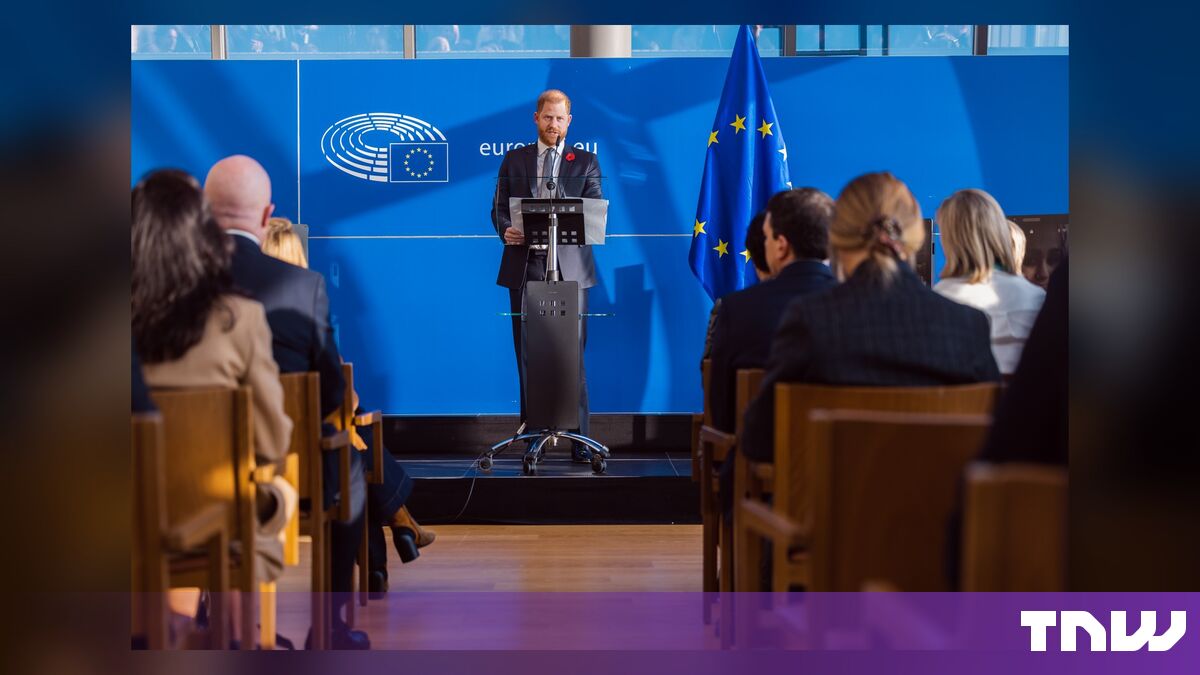
Prince Harry Urges EU to Mandate Child Safety Proofs for Tech Firms
Prince Harry addressed the European Parliament, urging tech companies to prove their apps are safe for children rather than placing the burden on parents. He advocated for stricter regulations under the EU Kids Act, specifically targeting addictive design features like infinite scroll. The appeal coincided with the opening of the Lost Screen Memorial, honoring children harmed by social media.
Key points
- Prince Harry addressed the European Parliament in Brussels, arguing that tech firms must demonstrate product safety for minors instead of relying on parental vigilance.
- He called for specific regulatory changes under the proposed EU Kids Act, including bans on addictive design elements like infinite scroll and differentiated age limits.
- Harry cited Meta, Google, and TikTok as companies that have previously challenged similar safety regulations in California.
- The speech occurred at the opening of the Lost Screen Memorial, which features oversized smartphones displaying photos of children whose deaths were linked to social media harm.
- Harry emphasized that while implementation details can be phased in, the core principle of corporate accountability for child safety cannot be delayed.
A Shift in Responsibility for Digital Safety
Prince Harry has issued a direct appeal to the European Union, calling for a fundamental shift in how technology companies are held accountable for the safety of minors on their platforms. Speaking at the European Parliament in Brussels, the royal advocate argued that the burden of protecting children online should rest squarely with tech firms, not with parents. He stated that companies must actively demonstrate that their products are safe for children to use, rather than requiring parents to prove that a specific product is dangerous. This stance marks a significant push for regulatory frameworks that prioritize proactive safety measures over reactive parental controls.
The Lost Screen Memorial Context
The address took place during the opening of the Lost Screen Memorial, a poignant installation designed to honor children whose deaths have been linked to harm caused by social media. The memorial features replicas of oversized smartphones, each displaying a photograph of a child on the home screen. This visual representation underscores the human cost behind the policy debate. The memorial originally opened in New York the previous year with support from the Archewell charity, founded by Harry and Meghan, the Duchess of Sussex. While Meghan attended the Brussels event, reports indicate she withdrew from speaking duties, leaving Harry to deliver the primary address regarding the urgent need for digital safety reforms.
Targeting Addictive Design Features
Harry used his platform to highlight specific design elements that he believes contribute to harm among young users. He specifically singled out the infinite scroll feature, a common mechanism in social media applications that allows users to consume content indefinitely without natural stopping points. He noted that young people have identified the rise of endless short videos as a critical turning point in their online experiences. Harry argued that banning such addictive features should be a straightforward regulatory requirement. He emphasized that age limits alone are insufficient and that the law must address the addictive nature of the platforms themselves, treating different age groups, such as seven-year-olds and fifteen-year-olds, with distinct protections.
Regulatory Challenges and Precedents
In his speech, Harry pointed to existing legal battles as evidence of the resistance tech giants pose to safety regulations. He named Meta, Google, and TikTok as companies that have previously challenged rules regarding addictive features in California. These challenges illustrate the difficulty in implementing stricter standards, as major tech firms often argue against restrictions on their product designs. Harry urged Members of the European Parliament (MEPs) to go further than previous attempts, advocating for a robust version of the EU Kids Act. The Commission proposed this legislation in September, initially suggesting a ban on social media for children under the age of 13. Harry’s intervention adds weight to the call for more comprehensive measures that address the mechanics of engagement rather than just access.
The Path Forward for EU Legislation
The Prince’s address serves as a high-profile endorsement for the EU Kids Act, aiming to influence the legislative process as it moves forward. He acknowledged that the details of implementation could be phased in over time, but insisted that the core principle of corporate accountability cannot wait. This approach seeks to balance the need for immediate protection with the practicalities of updating global technology platforms. As the EU considers its regulatory stance, Harry’s arguments highlight the growing international pressure on tech companies to prioritize child safety in their product development cycles. The memorial and the speech together frame the issue not just as a policy matter, but as a moral imperative to prevent further harm to young users worldwide.
Key takeaways
- Prince Harry told the European Parliament that tech companies must prove their apps are safe for children, shifting the burden from parents.
- He called for the EU Kids Act to ban addictive design features like infinite scroll and to implement differentiated age limits.
- Harry cited Meta, Google, and TikTok as examples of firms that have previously resisted similar safety regulations in California.
- The speech was delivered at the Lost Screen Memorial, which honors children whose deaths are linked to social media harm.
- Harry emphasized that while regulatory details can be phased in, the principle of corporate safety accountability is urgent.
Sources
The WireByte editorial team synthesises technology news from multiple primary sources, verifies the facts, and links every source. Articles are produced with AI assistance and reviewed under our editorial policy.