OpenAI Launches Business Profiles and Agents in ChatGPT Beta
OpenAI has introduced a beta feature allowing businesses to claim verified profiles and deploy AI agents within ChatGPT. The initiative, aimed at the platform's 1.2 billion weekly users, enables companies to manage product data and interact with customers directly. This move positions ChatGPT as a consumer discovery engine, mirroring search engine functionalities while integrating sponsored agent advertisements.
Key points
- OpenAI, the developer of ChatGPT, launched a beta program called 'Businesses in ChatGPT' to allow companies to claim verified profiles and deploy AI agents.
- The platform serves 1.2 billion weekly users, providing businesses with a 'Business Hub' to update details, prices, and stock information while viewing engagement metrics.
- Eligible US ecommerce and online-service firms can create specialized Business Agents that answer customer questions using company-specific product data.
- OpenAI VP of Monetization Benji Shomair stated the feature aims to deepen business integration as AI becomes a primary tool for consumer discovery.
- Businesses can sponsor these agents as advertisements, building on the 'Sponsored Agents' testing phase initiated in September 2024.
- The company confirmed that user chat data is not shared with businesses, maintaining privacy boundaries between user interactions and corporate profiles.
OpenAI Expands ChatGPT into a Business Discovery Platform
OpenAI has officially rolled out a new beta feature titled 'Businesses in ChatGPT,' marking a significant strategic shift toward integrating corporate entities directly into its conversational AI platform. The initiative allows businesses to claim verified profiles, manage their digital presence, and deploy specialized AI agents that interact with users. This development transforms ChatGPT from a purely informational tool into a comprehensive consumer discovery engine, drawing direct comparisons to the ecosystem established by traditional search engines like Google.
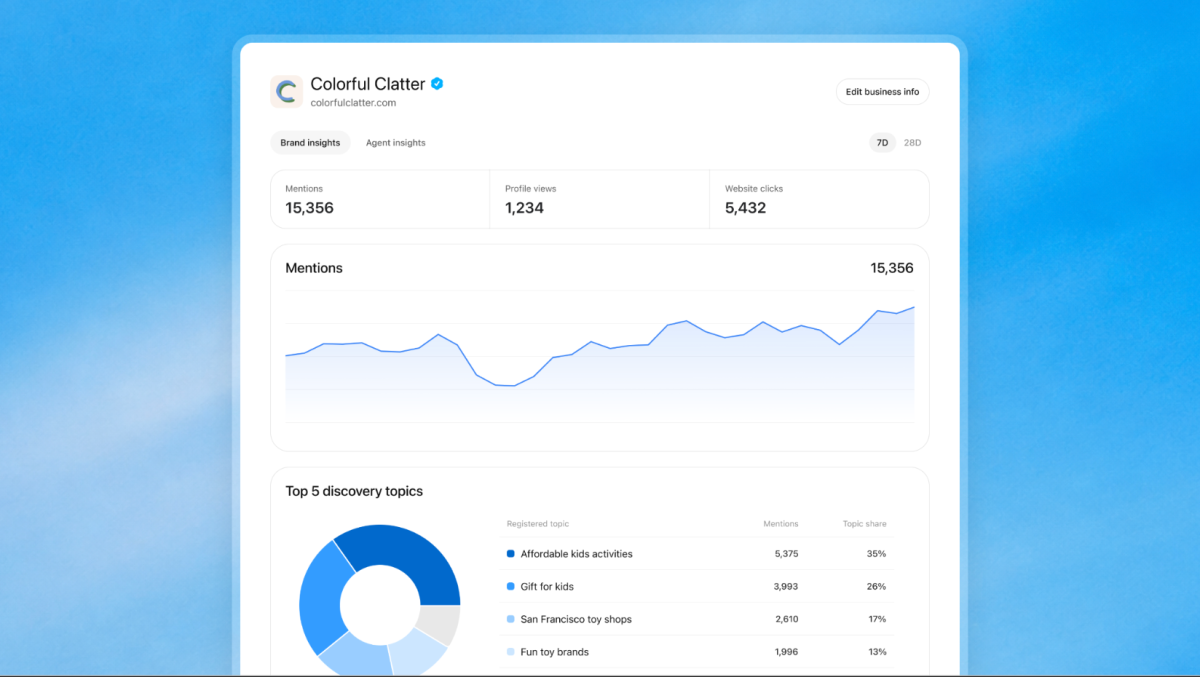
The core of this rollout is the 'Business Hub,' a dashboard where verified companies can update critical information such as product details, pricing, and stock availability. Through this interface, businesses gain access to limited analytics similar to Google Analytics. These insights reveal how users interact with their profiles, including metrics on profile views, the frequency of mentions in conversations, and click-through rates to external websites. OpenAI emphasizes that while these metrics are available to businesses, user chat data remains private and is not shared with corporate entities.
For eligible US-based ecommerce and online-service firms, the beta includes the ability to launch 'Business Agents.' These specialized AI bots are designed to answer customer questions using the company's specific product data. When a business appears in a ChatGPT response, users can access its profile and engage directly with the agent. The interface clearly labels these interactions and keeps them distinct from OpenAI’s general model responses, ensuring transparency for the user. This functionality allows businesses to provide instant, accurate support without human intervention.
Benji Shomair, OpenAI’s Vice President of Monetization, highlighted the strategic importance of this move. He noted that as consumers increasingly rely on AI to discover products, compare options, and make purchasing decisions, ChatGPT has evolved into a primary platform for connecting people and businesses. The company describes the current rollout as an early step in bringing businesses more deeply into the ChatGPT ecosystem, aiming to create a seamless bridge between AI assistance and commercial transactions.
The integration of business profiles also serves OpenAI’s advertising strategy. The company is leveraging this infrastructure to support 'Sponsored Agents,' a form of advertisement that OpenAI began testing in September 2024. Businesses can sponsor their agents as landing spots for ChatGPT ads, paying to have their AI representatives featured prominently in relevant search results. OpenAI states that paying for sponsorship does not alter the frequency or ranking of organic business mentions, maintaining a distinction between paid placements and natural discovery.
This launch targets OpenAI’s massive user base, which the company reports includes 1.2 billion weekly active users. By providing businesses with tools to control their narrative and interact directly with this audience, OpenAI aims to enhance the utility of its platform for both consumers and enterprises. The beta phase allows the company to gather data on user engagement and business adoption before potentially expanding the feature globally.
The move reflects a broader industry trend where tech giants are integrating commerce and AI more tightly. By positioning ChatGPT as a destination for product discovery, OpenAI is competing not only with other AI models but also with established e-commerce and search platforms. The success of this beta will likely influence how other AI providers approach business integration and monetization in the coming months.
Key takeaways
- OpenAI launched a beta program allowing businesses to claim verified profiles and deploy AI agents within ChatGPT.
- The 'Business Hub' provides companies with tools to update product data and view engagement metrics like clicks and mentions.
- Eligible US ecommerce firms can create specialized agents that answer customer questions using company-specific data.
- The initiative positions ChatGPT as a consumer discovery engine, mirroring functionalities found in search engines.
- Businesses can sponsor their agents as advertisements, building on the 'Sponsored Agents' testing phase from September 2024.
- OpenAI confirmed that user chat data is not shared with businesses, preserving privacy between user interactions and corporate profiles.
Sources
The WireByte editorial team synthesises technology news from multiple primary sources, verifies the facts, and links every source. Articles are produced with AI assistance and reviewed under our editorial policy.