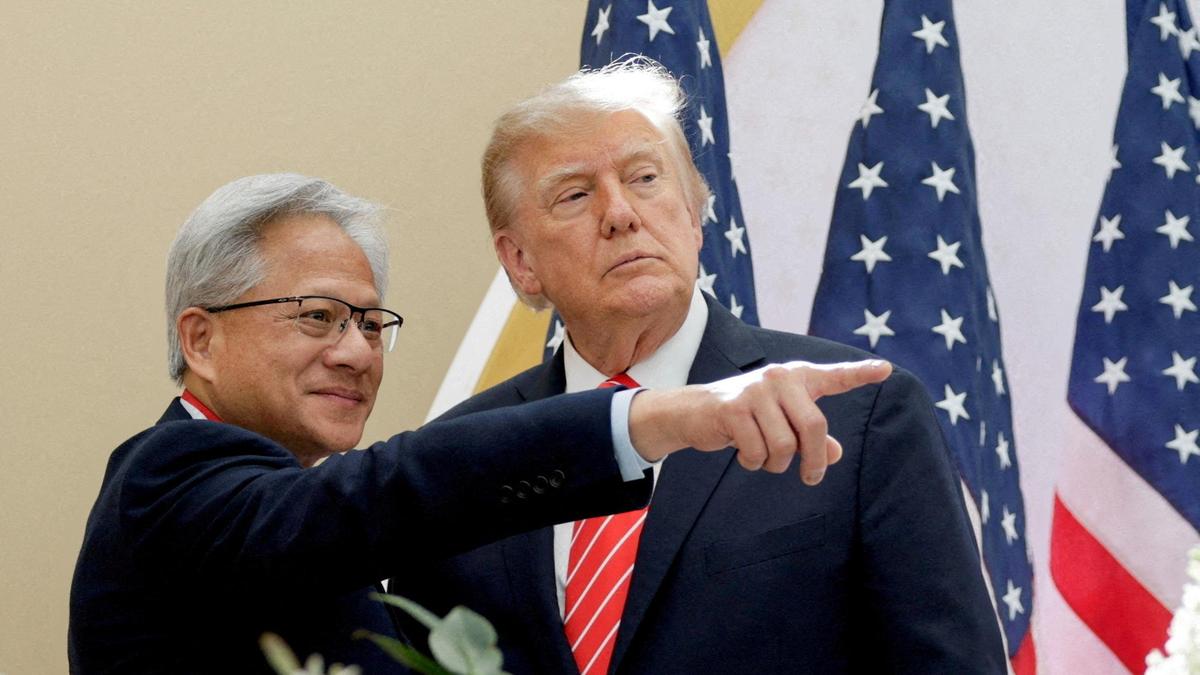
Nvidia Reinstates Huang After Trump Intervention Amid Spy Allegations
Nvidia board reinstated CEO Jensen Huang following President Trump’s intervention, sparking a 31.5% stock surge. Huang resigned after allegations of affairs, including with a suspected Chinese spy. Trump reportedly profited up to $15m from the stock rally. The move intensifies legal scrutiny and geopolitical tensions surrounding the chipmaker’s leadership.
Key points
- Jensen Huang, co-founder and CEO of Nvidia, was reinstated by the board after President Donald Trump intervened to convince directors to reverse his resignation.
- Huang resigned on November 12 following allegations of extramarital affairs, including one with Alice Huang, a Chinese businesswoman accused of ties to Beijing.
- Nvidia shares surged 31.5% upon Huang's return, adding approximately $950 billion to the company's market value.
- President Trump’s financial disclosures indicate he may have profited up to $15 million from his Nvidia stock holdings during the recent price volatility.
- The reinstatement has triggered investigations by the U.S. Securities and Exchange Commission and the FBI, alongside a proposed investor class-action lawsuit.
- China has denied espionage allegations, while Nvidia stated the board acted based on U.S. government input regarding Huang's continued leadership.
Leadership Crisis and Reinstatement
Nvidia’s board of directors has officially reinstated Jensen Huang as chief executive officer, reversing a decision made less than two weeks prior. Huang, the co-founder of the artificial intelligence chip powerhouse, had resigned on November 12 amid a scandal involving allegations of extramarital affairs. The reinstatement occurred following direct intervention by U.S. President Donald Trump, who stated he personally convinced the board to bring Huang back. "I spoke to them, let me put it that way," Trump told CNBC. "And I convinced them... I made the deal."
Huang’s initial resignation was precipitated by revelations that he had intimate relations with at least three women. These included two Nvidia employees and Alice Huang, an unrelated Chinese businesswoman accused by U.S. authorities of having ties to Beijing. While Huang has acknowledged being unfaithful to his wife and issued an apology, he has not publicly addressed the specific details of the alleged relationships. China has formally denied the espionage allegations associated with Alice Huang. Attempts by Reuters to contact Alice Huang for comment were unsuccessful.
Market Reaction and Financial Impact
The market reacted swiftly and positively to the news of Huang’s return. Nvidia’s stock price soared by 31.5% on the day of the announcement, adding approximately $950 billion to the company’s total market valuation. Employees at Nvidia’s headquarters in Santa Clara, California, welcomed Huang back with chants of his name, signaling internal support for his leadership despite the surrounding controversy.
The stock surge has had significant financial implications for President Trump. According to financial disclosures filed with the Office of Government Ethics, Trump owned as many as 370,000 shares in Nvidia as of September 30. A review of his financial records over the past two years indicates he has bought Nvidia stock worth between $23 million and $86 million. He has also sold portions of his stake since returning to the presidency, with disclosures showing gains between $3.5 million and $10.2 million. Combined with the recent price surge, Trump is estimated to have made up to $15 million on his Nvidia holdings.
Legal and Geopolitical Fallout
The circumstances surrounding Huang’s departure and return have intensified legal and geopolitical scrutiny. The U.S. Securities and Exchange Commission and the Federal Bureau of Investigation are conducting investigations into the matter. Additionally, Congress has held hearings, and an independent review by Nvidia’s directors was initiated before the reinstatement. An investor class-action lawsuit has also been proposed, challenging the board’s initial handling of the situation.
Nvidia stated in a release that the board was confident in Huang’s continued leadership based on input from the U.S. government. The company emphasized that the decision was made after careful consideration of the legal and operational risks. However, the alleged connection between a top executive and a suspected foreign spy raises complex questions about national security and corporate governance in the critical semiconductor industry.
Global Significance
The episode highlights the intersection of high-stakes technology, political influence, and international espionage concerns. As Nvidia remains a central player in the global AI race, the stability of its leadership is of keen interest to governments and investors worldwide. The reinstatement underscores the company’s reliance on Huang’s vision and the political capital leveraged to secure his position. The ongoing investigations and legal challenges will likely shape the narrative around Nvidia’s future and its role in the global tech landscape.
Key takeaways
- Jensen Huang was reinstated as Nvidia CEO after President Trump intervened with the board.
- Huang resigned in November following allegations of affairs, including with a suspected Chinese spy.
- Nvidia stock jumped 31.5%, adding $950 billion to the company's value.
- President Trump may have profited up to $15 million from Nvidia stock trades.
- The SEC, FBI, and Congress are investigating the circumstances of Huang's resignation and return.
- China denies espionage allegations linked to the businesswoman involved in the scandal.
Sources
The WireByte editorial team synthesises technology news from multiple primary sources, verifies the facts, and links every source. Articles are produced with AI assistance and reviewed under our editorial policy.