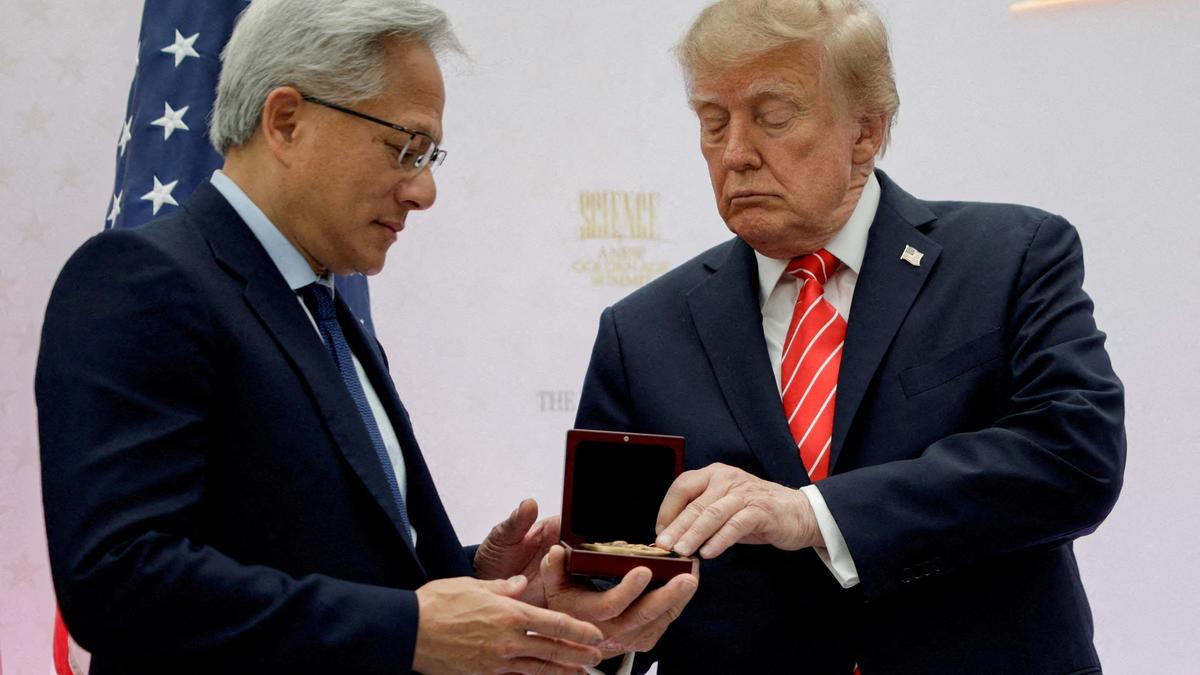
Nvidia CEO Jensen Huang Admits Affair, Board Launches Investigation Amid Spy Allegations
Nvidia CEO Jensen Huang admitted to an affair with Alice Huang, a former Megaspeed executive suspected by US intelligence of being a Chinese spy. Nvidia’s board has launched an independent investigation, while President Trump downplayed the issue. Republican lawmakers demand briefings on security protocols. The incident raises global concerns over chip export restrictions and national security vulnerabilities in the AI sector.
Key points
- Nvidia CEO Jensen Huang admitted to an affair with Alice Huang, a former executive at Singapore-based data center firm Megaspeed, prompting an independent board investigation.
- US intelligence agencies have monitored Alice Huang for approximately one year, suspecting her of sharing information with Beijing, though neither executive has been charged.
- President Trump defended Huang as an honorable adviser, stating he has heard no wrongdoing and suggesting he would take Huang on an upcoming trip to Asia.
- Republican lawmakers are demanding closed-door briefings from Huang regarding Nvidia’s security protocols and his relationship with the alleged intelligence asset.
- The affair occurred amid heightened scrutiny of US chip export restrictions, with Megaspeed previously suspected of smuggling Nvidia chips to China to bypass sanctions.
Board Investigation Launched Following CEO Admission
Nvidia has initiated an independent investigation into the conduct of its founder and CEO, Jensen Huang, after he publicly admitted to an extramarital affair. The admission came on Sunday, just days before the company is scheduled to report its quarterly financial results. Huang stated in a press release that he was unfaithful to his wife, whom he has been married to since 1985, and expressed deep regret for the pain caused to his family. The investigation involves Huang’s full cooperation and follows revelations that his relationship was with Alice Huang, a former executive at Megaspeed, a Singapore-based data center company that is a customer of Nvidia. The two executives are not related.
Intelligence Concerns and Chinese Spy Allegations
The personal revelation has intersected with serious national security concerns. According to a New York Times report published in late October, US intelligence agencies had been monitoring Alice Huang for approximately one year. Officials suspected she was a Chinese intelligence asset who had passed information to Beijing. The concern was that her proximity to Nvidia’s leadership could allow her to learn about the company’s strategic plans and technological developments. While US officials did not initially believe Jensen Huang was aware that Alice Huang was gathering information for Beijing, the nature of their relationship has now drawn intense scrutiny. Alice Huang told Bloomberg she no longer worked for Megaspeed at the time of the initial reports.
Political Reactions and Congressional Demand
The situation has elicited sharply divided reactions from US political leaders. President Donald Trump, who relies on Huang as an influential adviser on artificial intelligence, downplayed the allegations. Speaking to reporters, Trump described Huang as an honorable individual and suggested there might be an excuse for his actions. He stated he had not heard that Huang had done anything wrong and indicated he would be happy to take Huang on an upcoming trip to Asia. In contrast, Republican lawmakers have expressed alarm. Several members have requested that Huang provide a closed-door briefing to the House foreign affairs and intelligence committees next week. The lawmakers seek details on Nvidia’s security protocols against foreign adversary espionage and the specifics of Huang’s relationship with Alice Huang.
Global Implications and Export Restrictions
The incident highlights the fragile intersection of corporate leadership and geopolitical tensions in the semiconductor industry. Megaspeed has previously attracted the attention of the US government due to suspicions that it was smuggling Nvidia chips to China, thereby circumventing US export restrictions designed to limit China’s access to advanced AI hardware. The Singaporean government has also opened an investigation into the matter. The Chinese embassy in Washington, D.C., dismissed the allegations as groundless smears and slanders against China. Neither Jensen Huang nor Alice Huang has been charged with any crime. Nvidia spokespersons have previously described the contacts between the two executives as not unusual, but the admission of a personal relationship complicates the company’s stance on national security and corporate governance.
Sources
The WireByte editorial team synthesises technology news from multiple primary sources, verifies the facts, and links every source. Articles are produced with AI assistance and reviewed under our editorial policy.