Netflix's 'Steps' Ending Explained: Directors Reveal Cinderella Twist
Netflix’s animated film Steps, directed by Alyce Tzue and John Ripa, reimagines Cinderella’s stepsisters as victims of Western bias against their East Asian heritage. The finale reveals a surprising narrative shift as protagonists Lilith and Cinderella undo damage caused by ex-friend Priscilla to restore the kingdom of Alouette.
Key points
- Directors Alyce Tzue and John Ripa crafted a narrative where the stepsisters, Lilith and Margot, face distrust due to their East Asian heritage rather than traditional villainy.
- The plot follows Lilith (Ali Wong) and Cinderella (Amanda Seyfried) as they attempt to reverse harm inflicted by their ex-friend Priscilla (Nikki Glaser) on the kingdom of Alouette.
- The central quest involves retrieving the glass slipper to travel back in time to the night Priscilla stole the fairy godmother’s magic wand, played by Bette Midler.
- The film’s ending subverts expectations by taking the story in an unexpected direction, reshaping the audience's understanding of the characters' roles and relationships.
- The film is produced by Netflix Animation Studios and features voice work from Stephanie Hsu, adding to its distinctive animated style.
A Fresh Perspective on a Classic Tale
Netflix’s latest animated offering, Steps, has emerged as a distinctive entry in the realm of fairy-tale adaptations. Directed by Alyce Tzue, known for Soar, and John Ripa, who worked on Raya and the Last Dragon, the film dares to question traditional narratives. It posits a scenario where Cinderella’s so-called ugly stepsisters are not inherently malicious but are instead besieged by a Western world that reacts to their East Asian heritage with distrust and unease. This conceptual framework sets the stage for a story that is far more nuanced than simple revisionism.
The Core Conflict and Characters
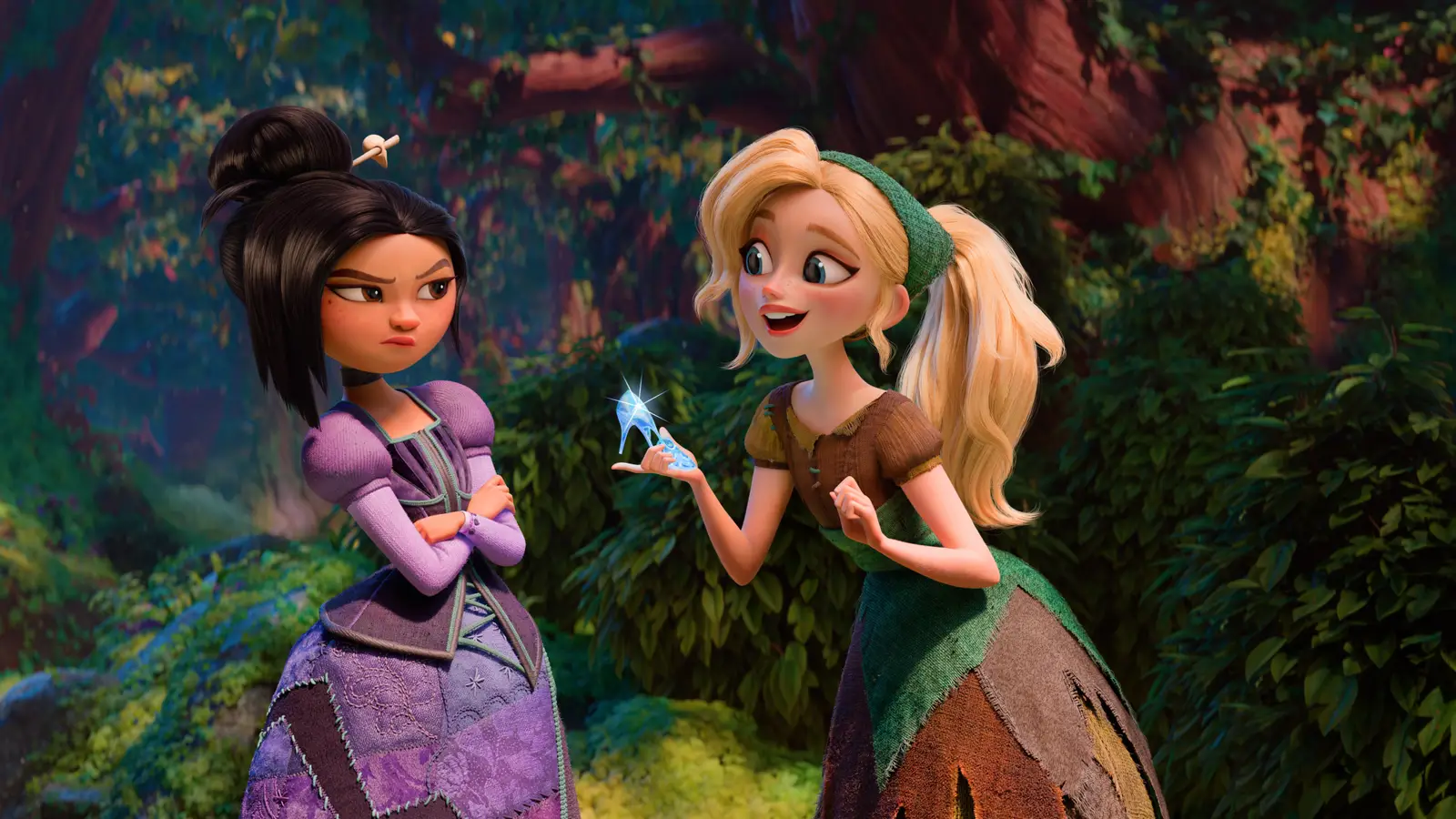
The narrative centers on the complex relationships among Lilith, Margot, and Cinderella. Voiced by Ali Wong, Stephanie Hsu, and Amanda Seyfried respectively, these characters drive the film from a promising concept to a compelling must-see. The central plot involves Lilith and Cinderella working together to undo the harm caused by their ex-friend, Priscilla. Voiced by Nikki Glaser, Priscilla is depicted as bratty and insecure, having inflicted significant damage on the kingdom of Alouette. The protagonists’ goal is to restore balance and correct the injustices perpetrated by Priscilla.
The Quest for the Glass Slipper
To achieve their objective, Lilith and Cinderella must retrieve the glass slipper. This artifact serves as a key to time travel, allowing them to return to the night of the ball before Priscilla stole the fairy godmother’s magic wand. The fairy godmother is portrayed by Bette Midler, adding a layer of star power to the ensemble. The retrieval of the slipper is not merely a physical challenge but a narrative device that propels the story toward its climax. The protagonists’ success in this task is crucial for reversing the timeline and undoing the damage done to Alouette.
The Unexpected Finale
The ending of Steps has sparked discussion among viewers and critics alike. While not confusing, the finale takes the story in a surprising direction. It reshapes the understanding of Lilith and Cinderella’s journey, moving beyond the initial premise of fairy-tale revisionism. The directors have revealed the true meaning behind this twist, emphasizing the film’s deeper themes. The ending challenges the audience to reconsider the roles of the characters and the nature of their conflicts. It is a deliberate choice that adds depth to the narrative and distinguishes the film from other adaptations.
Cultural Context and Reception
Steps is produced by Netflix Animation Studios, a division known for its diverse and innovative content. The film’s focus on East Asian heritage and Western bias reflects contemporary cultural conversations. By centering the narrative on the stepsisters’ experiences, the film offers a fresh perspective on a well-known story. The involvement of directors Alyce Tzue and John Ripa brings a unique visual and storytelling style to the project. Their previous works, Soar and Raya and the Last Dragon, have been well-received, setting high expectations for Steps. The film’s release has generated significant interest, with viewers eager to see how the directors resolve the central conflict.
What Happens Next
As the dust settles on the film’s release, the focus shifts to its broader impact. The unexpected ending has prompted analysis and discussion, highlighting the film’s narrative complexity. The directors’ decision to subvert expectations has been noted as a key factor in the film’s distinctiveness. For Netflix, Steps represents a continued investment in original animated content that challenges traditional tropes. The film’s success will likely influence future projects, encouraging more diverse and nuanced storytelling in the animation industry. The legacy of Steps will be measured by its ability to engage audiences and provoke thought about cultural representation and narrative innovation.
Key takeaways
- Directors Alyce Tzue and John Ripa reimagined the stepsisters as victims of Western bias in Netflix's animated film Steps.
- The plot follows Lilith (Ali Wong) and Cinderella (Amanda Seyfried) as they undo harm caused by ex-friend Priscilla (Nikki Glaser) in Alouette.
- The protagonists must retrieve the glass slipper to travel back in time to stop Priscilla from stealing the fairy godmother's wand (Bette Midler).
- The film's ending takes a surprising direction, reshaping the narrative and challenging traditional fairy-tale tropes.
- Produced by Netflix Animation Studios, the film features voice work from Ali Wong, Stephanie Hsu, Amanda Seyfried, and Bette Midler.
Sources
The WireByte editorial team synthesises technology news from multiple primary sources, verifies the facts, and links every source. Articles are produced with AI assistance and reviewed under our editorial policy.