Meta Expands Parental Alerts for Teen Self-Harm Searches on Facebook
Meta is extending parental notification features to Facebook, mirroring earlier Instagram updates. Parents supervising teen accounts will receive alerts if their child repeatedly searches for self-harm content or engages with Meta AI in ways suggesting suicide risk. The company aims to balance safety with privacy, providing resources without revealing specific search terms.
Key points
- Meta, the parent company of Facebook and Instagram, is expanding parental supervision tools to Facebook accounts following similar updates on Instagram earlier this year.
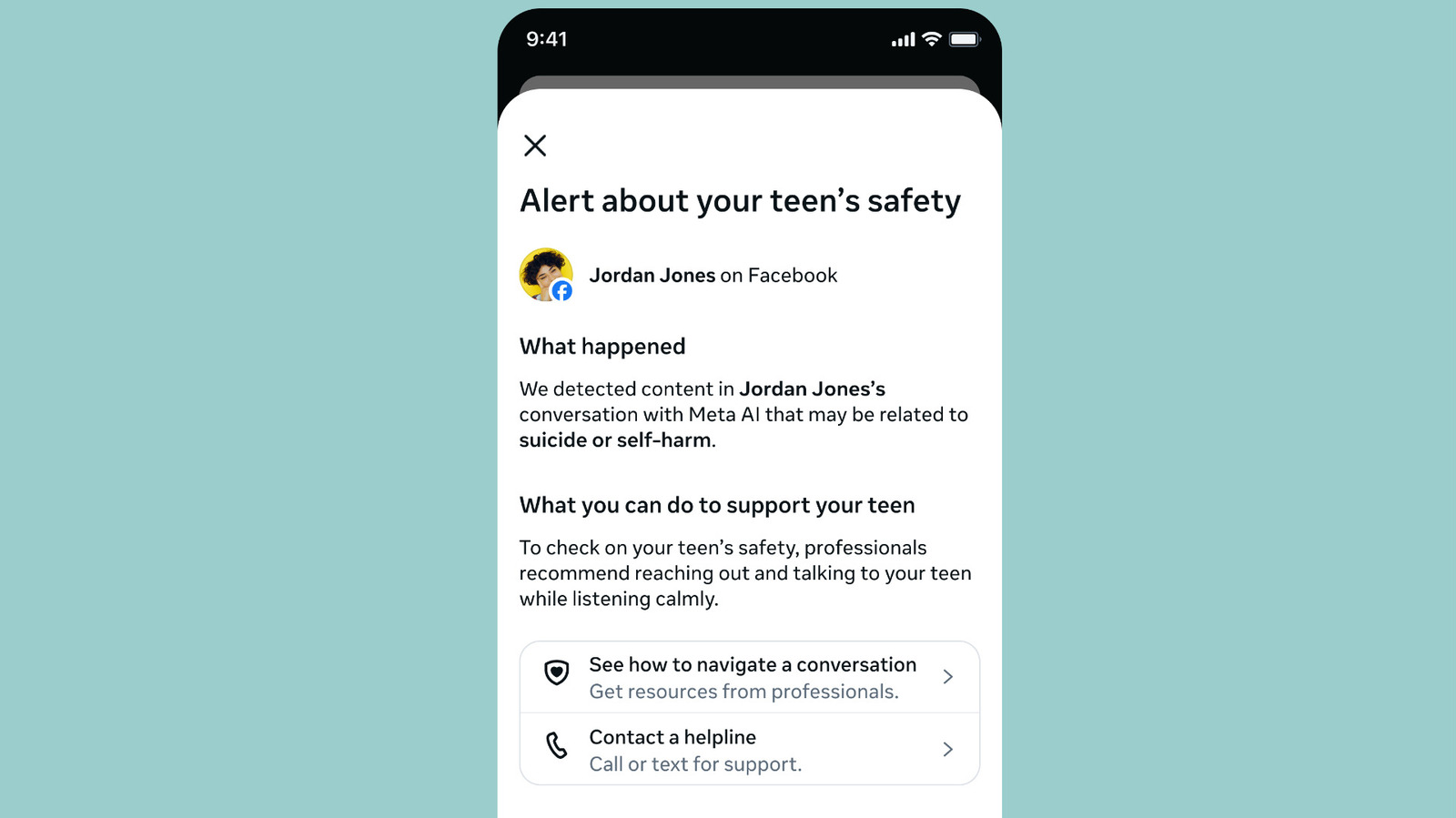
- Parents will receive notifications via text, email, WhatsApp, or app alerts if their teen repeatedly searches for self-harm content within a short period or chats with Meta AI in a manner suggesting suicide risk.
- The specific thresholds for triggering alerts remain vague, with Meta stating it chose a level that errs on the side of caution to avoid unnecessary notifications while ensuring safety.
- Alerts do not disclose specific search terms or chat details but provide helpline resources and encourage parents to speak with their teens about the content.
- This update supports Meta's broader initiative to encourage enrollment in supervised 'teen accounts' that offer caregivers enhanced control over privacy settings and account interactions.
Meta Broadens Safety Net on Facebook
Meta has announced a significant expansion of its parental notification systems, extending safety features previously limited to Instagram to its Facebook platform. This move marks a strategic effort to consolidate teen safety protocols across its major social media properties. The company confirmed that parents who supervise teen accounts on Facebook will now receive alerts regarding their children's online behavior, specifically targeting content related to self-harm and suicide. This development follows a similar rollout on Instagram earlier this year, signaling a unified approach to digital safety within the Meta ecosystem.
Triggering Mechanisms and Privacy Boundaries
The new system is designed to intervene when specific behavioral patterns are detected. Parents will be notified if their teen repeatedly searches for self-harm content within a short period of time. Additionally, the update includes monitoring of interactions with Meta AI. If a teen engages with the AI assistant in a way that suggests they may be at risk of suicide or self-harm, parents will receive a corresponding alert. Meta has intentionally kept the exact criteria for these triggers vague. The company stated it selected a threshold requiring multiple searches in a brief timeframe to balance effectiveness with the desire to avoid sending unnecessary notifications that could disrupt family dynamics.
Notification Channels and Content Restrictions
When an alert is triggered, parents receive the information through multiple channels, including text messages, emails, WhatsApp, and push notifications within their own Meta app. Crucially, these alerts do not reveal the specific search terms used by the teen or the detailed content of conversations with Meta AI. This design choice appears intended to protect the teen's privacy while still providing parents with a warning sign. Instead of explicit details, the notifications recommend that parents speak with their teens and provide links to helplines and other resources. This approach aims to facilitate supportive conversations rather than punitive monitoring.
Integration with Teen Accounts
This feature is part of Meta's broader push to encourage the adoption of supervised teen accounts. These accounts offer caregivers more control over privacy settings and account interactions, addressing growing concerns about teen mental health and online safety. By integrating parental notifications into the Facebook platform, Meta hopes to make these safety tools more accessible and comprehensive. The company emphasizes that the goal is to provide parents with the information they need to support their children without overstepping into invasive surveillance. The vague nature of the trigger criteria reflects an ongoing effort to refine the balance between safety and privacy.
Global Implications and Industry Context
The expansion of these features comes amid increasing global scrutiny of social media platforms' impact on youth mental health. Regulators and advocacy groups have long called for stronger safeguards to protect minors from harmful content. Meta's move to unify its parental notification systems across Facebook and Instagram may set a precedent for other tech companies. However, the lack of transparency regarding the specific algorithms and thresholds used to detect self-harm risks has drawn some criticism. Privacy advocates argue that the vague criteria could lead to inconsistent application and potential over-reporting. Despite these concerns, Meta maintains that the current design prioritizes the well-being of teen users while respecting their right to privacy.
Key takeaways
- Meta is extending parental alerts for self-harm searches and risky AI chats to Facebook, matching earlier Instagram updates.
- Alerts are sent via text, email, WhatsApp, or app notifications when teens repeatedly search for harmful content or show signs of risk.
- The company keeps trigger thresholds vague to avoid unnecessary alerts, prioritizing caution over precision in detection.
- Notifications omit specific search terms or chat details, instead offering helpline resources and encouraging parent-teen dialogue.
- The update supports Meta's broader strategy to promote supervised teen accounts with enhanced parental controls.
- The move reflects growing pressure on tech firms to address teen mental health concerns amid regulatory scrutiny.
Sources
The WireByte editorial team synthesises technology news from multiple primary sources, verifies the facts, and links every source. Articles are produced with AI assistance and reviewed under our editorial policy.