Lenovo ThinkPlus USB Drive Lacks Encryption Despite Security Claims
Security researcher Xusheng Li discovered that Lenovo’s ThinkPlus FU100 fingerprint USB drive, marketed with AES-256 encryption, contains only an unencrypted SD card. The biometric sensor merely unlocks the USB connection, leaving data exposed. This discrepancy undermines consumer trust in hardware security features and highlights broader vulnerabilities in supposedly secure storage devices.
Key points
- Xusheng Li, a security researcher, analyzed the Lenovo ThinkPlus FU100 fingerprint USB drive and found it lacks advertised encryption.
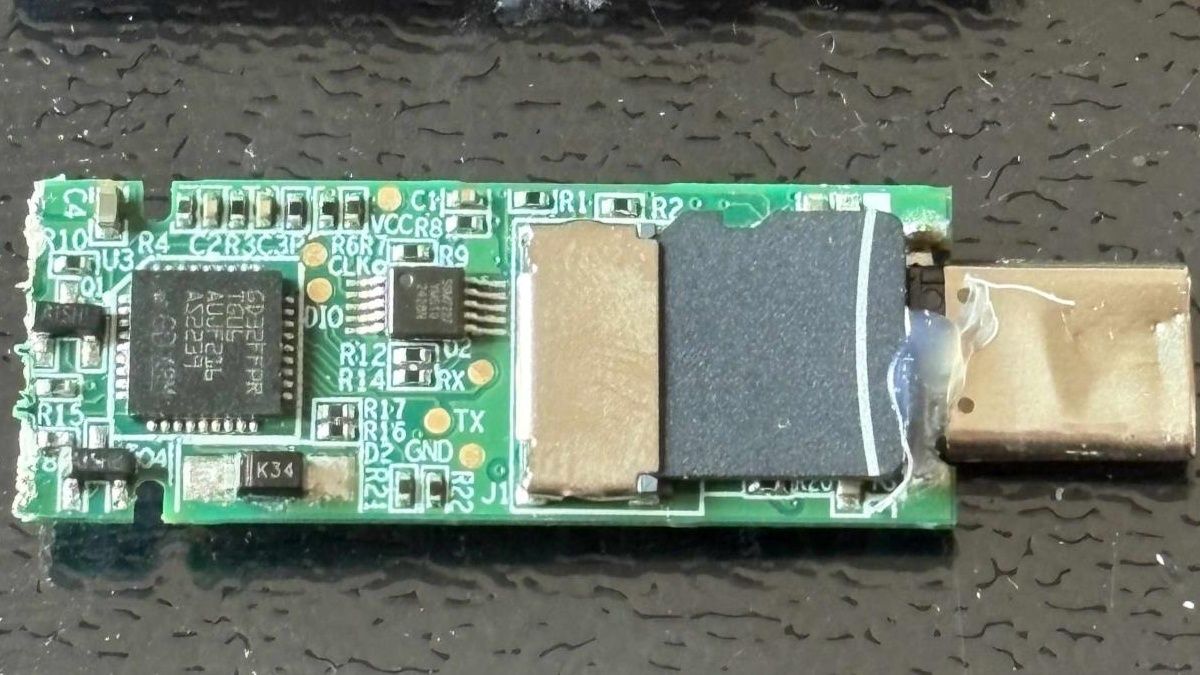
- The device, sold as featuring AES-256 encryption, internally uses a plain SD card with no data protection.
- The fingerprint reader only controls the USB connection port, not the storage medium itself.
- Li’s investigation also revealed backdoor accounts and hardcoded keys in other secure USB storage products.
- The findings suggest significant gaps between marketing claims and actual security implementations in consumer tech.
Security Claims vs. Reality
A recent investigation by security researcher Xusheng Li has exposed a significant discrepancy in the security features of Lenovo’s ThinkPlus FU100 fingerprint USB drive. Marketed as a secure storage solution with AES-256 encryption, the device was found to contain only an unencrypted SD card housed within a specialized casing. This revelation challenges the product's core value proposition, which relies on the promise of robust data protection through biometric authentication and advanced encryption standards.
How the Device Works
Upon examination, Li discovered that the fingerprint reader integrated into the USB drive does not encrypt the data stored on the card. Instead, the biometric sensor serves solely as a gatekeeper for the USB connection. Once the correct fingerprint is scanned, the device allows the host computer to access the storage medium. However, because the SD card itself is not encrypted, any data stored on it remains accessible in plain text once the connection is established. This means that if the device is stolen or intercepted after the fingerprint unlock, the data is vulnerable to extraction.
Broader Industry Implications
Li’s findings are not isolated to Lenovo. His AI-assisted follow-up investigation uncovered similar security flaws in other USB storage products from different manufacturers. These devices, which also claim to offer enhanced security features, were found to contain backdoor accounts and hardcoded encryption keys. The presence of these vulnerabilities suggests a systemic issue within the industry, where marketing claims often outpace actual security implementations. Hardcoded keys are particularly concerning, as they can be easily extracted by attackers, rendering the encryption useless.
Consumer Trust at Risk
The exposure of these security flaws poses a significant risk to consumer trust. Users who purchase these devices with the expectation of secure data storage may find themselves vulnerable to data breaches. The discrepancy between advertised features and actual performance highlights the need for greater transparency and rigorous testing in the consumer electronics industry. Consumers are increasingly reliant on hardware-level security, and failures in this area can have severe consequences for personal and corporate data.
What Happens Next
Lenovo has not yet issued an official statement regarding Li’s findings. However, the incident is likely to prompt calls for more stringent security certifications and third-party audits for devices marketed as secure. Regulatory bodies may also take note, potentially leading to stricter guidelines on how security features are advertised and tested. For now, users of the ThinkPlus FU100 and similar devices are advised to exercise caution and consider alternative storage solutions that offer verified encryption.
Key takeaways
- Lenovo's ThinkPlus FU100 USB drive lacks AES-256 encryption despite marketing claims.
- The fingerprint reader only unlocks the USB connection, not the data on the SD card.
- Other secure USB drives also contain backdoor accounts and hardcoded keys.
- The findings highlight systemic security issues in the consumer storage device market.
- Consumers are urged to verify security features before purchasing sensitive data storage devices.
Sources
The WireByte editorial team synthesises technology news from multiple primary sources, verifies the facts, and links every source. Articles are produced with AI assistance and reviewed under our editorial policy.