iFixit Teardown Reveals PROLED MacBook Pro's Illuminated Logo and Repairability
iFixit has dissected Apple's new PROLED MacBook Pro, detailing how the illuminated logo functions via internal LEDs and a reflective coating. The teardown highlights the device's lighter weight, tandem OLED display, and mixed repairability, with soldered components limiting user repairs. While logic board swaps work, screen damage is critical, impacting global repair standards.
Key points
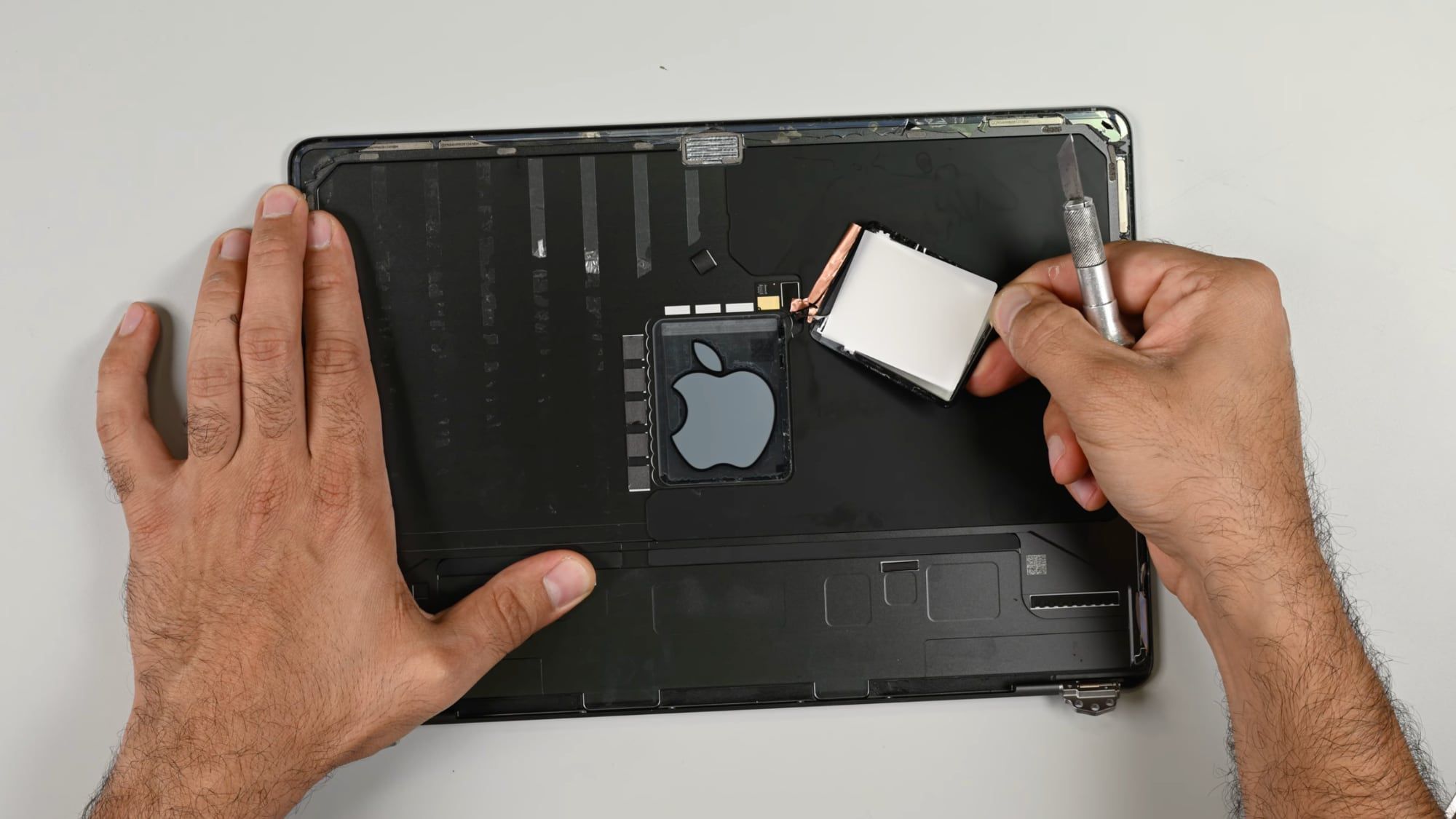
- iFixit analyzed the Apple PROLED MacBook Pro, revealing the illuminated logo uses four LEDs and a two-way mirror coating behind the display.
- The laptop weighs 3 pounds (1.38 kg), down from the previous 14-inch model's 3.4 pounds (1.55 kg), achieved through a tandem OLED stack.
- Repairability is limited as RAM, storage, HDMI, and SDXC ports are soldered to the logic board, requiring full board replacement for fixes.
- iFixit successfully swapped logic boards between units, confirming touchscreen and Touch ID functionality without pairing issues.
- The display panel is fragile; iFixit broke the glass during disassembly, noting that logo repairs require full screen removal.
Illuminated Logo Engineering
iFixit has published a detailed teardown of Apple's newly released PROLED MacBook Pro, shedding light on the engineering choices behind its distinctive features. A primary focus of the analysis is the return of the illuminated Apple logo on the device's lid. Apple reintroduced this iconic branding element, which was discontinued in 2016, despite the shift away from traditional LCD backlights. Since the new PROLED XDR Display utilizes organic light-emitting diodes that do not require a backlight layer, Apple had to devise a separate mechanism to achieve the glow. The teardown reveals that the company installed a light strip containing four LEDs positioned behind the display. These LEDs project light through a diffuser layer to evenly illuminate the logo. Additionally, the logo itself is coated with a two-way mirror finish. This coating allows the emblem to appear metallic and reflective when the lights are off, yet remains translucent enough to let the internal LEDs shine through when activated.
Display Technology and Weight Reduction
Beyond the branding, the teardown examines the core display technology and the laptop's physical construction. The PROLED MacBook Pro features a tandem OLED display, which stacks two light-emitting layers to achieve higher brightness levels than conventional single-layer OLED panels. Microscopic analysis by iFixit noted that the blue subpixels are larger than the red and green counterparts, a design choice likely intended to reduce material strain and potentially extend the display's operational lifespan. This advanced display technology is housed in a chassis that Apple claims is significantly lighter than its predecessor. The new 14-inch model weighs 3 pounds (1.38 kg), a reduction from the 3.4 pounds (1.55 kg) of the standard previous-generation 14-inch MacBook Pro. The hinge mechanism, while designed to support touch input, was found by iFixit to be structurally similar to the M6 MacBook Pro's hinge, merely stiffer to better maintain the display's angle when tapped.
Repairability and Component Analysis
The teardown also provides a critical assessment of the laptop's repairability, highlighting both accessible and restricted components. While the Thunderbolt/USB-C ports and cooling fans are replaceable, accessing them still necessitates the removal of the entire logic board. Similarly, the headphone jack requires logic board extraction for replacement. More restrictive are the HDMI port, SDXC card slot, RAM, and storage, all of which are soldered directly to the logic board. This soldering limits user repairs to full board swaps rather than individual component fixes. iFixit tested this by swapping logic boards between two PROLED MacBook Pro units. After running Apple's Repair Assistant, all components, including the touchscreen and Touch ID, functioned correctly. Notably, the touchscreen did not introduce new pairing complications, a common issue in previous generations. However, the display assembly itself proved fragile. During the disassembly process, iFixit broke the panel as the glass separated from the underlying layers, destroying the OLED. This incident underscores that any repair involving the logo or display requires complete screen replacement, reinforcing the device's low repairability score.
Key takeaways
- iFixit's teardown of the Apple PROLED MacBook Pro reveals the illuminated logo uses four internal LEDs and a reflective two-way mirror coating.
- The laptop weighs 3 pounds (1.38 kg), a reduction from the previous 14-inch model's 3.4 pounds (1.55 kg).
- The display employs a tandem OLED stack with larger blue subpixels to potentially extend lifespan.
- Critical components including RAM, storage, HDMI, and SDXC ports are soldered to the logic board.
- Logic board swaps were successful, with Touch ID and touchscreen functionality preserved after repair software execution.
- The display panel is fragile, with iFixit breaking the glass during disassembly, necessitating full screen replacement for repairs.
Sources
The WireByte editorial team synthesises technology news from multiple primary sources, verifies the facts, and links every source. Articles are produced with AI assistance and reviewed under our editorial policy.