Google's Suncatcher Satellite Successfully Runs AI Model in Orbit
Google’s Project Suncatcher satellite, launched earlier this month, has successfully executed its first AI workload in orbit. The spacecraft, carrying four Tensor Processing Units, generated a haiku using the Gemma 4 model. This test validates hardware performance under space conditions, paving the way for twin interconnected satellites planned for 2027.
Key points
- Google launched the Project Suncatcher satellite earlier this month on a SpaceX Falcon 9 rocket, carrying four Tensor Processing Units (TPUs).
- After a three-week commissioning period, the satellite successfully booted its AI model, Gemma 4, and generated a space-themed haiku.
- The satellite generates up to 1 kW of electricity, but power constraints limit TPU usage to approximately twenty minutes at a time.
- Google aims to evaluate TPU performance under thermal stress and radiation exposure during ongoing orbital tests.
- The successful test validates the concept for future networks of close-flying satellites, with twin interconnected units planned for 2027.
Orbital AI Milestone Achieved
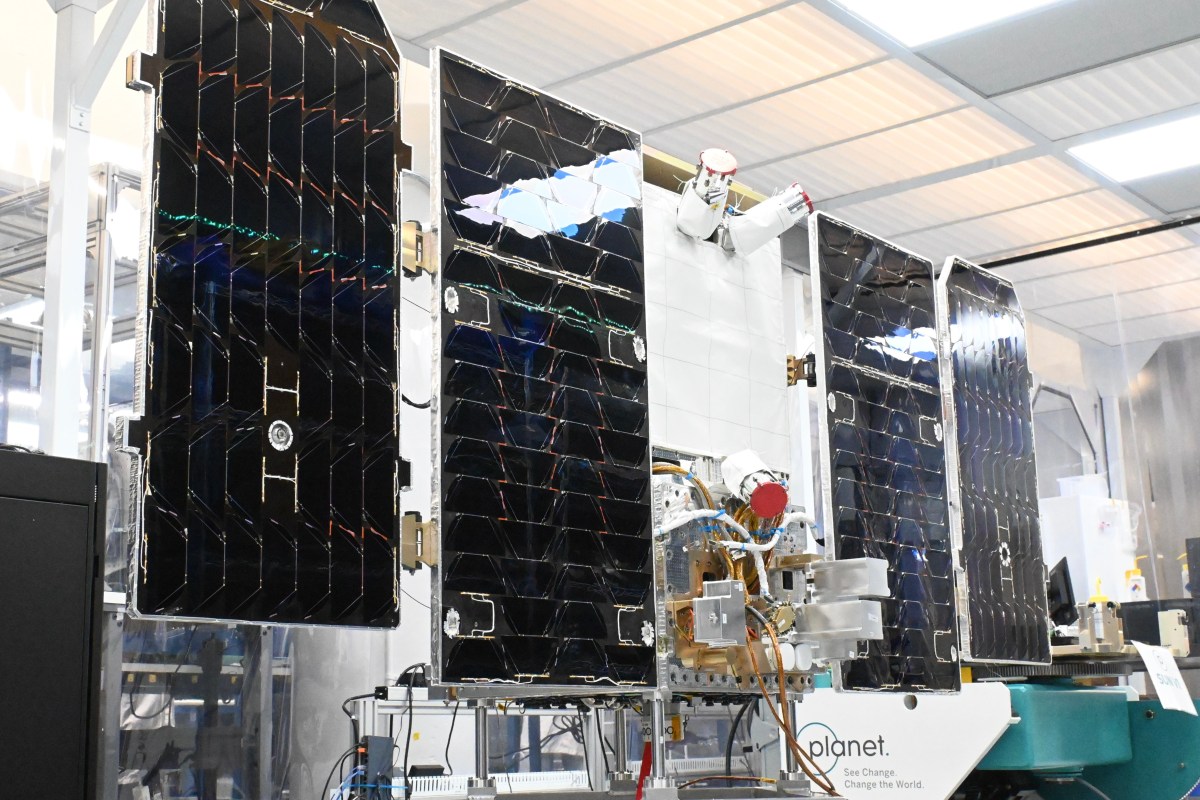
Google has successfully activated its experimental Project Suncatcher satellite, marking a significant step toward deploying artificial intelligence data centers in space. The satellite, which launched earlier this month aboard a SpaceX Falcon 9 rocket alongside more than 100 other spacecraft, has completed its initial commissioning phase. During this three-week period, engineers tested various subsystems to ensure the satellite was ready for operational tasks. The successful activation allows the satellite to communicate with ground control and execute computational workloads directly from orbit.
First Data from Space
The primary objective of the initial test was to verify that the satellite’s hardware could function in the harsh environment of space. The spacecraft is equipped with four Google Tensor Processing Units (TPUs), specialized chips designed for machine learning tasks. Despite generating up to 1 kW of electricity, the power demands of the TPUs are substantial. Consequently, the satellite can only activate one TPU for approximately twenty minutes at a time. This limitation complicates the already challenging process of space-to-ground communications, requiring careful management of energy and data transmission windows.
During the first operational test, engineers on the ground sent a prompt to the on-board AI model, Google DeepMind’s Gemma 4. The model responded by generating a haiku about its location in space. The poem read: "Blue marble below / Data streams in silent grace / Starlight feeds my core." Google also tested the system with space-themed limericks and telemetry prompts to assess its responsiveness. A company spokesperson confirmed that the satellite is operating nominally, indicating that all systems are functioning as expected.
Testing Under Stress
The immediate focus of the test campaign is to evaluate how the TPUs perform under thermal stress and radiation exposure. While Google has extensively tested its chips in particle accelerators on Earth, the actual conditions of orbit present unique challenges. The ongoing tests will provide critical data on the durability and reliability of the hardware when exposed to the vacuum of space and cosmic radiation. This data is essential for determining the viability of long-term AI operations in orbit.
Future Plans
The success of Project Suncatcher’s first satellite is a precursor to more ambitious projects. Google has stated that verifying the ability of TPUs to reliably execute workloads in space is a key milestone. The next phase of the project involves launching twin interconnected satellites, which are planned for 2027. These satellites will likely perform larger inference workloads, potentially reducing latency for global data processing tasks. The initiative aims to pave the way for future networks of close-flying satellites that could revolutionize how AI data is processed and transmitted globally.
Key takeaways
- Google's Project Suncatcher satellite launched on a SpaceX Falcon 9 and completed a three-week commissioning phase.
- The satellite carries four TPUs and generates up to 1 kW of power, limiting active usage to twenty-minute intervals.
- The Gemma 4 model successfully generated a haiku, confirming basic operational capability in orbit.
- Ongoing tests will measure TPU performance against thermal stress and radiation in the space environment.
- Google plans to launch twin interconnected satellites in 2027 to expand orbital AI capabilities.
Sources
The WireByte editorial team synthesises technology news from multiple primary sources, verifies the facts, and links every source. Articles are produced with AI assistance and reviewed under our editorial policy.