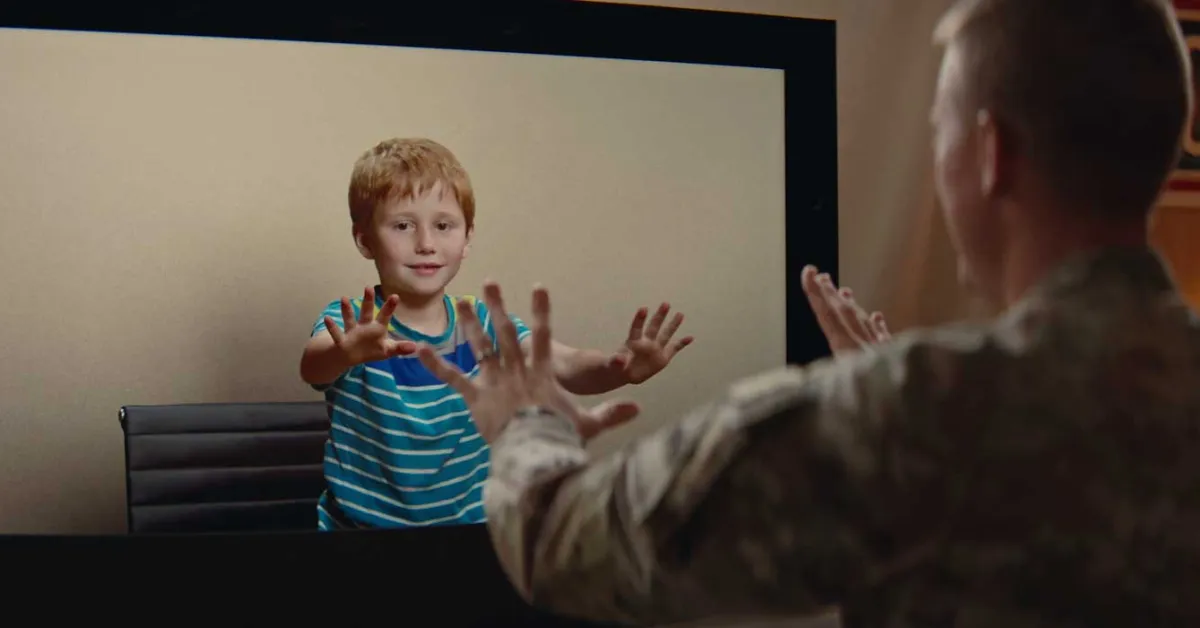
Google Beam 3D Video Booths Expand to 20 USO Locations for Military Families
Google is deploying its Beam 3D video conferencing technology at 20 United Service Organizations locations worldwide, following a successful pilot in Texas and Poland. The initiative aims to help military families bridge geographical distances through lifelike holographic communication, marking a significant expansion of the tech beyond corporate and co-working environments.
Key points
- Google announced the deployment of Beam 3D video booths at 20 United Service Organizations (USO) locations globally to assist military families.
- The expansion follows a pilot program connecting facilities in Fort Bliss, Texas, and Poland, with new sites including Grafenwöehr, Germany, and Fort Hood, Texas.
- Beam technology, formerly Project Starline, uses six cameras, AI models, and light displays to project real-time, life-sized 3D holograms with spatial audio.
- The initiative includes a docuseries produced with veteran filmmaker Kyle Hausmann-Stokes, featuring four families from Fort Bliss, Texas.
- While the USO rollout is confirmed, Google has not specified if this signals an imminent broader commercial release for general consumers.
Military Connectivity Through Holographic Tech
Google has announced a significant expansion of its Beam 3D video communication technology, partnering with the United Service Organizations (USO) to install video booths at 20 locations worldwide. This move is designed to help military members and their families overcome geographical separation by providing a more immersive communication experience than traditional video calls. The deployment marks a shift from the technology's initial corporate and co-working space introductions to a humanitarian-focused application for service members.
Pilot Success and Global Expansion
The global rollout follows a successful pilot program that established connections between Beam systems in Fort Bliss, Texas, and Poland. Based on the positive outcomes of these initial tests, Google is now extending access to additional military installations. The new locations include Grafenwöehr, Germany, and Fort Hood, Texas, joining the existing sites in Poland and Texas. This expansion aims to bring the technology to a broader segment of the military community, allowing more families to utilize the advanced communication tools.
Technology Behind the Holograms
Beam, originally known as Project Starline, utilizes a sophisticated setup to create lifelike 3D holograms. The system employs six cameras, AI-assisted video models, and specialized light displays to project participants in real-time. Additional features such as head tracking and spatial audio enhance the illusion of presence, making interactions feel more natural and engaging. Early demonstrations of the technology have highlighted its ability to create a sense of physical proximity, with users reporting that it feels like making eye contact with the person on the other end.
Docuseries and Human Impact
To illustrate the impact of this technology, Google collaborated with Kyle Hausmann-Stokes, a filmmaker and veteran, to produce a docuseries. The series, titled "For Bliss," follows four families in Fort Bliss, Texas, as they use the 3D video booths to connect with deployed loved ones. The content is available on Google’s YouTube channel and serves to highlight the emotional and practical benefits of the technology for military families. This narrative approach underscores Google's focus on the human element of the deployment.
Future Implications and Availability
While the USO program is a confirmed expansion, it remains unclear if this initiative signals an imminent broader commercial rollout for general consumers. Google has not provided specific timelines for wider availability outside of military and select corporate environments. The technology's current focus on military families suggests a strategic use case for building reputation and refining the system before potential mass-market adoption. Observers will watch closely to see if this pilot leads to increased accessibility for the general public in the near future.
Key takeaways
- Google Beam 3D booths are now available at 20 USO locations globally.
- The expansion includes sites in Germany, Texas, and Poland following a successful pilot.
- Technology uses six cameras and AI to create real-time 3D holographic video calls.
- A docuseries highlights the experience of four military families in Fort Bliss.
- No timeline has been given for broader commercial availability beyond military use.
Sources
The WireByte editorial team synthesises technology news from multiple primary sources, verifies the facts, and links every source. Articles are produced with AI assistance and reviewed under our editorial policy.