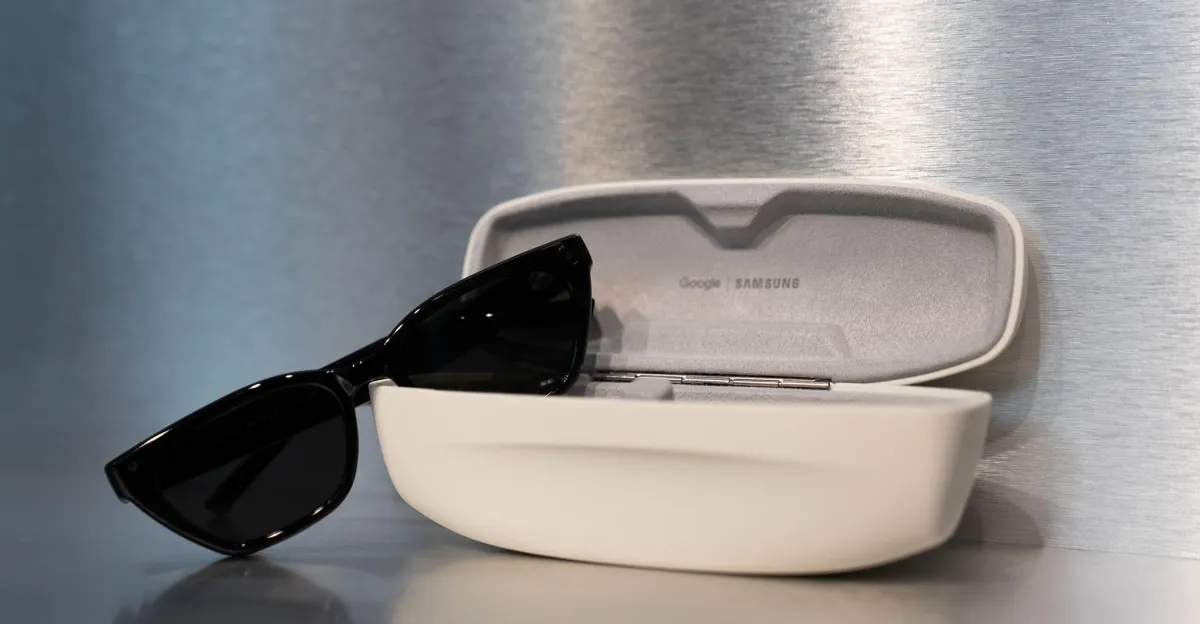
Google and Samsung Launch Android XR Smart Glasses Amid Privacy Scrutiny
Google and Samsung have launched Android XR smart glasses, co-branded with Warby Parker and Gentle Monster, starting at $395. The devices feature real-time translation and AI assistance via Gemini. Launching in the US and South Korea, the release aims to capitalize on the smart glasses market while addressing privacy concerns that have plagued competitors like Meta.
Key points
- Google and Samsung have officially launched Android XR smart glasses, developed in collaboration with eyewear brands Warby Parker and Gentle Monster.
- The devices start at $395 for Warby Parker frames and $449 for Gentle Monster styles, with initial availability limited to the US and South Korea.
- Powered by Google’s Gemini AI and Android XR, the glasses offer features such as real-time translation and hands-free assistance without a visual display.
- The launch follows significant public backlash against Meta’s Ray-Ban smart glasses, which were criticized for privacy violations and being perceived as surveillance devices.
- Google has implemented strict privacy protocols, including clear LED indicators and comprehensive data handling policies, to rebuild consumer trust in camera-equipped eyewear.
A New Era for Smart Eyewear
Google and Samsung have officially entered the consumer smart glasses market with the launch of Android XR Intelligent Eyewear. This release marks Google’s return to the form factor more than a decade after the discontinuation of the original Google Glass. Unlike its predecessor, which struggled with privacy concerns and limited functionality, the new devices are designed as mainstream fashion accessories rather than niche tech gadgets. The hardware is a collaborative effort: Google provides the software and AI capabilities, Samsung co-builds the internal technology, and the frames are crafted by luxury eyewear manufacturers Warby Parker and Gentle Monster. This strategy mirrors the successful approach taken by Meta with its Ray-Ban collaboration, aiming to make the technology invisible and desirable.
Design and Availability
The initial lineup features two distinct aesthetic directions. Warby Parker offers three classic styles—Alden, Reid, and Wren—in colors such as Pine, Saddle, and Jet Black, with prices starting at $395. Gentle Monster provides a more avant-garde selection with six styles and various lens options, including blue, brown, clear, and tinted, starting at $449. Both brands allow for prescription lens customization, positioning the devices as practical replacements for daily eyewear rather than situational accessories. The glasses are currently available for pre-order in the United States and South Korea. While the hardware is universal, the software initially supports a limited range of smartphones, including select Samsung and Google Android devices, as well as iPhones.
AI Capabilities and User Experience
At the core of the Intelligent Eyewear is Google’s Gemini AI, integrated via the Android XR platform. Early hands-on demonstrations have highlighted the system’s ability to handle complex, multi-language scenarios. In testing, the glasses successfully translated conversations in French, Spanish, Korean, and Thai into Japanese in real-time, without requiring users to manually select language pairs or download specific packs. The devices also support ambient audio features, allowing users to listen to music or receive notifications through bone conduction technology. Notably, the glasses do not feature a heads-up display, relying instead on audio cues and companion app interactions to deliver information. This design choice prioritizes a natural look and feel, avoiding the bulky appearance of earlier mixed-reality headsets.
Addressing the Privacy Backlash
The launch comes at a critical time for the smart glasses industry. Meta’s Ray-Ban smart glasses have faced significant public scrutiny, with critics labeling them as "pervert glasses" or "creep glasses" due to their discreet camera capabilities. The controversy has led to a decline in user trust and has prompted some cities and businesses to ban the devices. In response, Google has placed a heavy emphasis on privacy. The company has published detailed privacy policies outlining how data is collected, stored, and used. A key feature is the LED indicator light, which clearly signals when the camera or microphone is active. Google argues that this transparency is essential for maintaining public trust and ensuring that the technology is accepted as a helpful assistant rather than a surveillance tool.
Market Implications and Future Outlook
Analysts suggest that Google’s entry could reshape the smart glasses landscape by forcing competitors to improve their privacy standards. The collaboration between Google, Samsung, and established fashion brands provides a robust ecosystem that Meta currently lacks in terms of hardware diversity and AI integration. However, challenges remain. The initial smartphone support is limited, and the cultural stigma associated with camera-equipped glasses persists. As the market matures, the success of Android XR will depend on Google’s ability to scale the device support and demonstrate the long-term utility of the AI features. The launch sets the stage for a competitive year in the wearable tech sector, with privacy and design likely to be the primary differentiators.
Key takeaways
- Google and Samsung have launched Android XR smart glasses in collaboration with Warby Parker and Gentle Monster.
- Prices start at $395 for Warby Parker models and $449 for Gentle Monster styles, available in the US and South Korea.
- The devices feature Google’s Gemini AI for real-time translation and audio assistance, without a visual display.
- Google has emphasized privacy protections, including LED indicators and clear data policies, to counter public backlash against similar devices.
- The launch marks Google’s return to smart eyewear after more than ten years, aiming to mainstream the form factor through fashion partnerships.
Sources
The WireByte editorial team synthesises technology news from multiple primary sources, verifies the facts, and links every source. Articles are produced with AI assistance and reviewed under our editorial policy.