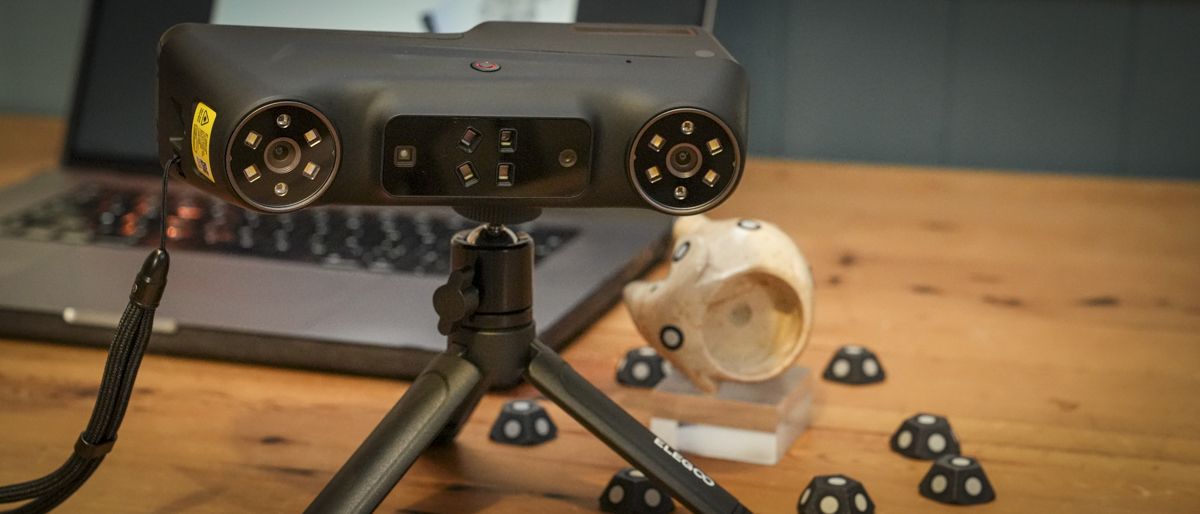
Elegoo M1 Ultra 3D Scanner Review: Premium Hardware Meets Hobbyist Software
Elegoo launches the M1 Ultra 3D scanner, marking a shift toward premium hardware with 0.02mm accuracy and wireless operation. While the device offers exceptional detail and value against competitors like Creality, its software interface retains a dated, hobbyist aesthetic. Users must prepare objects carefully, though the hardware quality suggests a new direction for the brand.
Key points
- Elegoo, previously known for hobbyist 3D printers, introduces the M1 Ultra scanner as a premium entry into the professional market.
- The device features blue laser and infrared structured-light scanning, achieving a top accuracy of 0.02mm in its finest mode.
- Key hardware specifications include full wireless operation, a 3-inch touchscreen, and five distinct scanning configurations for various object sizes.
- Reviewers note the build quality rivals established manufacturers like Creality, offering exceptional value for the price point.
- Critiques focus on the software interface, which retains a dated, hobbyist styling that contrasts with the premium hardware design.
- Object preparation remains essential for optimal results, and wireless connectivity may limit certain online connection functionalities.
A Shift in Elegoo’s Manufacturing Strategy
Elegoo, a brand historically recognized for its accessible hobbyist 3D printers, is executing a strategic pivot toward higher-end manufacturing. The launch of the M1 Ultra 3D scanner serves as a primary indicator of this evolution. This new device demonstrates significant improvements in both industrial design and build quality, positioning the company to compete directly with established industry players. The M1 Ultra is not merely an incremental update but a signal that Elegoo is serious about capturing market share in the professional scanning sector.
Technical Specifications and Scanning Capabilities
The M1 Ultra distinguishes itself through a hybrid scanning technology that combines blue laser and infrared structured-light methods. This dual approach allows for versatile performance across a wide range of object types. The scanner offers five main configurations, enabling users to capture everything from tiny mechanical components and intricate details to larger structures and even human subjects. In its most precise blue laser mode, the device achieves a top accuracy of 0.02mm. This level of detail is critical for applications requiring high fidelity, such as reverse engineering or quality control in manufacturing.
Hardware Design and User Interface
Physically, the M1 Ultra presents a premium aesthetic that contrasts with the plastic-heavy designs often associated with entry-level 3D printing hardware. The device features a robust build and includes a 3-inch touchscreen for local operation. A standout feature is its full wireless capability, which enhances mobility and ease of use in various environments. However, the user experience is split between the hardware and software. While the physical device feels solid and modern, the scanner’s software user interface retains traces of older, hobbyist styling. This creates a slight disconnect between the premium hardware feel and the digital interaction experience.
Market Positioning and Competition
By entering the 3D scanning market with the M1 Ultra, Elegoo is challenging established brands such as Creality. The device is positioned as a high-value option, offering exceptional accuracy and detail at a price point that undercuts many professional-grade alternatives. Reviewers have noted that the hardware quality is sufficient to compete with more expensive manufacturers. This value proposition is likely to attract hobbyists looking to upgrade and small businesses seeking affordable scanning solutions without sacrificing precision.
Operational Considerations and Limitations
Despite the advanced hardware, successful operation of the M1 Ultra requires careful preparation of the objects being scanned. The review notes that scan quality is heavily dependent on how the subject is prepared prior to capture. Additionally, while the scanner supports full wireless operation, there are limitations regarding online connectivity. Users may find that certain cloud-based features or remote functionalities are restricted due to these wireless constraints. These factors mean that while the device is powerful, it is not entirely plug-and-play for all users.
Key takeaways
- Elegoo is transitioning from hobbyist printers to premium hardware with the M1 Ultra scanner.
- The device uses blue laser and infrared light to achieve 0.02mm accuracy.
- Wireless operation and a 3-inch touchscreen enhance the user experience.
- The software interface is criticized for its dated, hobbyist design.
- Object preparation is crucial for achieving the best scan quality.
- The M1 Ultra competes directly with brands like Creality on value and performance.
Sources
The WireByte editorial team synthesises technology news from multiple primary sources, verifies the facts, and links every source. Articles are produced with AI assistance and reviewed under our editorial policy.