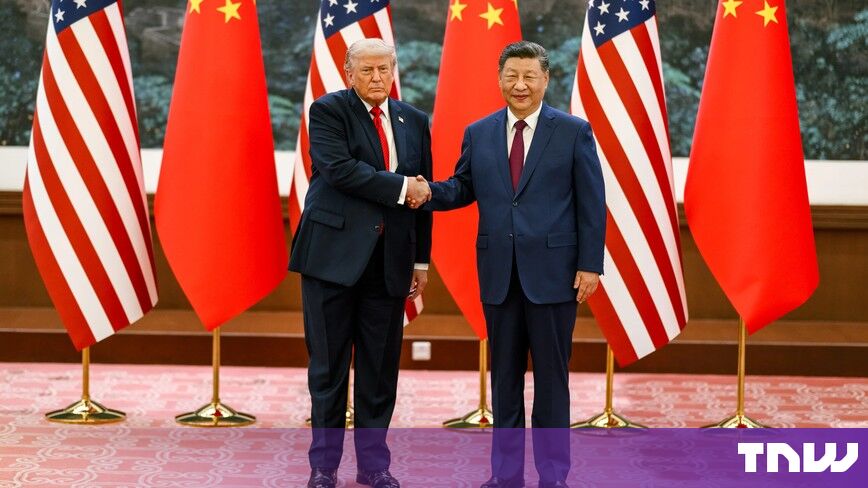
China Weighs Retaliation as US Tightens AI Chip Controls Ahead of Trump-Xi Summit
China is considering countermeasures against new US interim rules restricting AI chip exports and cloud access, days before President Xi Jinping meets Donald Trump at the APEC summit. Beijing’s foreign ministry condemned the measures as an abuse of export controls, warning of necessary protections for its interests amid ongoing trade tensions and critical mineral disputes.
Key points
- China is evaluating retaliatory actions against new US Commerce Department rules that require licenses for advanced chip shipments to several Asian and South American nations and restrict cloud computing access for Chinese firms.
- The US interim rules, released on Monday, mandate approval for overseas data centers providing significant computing power to Chinese entities, though exceptions remain for content recommendation systems and US data center rentals.
- Chinese Foreign Ministry spokesperson Guo Jiakun condemned the measures as an abuse of export controls that contradicts bilateral consensus, stating Beijing will take necessary steps to protect its rights and interests.
- The diplomatic friction occurs just days before Xi Jinping and Donald Trump meet on the sidelines of the APEC summit in Shenzhen for their third meeting this year and a first AI safety dialogue.
- The new restrictions threaten an unwritten trade truce where US tech curbs are balanced by Chinese flows of critical minerals, with Washington recently complaining about slow shipments of rare-earth magnets.
Escalating Tech Tensions Before High-Stakes Diplomacy
China is actively weighing potential retaliatory measures against the United States following the release of new interim regulations designed to tighten restrictions on artificial intelligence chip access. The development comes at a highly sensitive juncture, occurring just days before Chinese President Xi Jinping is scheduled to meet with Donald Trump. This upcoming encounter is set to take place on the sidelines of the Asia-Pacific Economic Cooperation (APEC) summit in Shenzhen, marking the third meeting between the two leaders this year.
The US Commerce Department unveiled the interim rules on Monday, introducing significant hurdles for Chinese technology firms seeking advanced computing capabilities. Under the new framework, overseas data centers must now obtain explicit US approval before providing large amounts of computing power to Chinese entities. Additionally, the regulations impose licensing requirements on shipments of advanced chips to Singapore, Malaysia, Thailand, Indonesia, and Brazil, effectively extending the reach of US export controls beyond domestic borders.
Despite the broad scope of the restrictions, the rules include specific carve-outs that allow some continuity in operations. Chinese companies retain the ability to utilize computing power for content recommendation systems, a critical function for many digital platforms. Furthermore, firms are still permitted to rent capacity within US data centers, providing a limited pathway for accessing necessary infrastructure without triggering the new licensing mandates.
Beijing’s Official Condemnation
The Chinese government responded swiftly to the announcement, with Foreign Ministry spokesperson Guo Jiakun addressing the media in Beijing on Tuesday. Guo accused the United States of abusing export controls, arguing that the measures run counter to the consensus previously reached between the two sides. He emphasized that Beijing would take necessary measures to protect its rights and interests, signaling a firm stance against what it views as unjustified technological containment.
The diplomatic rhetoric underscores the fragility of the current relationship between Washington and Beijing. The new rules threaten to strain an unwritten bargain that has underpinned a recent trade truce. Historically, this informal arrangement involved Washington holding off on new technology curbs in exchange for China maintaining the flow of critical minerals to the US. This balance has come under pressure, with US officials recently complaining that shipments of rare-earth magnets have been arriving too slowly, highlighting ongoing friction in the supply chain.
Strategic Implications and Future Dialogue
As the APEC summit approaches, both nations are expected to hold their first dialogue on AI safety. This planned discussion aims to establish guardrails for the rapid development of artificial intelligence, a sector heavily impacted by the new chip restrictions. However, the timing of the US regulations raises concerns that they may complicate these diplomatic efforts. The measures could be seen as undermining the trust necessary for productive cooperation on global technology governance.
China also possesses its own leverage in the form of critical mineral exports. After Xi and Trump met in Busan last year, China suspended its ban on gallium, a key semiconductor material. The current situation suggests that Beijing may consider re-evaluating its export policies on such materials if the US does not adjust its approach. This potential escalation highlights the interconnected nature of the global tech supply chain and the risks of decoupling.
Key takeaways
- China is evaluating countermeasures against new US rules restricting AI chip exports and cloud access ahead of the Xi-Trump meeting.
- The US Commerce Department requires licenses for advanced chip shipments to several Asian and South American nations and for overseas data centers serving Chinese firms.
- Chinese Foreign Ministry spokesperson Guo Jiakun condemned the rules as an abuse of export controls, promising protective measures for national interests.
- The tensions threaten an unwritten trade truce balancing US tech curbs with Chinese flows of critical minerals like rare-earth magnets.
- Xi Jinping and Donald Trump are set to meet at the APEC summit in Shenzhen, where they will also hold their first AI safety dialogue.
Sources
The WireByte editorial team synthesises technology news from multiple primary sources, verifies the facts, and links every source. Articles are produced with AI assistance and reviewed under our editorial policy.