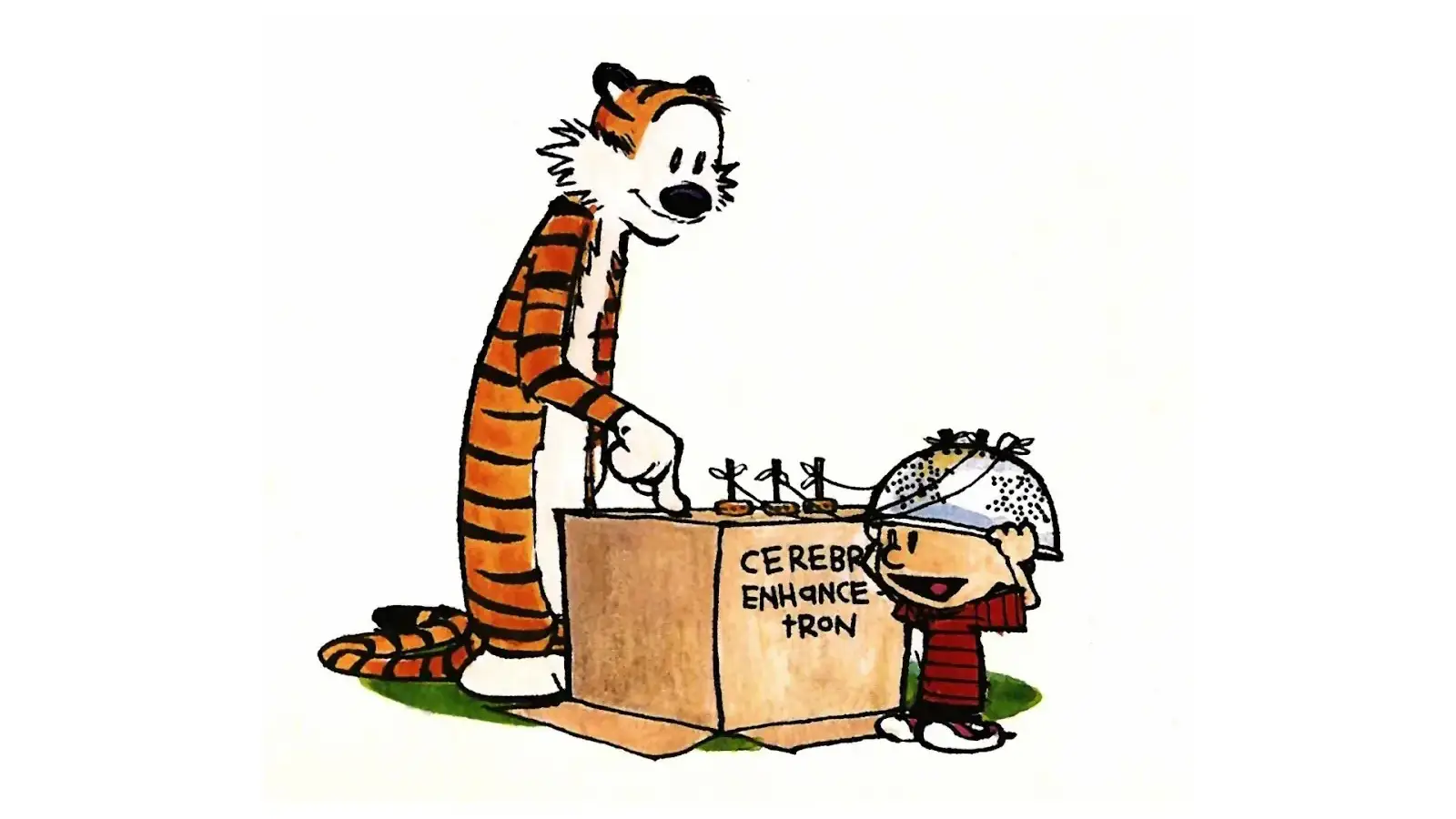
Calvin and Hobbes: The Legacy of Spaceman Spiff
Spaceman Spiff, Calvin’s intergalactic alter ego in Bill Watterson’s Calvin and Hobbes, originated from Watterson’s earlier rejected comic Marvin. Debuting in November 1985, Spiff served as a frequent escapist fantasy for the protagonist. The character reflects Watterson’s early artistic interests in space adventure parodies, evolving from a standalone cartoon concept into a staple of the beloved strip.
Key points
- Spaceman Spiff is the spacefaring alter ego of Calvin, the protagonist of Bill Watterson's Calvin and Hobbes.
- The character originated from Watterson's earlier rejected comic strip Marvin, which featured a mustachioed, cigar-smoking adventurer.
- Spaceman Spiff made his first appearance in Calvin and Hobbes on November 29, 1985.
- Watterson reworked the character Mort from his previous comic The Doghouse into Spiff after Calvin and Hobbes began.
- Spiff served as a frequent escapist fantasy for Calvin during boring or unpleasant situations.
- The strip Calvin and Hobbes was eventually picked up by Universal Press Syndicate after initial rejections.
Origins in Rejected Comics
Bill Watterson’s creation of Spaceman Spiff was deeply rooted in his earlier artistic endeavors and rejected pitches. Before Calvin and Hobbes became a global phenomenon, Watterson developed a comic strip called The Doghouse. The protagonists of Calvin and Hobbes initially appeared as side characters in this earlier work. However, Watterson’s original syndicate suggested that Calvin and Hobbes should be the central focus, leading to a significant restructuring of the cast. The character Marvin, who appeared in The Doghouse, was renamed Calvin, and the rest of the original cast was dropped. Despite these changes, United Feature Syndicate still rejected the resulting comic. It was only after being picked up by Universal Press Syndicate that the strip found its home.
From Marvin to Spaceman Spiff
Watterson’s interest in space adventure characters predated Calvin and Hobbes itself. As early as his college years, he drew cartoons about a spacefaring character. This concept evolved into a standalone comic titled Marvin, which featured a mustachioed, cigar-smoking protagonist. This character was a parody of classic adventure figures like Flash Gordon. Watterson’s early work in this genre laid the groundwork for the fantastical elements that would later define Calvin’s personality. The transition from a standalone adventure comic to an integrated fantasy persona within a daily strip required a creative shift that Watterson executed with precision.
Debut and Integration
Spaceman Spiff made his first official appearance in Calvin and Hobbes on November 29, 1985. This debut occurred shortly after the strip had gained traction under Universal Press Syndicate. The character was not entirely new; Watterson had previously drawn a character named Mort in The Doghouse. He reworked Mort into Spiff, adapting the design and personality to fit Calvin’s imaginative world. The integration of Spiff allowed Watterson to explore themes of heroism and adventure within the constraints of a domestic setting. This duality became a defining feature of the strip, contrasting the mundane reality of Calvin’s life with the epic scale of his fantasies.
The Role of Escapism
Spaceman Spiff served as one of Calvin’s most frequent escapist characters. Whenever Calvin faced a boring or unpleasant situation, he frequently retreated into his Spiff persona. This narrative device provided Watterson with a versatile tool to depict Calvin’s inner world. The Spiff strips often featured Calvin navigating perilous intergalactic scenarios, complete with dramatic dialogue and vivid imagery. These sequences allowed Watterson to parody adventure tropes while highlighting Calvin’s creativity and resilience. The contrast between Spiff’s heroic deeds and Calvin’s actual circumstances added a layer of humor and depth to the strip.
Cultural Impact and Legacy
The character of Spaceman Spiff has become an iconic part of Calvin and Hobbes lore. Fans of the strip often cite Spiff as a favorite element due to its imaginative scope and visual appeal. The character’s origins in Watterson’s earlier rejected work add a layer of historical significance to his role in the final strip. Watterson’s ability to repurpose and refine his early concepts demonstrates his skill as a cartoonist. The Spiff strips remain a testament to Watterson’s creativity and his ability to blend humor with adventure.
Conclusion
Spaceman Spiff’s journey from a rejected comic protagonist to a beloved fantasy persona illustrates Bill Watterson’s artistic evolution. The character’s debut in 1985 marked a significant moment in the strip’s history, providing a unique narrative voice for Calvin. Through Spiff, Watterson explored themes of imagination and escapism, enriching the overall storytelling of Calvin and Hobbes. The legacy of Spaceman Spiff endures as a key component of one of the most influential comic strips of the 20th century.
Key takeaways
- Spaceman Spiff originated from Bill Watterson's earlier rejected comic Marvin.
- The character debuted in Calvin and Hobbes on November 29, 1985.
- Watterson reworked the character Mort from The Doghouse into Spiff.
- Spiff served as a frequent escapist fantasy for Calvin during mundane situations.
- The strip was initially rejected by United Feature Syndicate before being picked up by Universal Press Syndicate.
- Spaceman Spiff remains a key element of Calvin's imaginative world in the strip.
Sources
The WireByte editorial team synthesises technology news from multiple primary sources, verifies the facts, and links every source. Articles are produced with AI assistance and reviewed under our editorial policy.