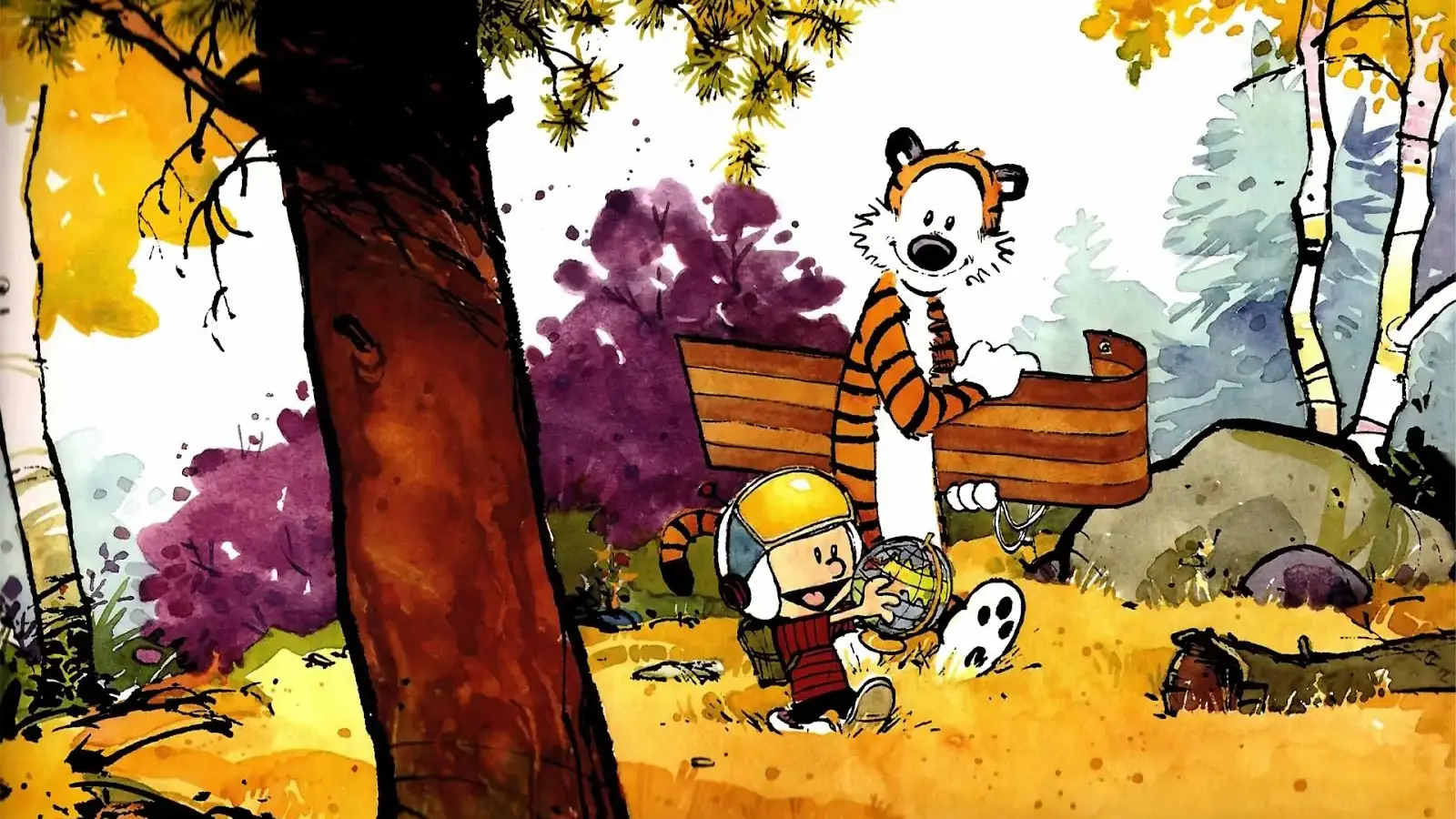
Calvin and Hobbes Friendship Strip Remains Beloved 37 Years Later
Bill Watterson’s 1993 Calvin and Hobbes comic strip, depicting the duo’s silent mutual longing during a rainy school day, is celebrated 37 years later as a timeless classic. The artwork, originally published in Yukon Ho!, highlights the emotional depth of the series' central friendship. Fans continue to revisit the strip, citing its poignant portrayal of separation and affection without dialogue.
Key points
- Bill Watterson, the creator of the iconic Calvin and Hobbes comic strip, is being celebrated for his enduring legacy 37 years after the series' conclusion.
- A specific Sunday strip from October 3, 1993, depicts Calvin and Hobbes parting ways on a rainy morning and silently longing for each other throughout the day.
- The comic, originally featured in the 1989 collection Yukon Ho!, uses visual storytelling without words to convey the depth of the boy and his tiger's bond.
- Readers and critics continue to cite this particular strip as one of the most heartwarming and emotionally resonant moments in the series' 10-year run.
- The enduring popularity of the strip underscores the universal appeal of Watterson's exploration of childhood innocence and friendship.
A Timeless Tribute to Childhood Friendship
Thirty-seven years after the conclusion of Bill Watterson’s Calvin and Hobbes, the comic strip continues to resonate with audiences worldwide. The series, which ran for a decade, established itself as a cultural touchstone for its sophisticated humor and profound emotional depth. Among the many memorable moments, a specific Sunday strip from October 3, 1993, has emerged as a standout example of Watterson’s ability to convey complex emotions through simple visuals.
The strip in question captures a quiet, rainy morning. Calvin and Hobbes wake up to find that the weather has turned against their usual outdoor adventures. They eat breakfast while reading the newspaper comics, a mundane ritual that grounds the fantastical elements of their world in reality. As they venture outside, the rain begins to fall. Calvin dons his raincoat, preparing for the school bus, while Hobbes holds an umbrella over him. The scene is one of tender care, highlighting the protective nature of their bond.
The Power of Silent Storytelling
What makes this particular strip so enduring is its reliance on visual narrative rather than dialogue. As Calvin waits for the bus, Hobbes stands by, holding the umbrella. When the bus arrives, they wave goodbye. Calvin boards the vehicle, leaving Hobbes behind in the rain. His mother then retrieves Hobbes, bringing him home. The simplicity of these actions belies the emotional weight they carry. Watterson does not need words to express the significance of the moment; the images speak for themselves.
The final panels of the strip shift the perspective. Calvin is shown at school, his expression one of longing for his companion. Simultaneously, Hobbes is depicted at home, equally yearning for Calvin’s return. This parallel structure emphasizes the mutual nature of their friendship. It is not one-sided affection but a shared experience of separation. The absence of text allows readers to project their own feelings onto the characters, making the experience deeply personal.
Enduring Legacy of Watterson’s Work
Watterson’s Calvin and Hobbes ran for ten years, from 1985 to 1995. During this time, he explored themes of childhood, imagination, and the relationship between humans and nature. The series was known for its intellectual depth and artistic innovation. Watterson’s decision to retire at the height of the strip’s popularity added to its mystique and legacy. He left behind a body of work that continues to be analyzed and appreciated by new generations of readers.
The strip from October 3, 1993, was originally included in the collection Yukon Ho!, published in 1989. However, its impact has only grown over time. Fans frequently revisit the comic, describing it as a tear-jerker that captures the essence of their friendship. The strip’s ability to evoke such strong emotions decades after its creation speaks to Watterson’s skill as a storyteller.
Why It Matters Today
In an era dominated by digital media and rapid content consumption, the enduring appeal of Calvin and Hobbes is noteworthy. The strip’s focus on quiet, reflective moments offers a counterpoint to the noise of modern life. It reminds readers of the value of simple, genuine connections. The story of Calvin and Hobbes is not just about a boy and his tiger; it is about the universal experience of friendship and the pain of separation.
The continued celebration of this specific strip highlights the timeless nature of Watterson’s work. It serves as a reminder that great art transcends its original context. The emotions depicted in the comic are universal and relatable, regardless of the reader’s age or background. As new fans discover the series, they find in Calvin and Hobbes a reflection of their own childhood experiences and a testament to the power of imagination.
Key takeaways
- Bill Watterson’s 1993 Calvin and Hobbes strip is celebrated 37 years later for its emotional depth.
- The comic depicts a rainy morning where Calvin and Hobbes part ways and silently long for each other.
- Watterson uses visual storytelling without dialogue to convey the mutual affection between the characters.
- The strip, originally in Yukon Ho!, remains a favorite among fans for its poignant portrayal of friendship.
- The enduring popularity of the series underscores the universal appeal of Watterson’s themes of childhood and connection.
Sources
The WireByte editorial team synthesises technology news from multiple primary sources, verifies the facts, and links every source. Articles are produced with AI assistance and reviewed under our editorial policy.