BYD Unveils Whale Minivan with 559-Mile Range and Rapid Charging
Chinese automaker BYD has introduced the Whale, a seven-passenger electric minivan boasting a 559-mile (900 km) CLTC range and 10-97% charging in nine minutes. Measuring 17.3 feet long, it features LiDAR for advanced driver assistance. The vehicle aims to compete with rivals like Geely’s Zeekr 009 in the global electric utility vehicle market.
Key points
- BYD, a leading Chinese electric vehicle manufacturer, announced the Whale, a flagship seven-passenger electric minivan.
- The vehicle features a 559-mile (900 km) CLTC range and can charge from 10% to 97% in just nine minutes.
- Measuring 17.3 feet (5,270mm) in length, the Whale is larger than competitors like the Honda Odyssey and Toyota Sienna.
- The minivan is equipped with a prominent LiDAR sensor cluster to support advanced hands-free driving capabilities.
- The Whale competes directly with Geely’s Zeekr 009, which also claims a 900 km range in certain configurations.
BYD Expands Electric Portfolio with Whale Minivan
Chinese electric vehicle manufacturer BYD has officially unveiled the Whale, a new flagship minivan designed to compete in the growing global market for large electric utility vehicles. The announcement highlights the company's ambition to lead in both battery efficiency and vehicle size, targeting families and commercial users who require significant passenger and cargo space without range anxiety.
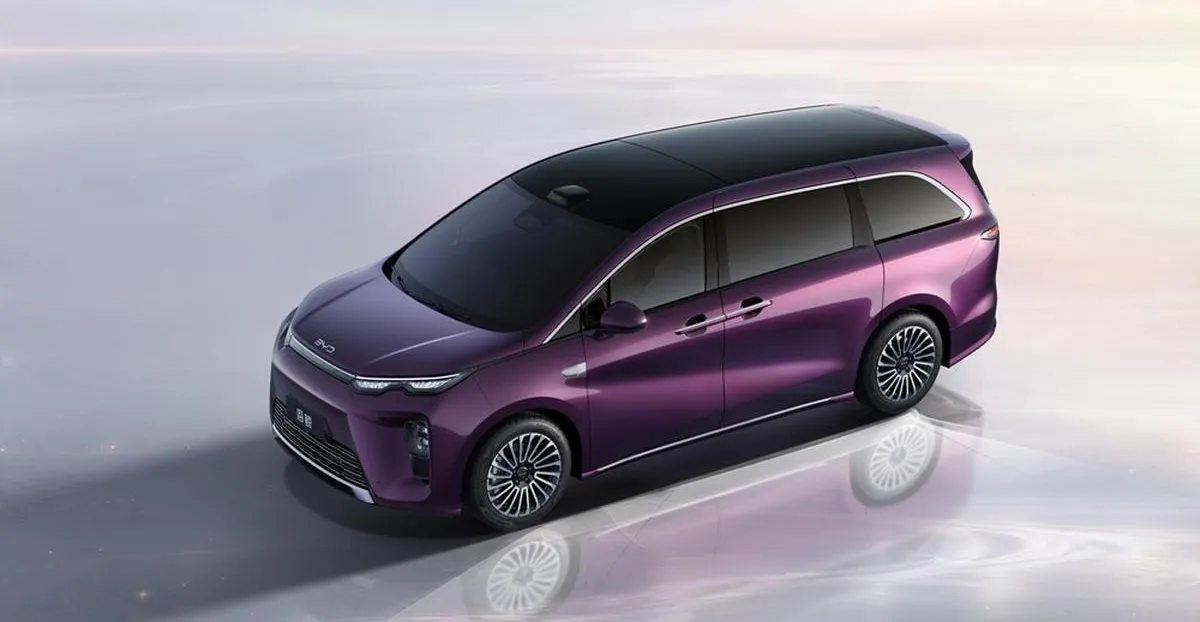
The Whale is positioned as a substantial vehicle, measuring 17.3 feet (5,270mm) in length, 6.5 feet (1,996mm) in width, and 6 feet (1,815mm) in height, with a wheelbase of 123 inches (3,130mm). These dimensions make it notably larger than established competitors in the North American and European markets, such as the Honda Odyssey, Chrysler Pacifica, and Toyota Sienna. The vehicle is designed to accommodate seven passengers and seven suitcases simultaneously, although interior details remain undisclosed pending official launch events.
Battery Technology and Charging Speed
A primary selling point of the Whale is its battery performance. According to the Chinese New Car Test Protocol (CLTC), the vehicle can travel an estimated 559 miles (900 km) on a single charge. This range significantly exceeds that of the Volkswagen ID. Buzz, which offers approximately 200 miles in its current configuration. BYD claims the Whale can charge its battery from 10% to 97% in just nine minutes, a specification that aims to alleviate concerns regarding charging infrastructure availability for large electric vehicles.
While the Whale is not the first electric minivan to claim a 900 km range, it enters a competitive niche. Geely’s Zeekr 009 minivan also offers a configuration with up to 900 km of range. However, BYD’s emphasis on rapid charging times and larger physical footprint distinguishes the Whale in the early stages of the electric minivan segment. The company has not yet released detailed specifications regarding battery capacity in kilowatt-hours or the specific type of battery chemistry used.
Advanced Driver Assistance Systems
The Whale is equipped with advanced driver assistance systems (ADAS) centered around a prominent sensor cluster located on the vehicle's front fascia. This cluster includes LiDAR technology, which is increasingly becoming a standard feature in high-end electric vehicles to enable more precise environmental mapping and autonomous driving capabilities. BYD states the vehicle will support advanced hands-free driving, although specific levels of autonomy (such as SAE Level 3 or 4) have not been explicitly defined in the initial press release.
The inclusion of LiDAR suggests that BYD is targeting markets where regulatory frameworks for autonomous driving are evolving. China has been a pioneer in testing and deploying autonomous vehicles, and the Whale’s technology stack aligns with the country’s push for smart transportation infrastructure. The vehicle’s exterior design, as seen in early images, prioritizes aerodynamic efficiency and sensor integration, features that are critical for maximizing range and safety in electric vehicles.
Market Implications and Global Competition
The introduction of the Whale underscores the intensifying competition in the global electric vehicle market. Chinese automakers like BYD are increasingly looking beyond domestic borders to capture market share in Europe, Southeast Asia, and potentially North America, where demand for large, family-oriented electric vehicles is growing. The Whale’s specifications challenge traditional internal combustion engine minivans and existing electric alternatives on both range and utility grounds.
Analysts note that the success of the Whale will depend on its pricing, availability in international markets, and the robustness of its charging network partnerships. While the CLTC range is a strong metric, real-world performance may vary depending on driving conditions, temperature, and usage patterns. The vehicle’s entry into the market also pressures established manufacturers to accelerate their own electric minivan development or enhance the efficiency of existing models.
Key takeaways
- BYD has introduced the Whale, a 17.3-foot electric minivan with a 559-mile CLTC range.
- The vehicle charges from 10% to 97% in nine minutes and seats seven passengers.
- LiDAR technology is included to support advanced hands-free driving features.
- The Whale competes with Geely’s Zeekr 009 in the large electric minivan segment.
- The announcement highlights BYD’s focus on large-scale electric utility vehicles.
Sources
The WireByte editorial team synthesises technology news from multiple primary sources, verifies the facts, and links every source. Articles are produced with AI assistance and reviewed under our editorial policy.