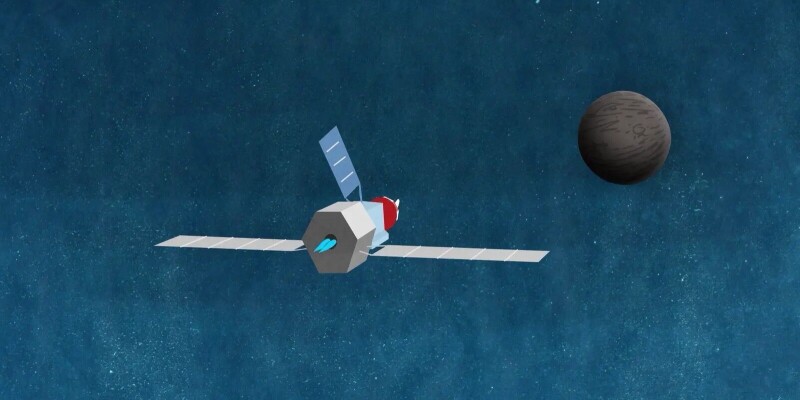
BepiColombo Enters Mercury Orbit Despite Software Glitch
The ESA-JAXA BepiColombo probe has successfully entered orbit around Mercury, marking a historic achievement for the joint mission. However, a software issue caused the orbital insertion thruster burn to be shorter than planned. The spacecraft remains safe, but mission control is analyzing the anomaly to determine its impact on the final trajectory and scientific objectives.
Key points
- The BepiColombo probe, a joint mission by the European Space Agency (ESA) and Japan’s Aerospace Exploration Agency (JAXA), has successfully entered orbit around Mercury, the first such achievement by a European mission.
- During the critical orbital insertion maneuver on Saturday, a software issue caused the thruster burn to be shorter than the planned duration, according to ESA updates released on Sunday.
- The spacecraft is reported to be safe, but mission control teams in Darmstadt are currently working to understand the cause of the glitch and assess its implications for the orbit.
- The mission was already delayed from mid-2025 to this past weekend due to earlier thruster underperformance in 2024, which required trajectory re-planning.
- Only NASA’s Mariner 10 and Messenger have previously visited Mercury, with Messenger being the sole spacecraft to remain in orbit before BepiColombo.
Historic Arrival at the Solar System's Innermost Planet
The BepiColombo spacecraft has officially entered orbit around Mercury, completing an arduous eight-year journey from Earth. This milestone makes BepiColombo only the second spacecraft in history to successfully orbit the solar system's smallest and least explored planet, following NASA's Messenger mission. The achievement is particularly significant for the European Space Agency (ESA), as it marks the first time a European-led mission has reached this destination. The probe is a collaborative effort between ESA and Japan’s Aerospace Exploration Agency (JAXA), carrying two distinct orbiters: Europe’s Mercury Planetary Orbiter and Japan’s Mio. These instruments are stacked together with a transfer module, which was jettisoned in September prior to the orbital insertion.
Software Glitch Complicates Orbital Insertion
While the spacecraft has successfully reached its destination, the mission has encountered a technical complication during the critical orbital insertion maneuver. The make-or-break engine burn began at 18:24 UTC on Saturday, designed to slow the spacecraft sufficiently for Mercury’s gravity to capture it. However, in an update released on Sunday, ESA confirmed that the thruster burn was shorter than planned due to a software issue. The agency emphasized that the spacecraft remains safe and that the team is working to understand the nature of the glitch. Mission control teams at the ESA’s operations center in Darmstadt are currently analyzing the data to determine the exact cause of the anomaly.
Impact on Trajectory and Future Operations
The shorter-than-planned burn raises questions about the precise nature of the initial orbit. While the spacecraft is in orbit, the deviation may affect the parameters of that orbit, requiring adjustments in subsequent maneuvers. ESA has promised to provide further updates early in the week as the analysis progresses. The mission’s path to Mercury has been complex, involving multiple gravity assists from Earth, Venus, and Mercury itself to slow the spacecraft down. This intricate trajectory was necessary because Mercury’s proximity to the Sun creates strong gravitational forces that accelerate incoming objects, making orbital insertion more challenging than reaching Saturn, according to ESA assessments.
Context of Previous Delays and Technical Challenges
This software issue is not the first technical challenge faced by BepiColombo. In 2024, the craft’s thrusters underperformed, leading ESA and JAXA to re-plot the planned trajectory. This earlier issue forced the agencies to reschedule the arrival at Mercury from mid-2025 to the current weekend. The cumulative effect of these technical hurdles has tested the resilience of the mission planning. Despite these setbacks, the successful entry into orbit represents a major triumph for international space cooperation. The mission aims to study Mercury’s interior structure, geology, magnetic field, and exosphere, providing insights into the formation of the inner solar system.
Global Significance and Scientific Goals
Mercury has long been referred to as the forgotten planet, having been visited only by NASA’s Mariner 10 and Messenger. Messenger remained in orbit for four years, providing extensive data before its mission ended in 2015. BepiColombo’s arrival adds a new dimension to our understanding of the planet, with two orbiters conducting complementary observations. The mission’s success underscores the capabilities of modern space exploration despite technical setbacks. As the team works through the software glitch, the scientific community awaits further details on how the anomaly might influence the mission’s long-term objectives. The data collected by BepiColombo will contribute to the global understanding of planetary formation and the dynamics of the inner solar system.
Key takeaways
- BepiColombo has entered orbit around Mercury, marking a historic first for European space exploration.
- A software issue caused the orbital insertion thruster burn to be shorter than planned, though the spacecraft is safe.
- ESA and JAXA are analyzing the glitch to determine its impact on the trajectory and mission objectives.
- The mission was previously delayed from mid-2025 due to thruster underperformance in 2024.
- Only NASA’s Mariner 10 and Messenger have previously visited Mercury, with Messenger being the only other orbiter.
Sources
The WireByte editorial team synthesises technology news from multiple primary sources, verifies the facts, and links every source. Articles are produced with AI assistance and reviewed under our editorial policy.