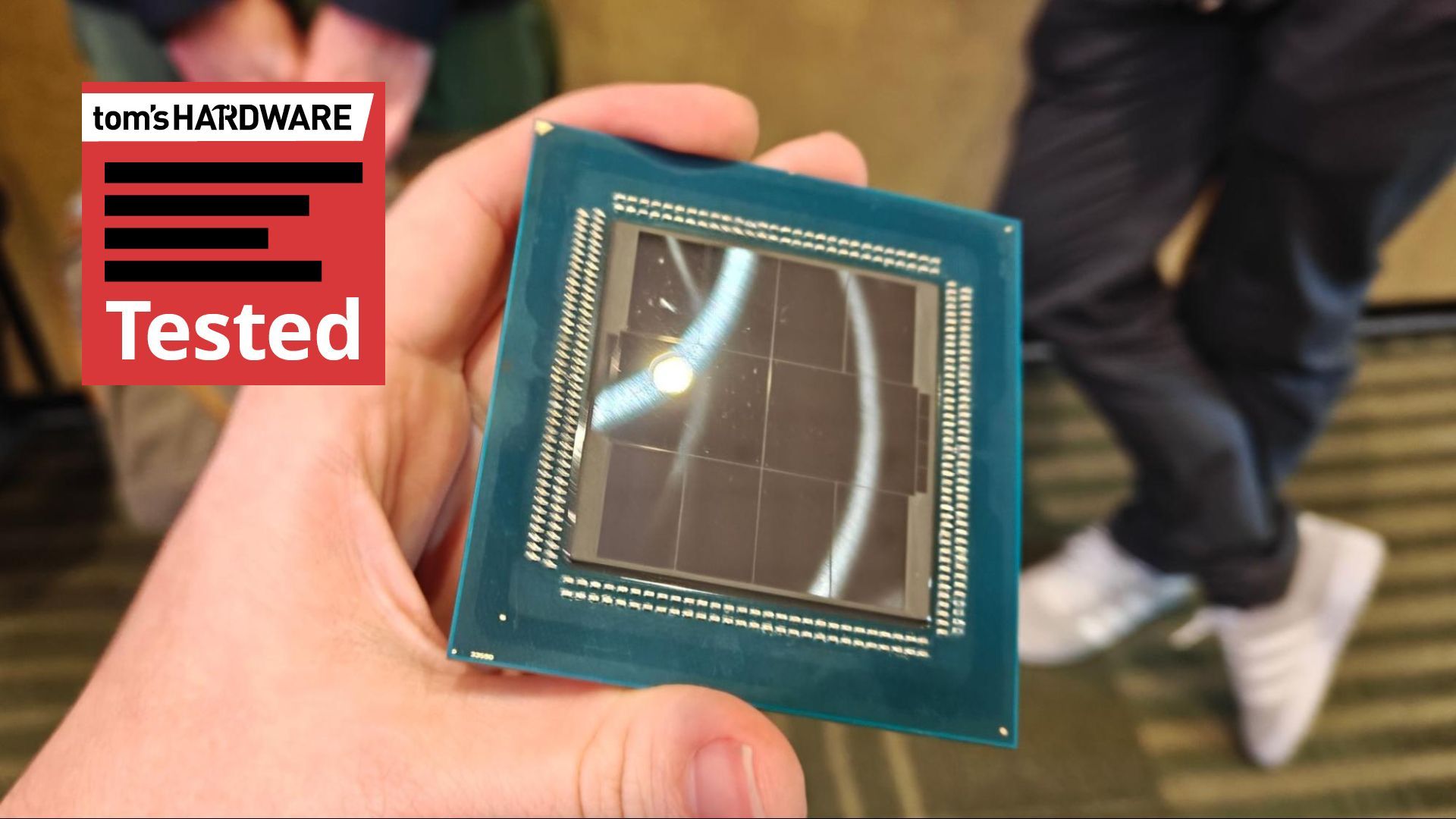
AMD Unveils Zen 6 Architecture with 27% IPC Uplift for EPYC Venice
AMD has detailed its Zen 6 architecture, featuring a 27% instructions-per-clock uplift and clock speeds up to 5.3 GHz for server chips. The new EPYC Venice processors utilize TSMC’s N2P node and split into frequency-optimized and density-focused variants. This marks a significant generational leap ahead of consumer Ryzen releases, targeting enhanced AI and server workloads.
Key points
- AMD introduced the Zen 6 microarchitecture, promising a 27% average increase in instructions per clock (IPC) for AI and server applications.
- The architecture supports clock speeds ranging from 4.1 to 5.3 GHz and is manufactured using TSMC’s N2P process node.
- EPYC Venice servers will feature two core variants: a frequency-optimized Zen 6 and a density-optimized Zen 6c.
- Technical improvements include a redesigned vector engine with native half-precision FP16 support and split integer schedulers.
- Analysts note the changes represent a major generational jump comparable to early Zen evolutions, with consumer Ryzen chips expected next year.
AMD Details Zen 6 Architecture and EPYC Venice Launch
Advanced Micro Devices (AMD) has officially unveiled the architectural details of its next-generation Zen 6 core, marking a significant evolution in its processor design strategy. During a press event held in Las Vegas last week, the company provided a deep dive into the technology that will power its upcoming EPYC Venice server processors. This release serves as the public introduction to the architecture before it is adapted for consumer-focused Olympic Ridge Ryzen processors, which are expected to launch next year.
The core promise of Zen 6 is a substantial performance increase over its predecessor, Zen 5. AMD reports an average 27 percent uplift in instructions per clock (IPC) across a variety of artificial intelligence and server workloads. This gain is achieved through a combination of higher clock speeds, architectural refinements, and improved power efficiency. The server chips are expected to operate at clock speeds ranging from 4.1 to 5.3 GHz, with consumer variants anticipated to reach even higher frequencies once released.
Architectural Shifts and Manufacturing Node
Zen 6 is built on TSMC’s N2P process node, continuing AMD’s reliance on advanced semiconductor manufacturing to drive performance. However, the improvements are not solely due to the node. The architecture features significant internal changes, including a redesigned vector engine that enhances Single Instruction, Multiple Data (SIMD) performance. Notably, this engine now natively supports half-precision FP16 instructions alongside full 32-bit precision, a critical capability for modern AI workloads.
Inside the core, AMD has split the integer schedulers within the execution engine. This change allows for more instructions to remain in flight, improving overall throughput. Technical analysis suggests that Zen 6 returns to an integer schedule layout reminiscent of Zen 3 and Zen 4, moving away from some of the structural choices made in Zen 5. The branch predictor has also been refined, reducing the latency penalty for branch mispredictions from roughly 3.5 to 4 nanoseconds in Zen 5 to approximately 3 to 3.5 nanoseconds in Zen 6.
Two Variants: Frequency vs. Density
Consistent with previous EPYC launches, Zen 6 is not a single monolithic core but comes in two distinct flavors. The first is the frequency-optimized Zen 6, designed for maximum speed. The second is the density-optimized Zen 6c, which prioritizes core count over individual core speed. This dual-strategy dates back to the 2023 launch of the Bergamo EPYC, which utilized 128 compact Zen 4c cores per chiplet. The Zen 6c variant continues this approach, trading clock speeds and cache per core for a more densely packed CPU die, similar to the philosophy behind Intel’s Efficient cores, though the underlying microarchitecture remains distinct.
Market Context and Future Outlook
The introduction of Zen 6 positions AMD to compete more aggressively in the high-performance computing and data center markets. By delivering a 27% IPC uplift and supporting advanced AI instructions natively, AMD aims to attract cloud providers and enterprise customers looking to optimize workloads. The split between high-frequency and high-density options allows AMD to target a broader range of server applications, from latency-sensitive databases to massive parallel processing tasks.
While the focus is currently on server chips, the Zen 6 architecture will eventually trickle down to the consumer market. AMD has indicated that the Olympic Ridge Ryzen processors, based on the same core, are expected to launch next year. Industry observers note that the architectural changes in Zen 6, particularly the structural shifts in the integer scheduler and branch predictor, represent one of the company’s most significant generational jumps since the initial Zen launch.
Key takeaways
- AMD’s Zen 6 architecture delivers a 27% average IPC uplift for AI and server workloads.
- EPYC Venice servers will use TSMC’s N2P node and support clock speeds up to 5.3 GHz.
- The architecture splits into frequency-optimized and density-optimized core variants for server deployment.
- Technical improvements include native FP16 support and reduced branch misprediction latency.
- Consumer Ryzen chips based on Zen 6 are expected to launch next year.
Sources
The WireByte editorial team synthesises technology news from multiple primary sources, verifies the facts, and links every source. Articles are produced with AI assistance and reviewed under our editorial policy.