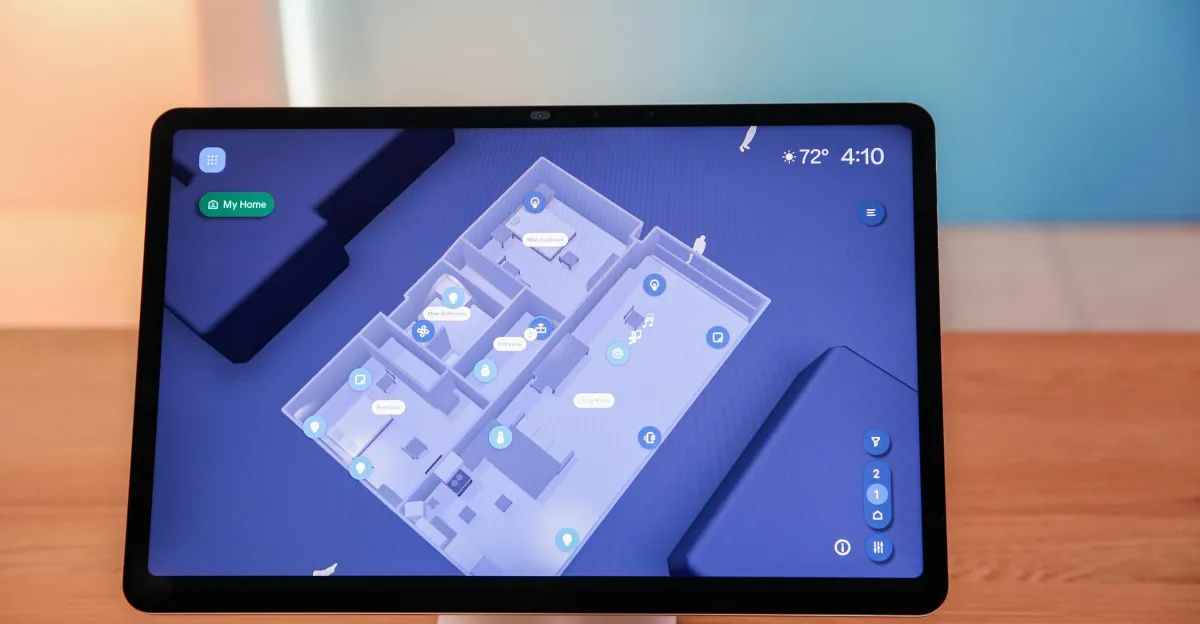
Amazon Unveils 3D Alexa Home Map with Live Camera Integration
Amazon has launched a redesigned Alexa Home Map, replacing its 2023 flat interface with an interactive 3D visualization of indoor and outdoor spaces. The update integrates Ring camera feeds to show real-time movement and allows users to control devices via a digital blueprint. This shift aims to simplify smart home management by providing spatial context for connected devices.
Key points
- Amazon, the tech giant behind the Echo and Ring ecosystems, has released a complete overhaul of its Alexa Home Map interface.
- The new system replaces the previous 2D layout with an interactive 3D digital blueprint that displays the spatial location of connected devices.
- The interface integrates Ring security cameras to provide a 360-degree exterior view, animating moving vehicles and pedestrians in real time.
- Users can control devices directly from the map, with dynamic visual feedback such as glowing lights matching their color and music notes over active speakers.
- A new interactive timeline feature allows users to rewind and review camera footage from the last 24 hours across all connected devices simultaneously.
- The redesign positions Amazon’s smart home hub closer to competitors like Samsung’s SmartThings by prioritizing spatial awareness over traditional list-based controls.
A Spatial Shift in Smart Home Control
Amazon has officially introduced a significant redesign of its Alexa Home Map, moving away from the traditional list-based interfaces that have dominated the smart home sector for years. The new interface, described by the company as an interactive 3D map, offers a digital blueprint of a user’s property, allowing for a more intuitive understanding of where connected devices are located. This update marks a departure from the 2D map previously introduced in 2023, aiming to reduce the cognitive load required to manage a household filled with numerous smart gadgets.
Visualizing the Connected Home
The core of the new Alexa Home Map is its ability to display devices in their actual physical locations within a 3D representation of the home. Instead of scrolling through rows of tiles or sorting devices by room or type, users can see icons for Echo speakers, Ring and Blink cameras, Fire TV sticks, lights, locks, and thermostats placed exactly where they exist in the space. This visual approach is particularly useful for households with many similarly named devices, such as multiple lamps, allowing users to identify and control specific fixtures by their position rather than their name.
Integration with Security Cameras
A standout feature of the redesign is the integration of exterior views using compatible Ring cameras. The map now provides a 360-degree view of the property’s perimeter, animating cars and people moving nearby. Rather than presenting a raw, photorealistic video feed, the interface uses stylized visualizations to represent movement, maintaining a clean aesthetic while providing real-time security awareness. When a camera detects motion, a small live preview appears on the map, giving users immediate insight into activity outside their home without needing to open a separate security app.
Dynamic Feedback and Control
The new interface is not merely observational; it is interactive and responsive. Users can control core device functions directly from the map, such as adjusting speaker volume or checking camera feeds. The system provides dynamic visual feedback to confirm actions and status. For instance, if a music speaker is active, animated music notes appear over its icon. Similarly, smart lights display a glow that matches their current color setting. These real-time updates create a more engaging and informative overview of the home’s current state, allowing users to monitor activity at a glance.
Historical Context and Competition
This redesign places Amazon’s smart home strategy in direct competition with other major tech providers. The visual style of the new Alexa Home Map bears similarities to Samsung’s SmartThings Map View, indicating a broader industry shift toward spatial interfaces. While Google Home and Apple Home have largely relied on card-based dashboards, Amazon’s move suggests a desire to differentiate its platform by offering a more immersive and context-aware control panel. The update is part of a broader rollout of new Echo devices and ecosystem enhancements announced by the company.
Looking Ahead
The introduction of the 3D Home Map reflects Amazon’s ongoing effort to simplify the smart home experience as the number of connected devices in average households continues to grow. By providing a single, visual hub that combines control, monitoring, and security, Amazon aims to reduce the fragmentation that often plagues smart home ecosystems. The interactive timeline feature, which allows users to rewind the last 24 hours of camera footage across all devices, further enhances the platform’s utility for home security and monitoring. As the smart home market matures, interfaces that prioritize spatial context and intuitive control are likely to become the standard for user experience.
Key takeaways
- Amazon has replaced its 2D Alexa Home Map with an interactive 3D digital blueprint of the user's property.
- The interface displays the exact location of Echo, Ring, Blink, and other smart devices within the home.
- Ring camera integration provides a 360-degree exterior view with animated representations of moving vehicles and pedestrians.
- Users can control devices directly from the map, with dynamic visual feedback like glowing lights and music notes.
- An interactive timeline allows users to review the last 24 hours of camera footage across all connected devices.
- The redesign aligns Amazon’s smart home interface with industry trends toward spatial awareness, similar to Samsung’s SmartThings.
Sources
The WireByte editorial team synthesises technology news from multiple primary sources, verifies the facts, and links every source. Articles are produced with AI assistance and reviewed under our editorial policy.