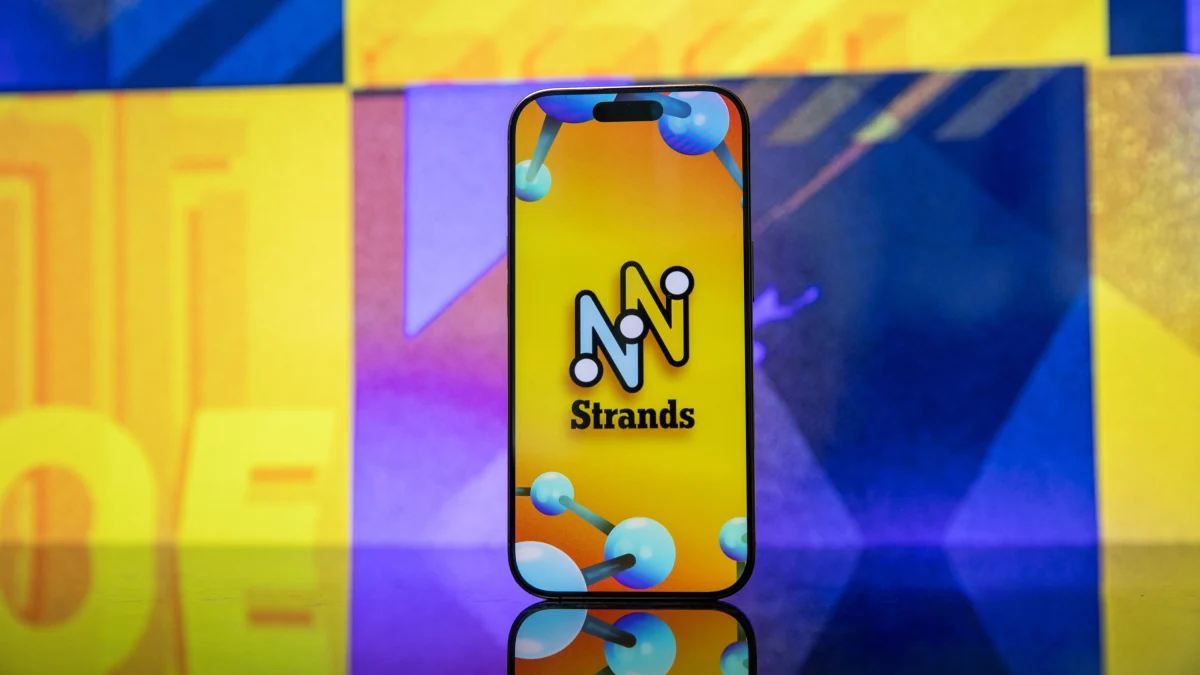
NYT Strands November 25, 2026: Newborn Theme and Spangram Details
The New York Times Strands puzzle for November 25, 2026, features a theme centered on handmade gifts for newborns and nursery decor. Players must find words linked by this concept, including a vertical spangram that spans the entire grid. The game requires finding every letter in the grid, offering a unique twist on classic word search mechanics.
Key points
- The New York Times published the Strands puzzle for November 25, 2026, with a theme focused on handmade gifts for newborns.
- The puzzle's words are related to nursery decor and items found in a baby's room.
- The spangram, which summarizes the daily theme, is oriented vertically across the grid.
- Strands requires players to find words that change direction, ensuring every letter in the grid is used.
- The game is described as more complex than Wordle or Connections due to its unique word-finding mechanics.
Strands Puzzle Theme Details
The New York Times released its daily Strands puzzle on November 25, 2026, presenting players with a specific thematic challenge. The central theme for this edition revolves around handmade gifts intended for newborns. This focus guides the selection of words hidden within the grid, requiring solvers to think in terms of items typically associated with welcoming a new baby.
Mechanics and Spangram Orientation
Strands distinguishes itself from other popular word games through its unique mechanics. Unlike traditional word searches where words run only in straight lines, Strands allows words to change direction, creating quirky shapes and patterns. Players must link letters moving up, down, left, right, or diagonally, but with the added complexity of directional changes. A critical rule of the game is that every single letter in the grid must be part of an answer, leaving no unused characters.
For the November 25 puzzle, the special "spangram" is oriented vertically. The spangram is a specific word or phrase that sums up the day's theme and spans the entire grid from top to bottom or side to side. In this instance, the vertical orientation adds a spatial challenge to the thematic deduction required to solve the puzzle.
Comparison to Other NYT Games
The Strands game is positioned as an elevated version of the classic word search. It shares the New York Times' digital gaming ecosystem with titles like Wordle and Connections. However, Strands is noted for taking longer to complete than its counterparts. The opaque hint system, which does not provide a list of words to find, adds to the brain-teasing nature of the experience. This design choice forces players to rely on their knowledge of the theme and pattern recognition skills rather than simple matching.
Accessibility and Hints
For users who may find the puzzle challenging or who lack the time to dedicate the usual ten or more minutes required for completion, hints are available. The hints provided for this specific date focus on clarifying the theme of nursery decor. By understanding that the words describe things found in a nursery, players can narrow down their search for words related to newborn gifts. This support structure ensures that the game remains accessible to a broad audience, including those who may not be familiar with the specific vocabulary of baby decor.
Conclusion
The November 25, 2026, Strands puzzle offers a thematic blend of baby-related items and complex word-finding mechanics. The vertical spangram and the requirement to use every letter create a distinct challenge for daily solvers. As part of the New York Times' digital offerings, Strands continues to provide a unique linguistic puzzle experience that differs from the more straightforward mechanics of other popular word games.
Key takeaways
- The NYT Strands puzzle for November 25, 2026, features a theme of handmade gifts for newborns.
- Words in the grid are related to nursery decor and items found in a baby's room.
- The spangram for this date is oriented vertically across the entire grid.
- Strands mechanics require words to change direction, using every letter in the grid.
- The game is considered more time-consuming than Wordle or Connections due to its complexity.
Sources
The WireByte editorial team synthesises technology news from multiple primary sources, verifies the facts, and links every source. Articles are produced with AI assistance and reviewed under our editorial policy.